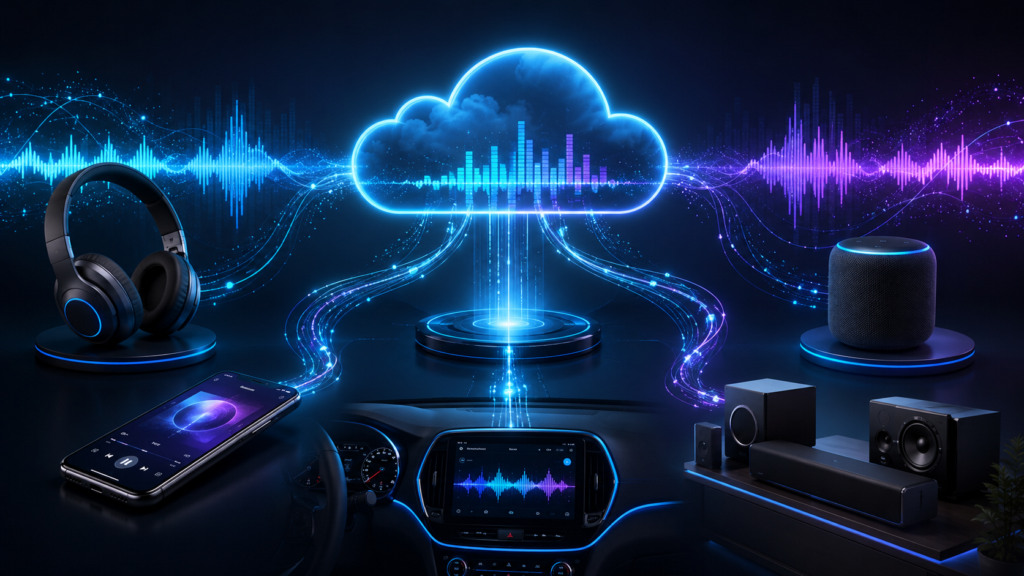
Sound used to live on a device. A CD, a hard drive, a set of local speaker wires — if the hardware couldn’t hold it or carry it, you couldn’t hear it. That model is disappearing fast. In its place is cloud-connected audio, a shift that moves the heavy lifting of storing, processing, and enhancing sound away from local hardware and into remote servers that respond in real time.
This isn’t a niche upgrade for audiophiles. It’s quietly become the backbone of how people stream music, run virtual meetings, control smart speakers, and even manage sound in hospitals and classrooms. Here’s what cloud connected audio actually is, how it works, and why 2026 is turning out to be a pivotal year for the technology.
What Is Cloud Connected Audio?
Cloud connected audio technology refers to any audio system or device that relies on cloud infrastructure rather than solely on local hardware — to store, process, sync, and enhance sound. Instead of a speaker or headset doing all the work on its own chip, it talks to remote servers that handle tasks like:
- Streaming and buffering audio in real time
- Applying AI-driven noise reduction, mastering, or equalization
- Syncing playlists, settings, and listening history across devices
- Powering voice assistants and smart home audio routines
- Routing business calls and conferencing audio over the internet instead of traditional phone lines
In short, the device in your hand or ear becomes an endpoint, while the actual intelligence and storage live in the cloud.
How Cloud Connected Audio Works
The basic flow is similar to how any cloud service operates, just applied to sound:
- Capture or request – A user presses play, speaks a voice command, or joins a call.
- Transmission – The request travels over the internet to cloud servers rather than being processed entirely on-device.
- Cloud processing – Servers retrieve the audio file, apply AI enhancements, mix multiple audio streams, or route the call to other participants.
- Delivery – The processed audio is sent back to the device, often in milliseconds, so the experience feels instantaneous.
This round trip happens so quickly that most listeners never notice it’s occurring at all — but it’s the reason a playlist can pick up exactly where you left off on a different device, or why a video call with people on three continents can sound like everyone is in the same room.
Why Cloud Connected Audio Is Growing So Fast in 2026
A few forces are converging to push this technology from “nice to have” into standard infrastructure:
- Remote and hybrid work is now the norm. Distributed teams need conferencing systems that work identically whether someone is on a laptop, a smartphone, or a dedicated conferencing device. Cloud-based audio platforms make that possible without expensive on-premises hardware, which is a major reason enterprise adoption of cloud communication systems has climbed sharply over the past few years.
- AI has moved from a feature to the foundation. Modern cloud audio platforms don’t just stream a file — they analyze listening habits, clean up poor-quality recordings, and adjust sound profiles based on time of day, room acoustics, or even a listener’s mood. That level of personalization simply isn’t possible with audio processed entirely on local hardware.
- Lossless and spatial audio no longer require a compromise. Streaming used to mean accepting lower fidelity. Cloud platforms now support near-studio-quality lossless streams, and spatial audio — once reserved for premium home theaters — is becoming a baseline expectation for everyday consumer devices.
- Use cases have expanded well beyond music. Podcast creators use cloud audio tools to record, clean up, and publish without a professional studio. Hospitals use centrally managed cloud audio to control calming soundscapes across patient rooms. Logistics and industrial teams use hands-free, cloud-connected voice interfaces to pull up manuals and log data in the field.
Benefits of Cloud-Connected Audio
- Access anywhere: Your audio experience isn’t tied to one device or physical storage limit.
- Seamless synchronization: Start on one device, continue on another, without losing your place.
- Smarter sound: AI-driven processing improves clarity, reduces noise, and adapts to context in real time.
- Lower hardware costs: Businesses and consumers alike can rely on lighter, cheaper devices since the processing happens remotely.
- Scalability for businesses: Cloud-based conferencing and communication systems scale with a growing team without requiring new physical infrastructure.
Where the Technology Is Headed
Analysts covering the broader audio and collaboration space expect a few clear trends to define the next few years: wider adoption of AVoIP (audio-visual over IP) as core business infrastructure, continued growth of cloud-native and browser-based audio production tools that let creators collaborate in real time from anywhere, and audio chips built specifically for lightweight, always-connected devices like smart glasses and open-ear earbuds. Serverless audio processing is also making it cheaper for smaller companies to offer cloud-enhanced sound without investing in dedicated infrastructure.
For businesses specifically, the practical takeaway is that cloud-connected audio is no longer just about better sound quality — it’s about building communication systems that are flexible, remote-ready, and easier to scale than traditional telephony ever was.
Building the Skills Behind Cloud Connected Audio
As this technology becomes standard across conferencing platforms, smart devices, and enterprise communication systems, understanding the cloud computing, VoIP, and networking fundamentals behind it is becoming a genuinely valuable skill set — not just for audio engineers, but for IT professionals and business teams rolling these systems out. Usmania Academy’s detailed breakdown of cloud-connected audio covers the architecture, providers, and hybrid cloud audio setups in more depth for anyone who wants to go beyond the surface-level explanation.
Final Thoughts
Cloud connected audio marks a real shift in how sound is delivered, not just a marketing label. Whether it shows up as a smarter playlist, a clearer conference call, or an AI-cleaned-up podcast recording, the common thread is the same: sound is no longer confined to the device you’re holding. As internet infrastructure and AI processing continue to improve, expect cloud-connected audio to keep moving from a background convenience to a core part of how we listen, work, and communicate.