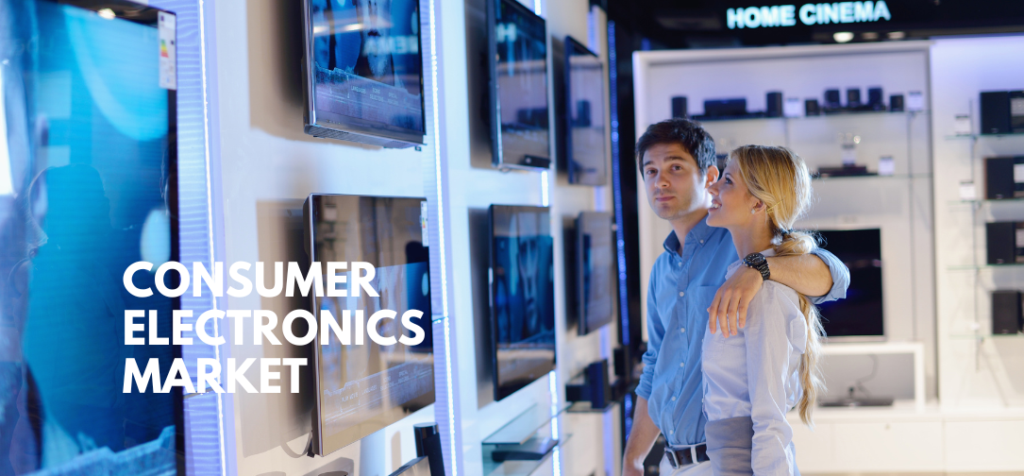
The consumer electronics industry in 2026 is experiencing one of its most paradoxical phases in decades. Innovation has never been faster, yet consumer confidence in purchasing decisions is showing signs of strain. As product cycles shorten and feature sets expand, buyers are increasingly overwhelmed by choice rather than empowered by it.
This shift is not merely anecdotal. Industry research from leading consulting firms indicates that a significant portion of consumers report regret after major technology purchases within months. The issue is no longer product availability—it is decision clarity.
The Growing Gap Between Innovation and Utility
Historically, technological progress was measured by meaningful leaps in capability. Today, however, much of the innovation in consumer electronics is incremental: improved cameras, marginal battery gains, and expanded software features that are often underutilized.
This has created a widening gap between what products can do and what users actually need. As a result, purchasing decisions are increasingly influenced by marketing narratives around “future readiness” rather than present-day utility.
In practice, this leads to over-specification—consumers paying for capabilities that remain unused throughout the product lifecycle.
A More Rational Framework for Evaluating Devices
Across industry reviews and long-term usage studies, a more stable evaluation model has emerged. Instead of focusing on specifications alone, practical buyers tend to prioritize four dimensions:
- Reliability in daily use cases
- Ease of onboarding and long-term usability
- Durability aligned with expected product lifespan
- Total cost of ownership relative to actual usage intensity
Interestingly, this framework consistently favors balanced products over high-end flagships. The most advanced device is not always the most practical one.
Category-Level Trends Reshaping the Market
Smartphones and Wearables Shift Toward Passive Intelligence
The smartphone segment is increasingly defined by artificial intelligence integration and long-term software support commitments. Rather than raw hardware upgrades, manufacturers are competing on computational photography, predictive systems, and ecosystem longevity.
Meanwhile, wearable technology is shifting from notification-centric design toward passive health intelligence. Sleep tracking, recovery metrics, and continuous biometric monitoring are becoming core value propositions, particularly as consumers seek reduced screen exposure.
Portable Computing and the Rise of Modular Thinking
In portable computing, two parallel trends are emerging. On one side, ultra-light laptops continue to dominate remote work environments due to efficiency and battery performance. On the other, high-end tablets are gaining traction among creative professionals seeking hybrid workflows.
A smaller but notable movement is the rise of modular hardware design. This approach reflects growing consumer frustration with planned obsolescence, enabling longer device lifecycles through component-level upgrades rather than full replacement.
Smart Home Security Becomes Mainstream Infrastructure
Smart home security systems have transitioned from niche convenience products to mainstream household infrastructure. Improvements in sensor accuracy, real-time alerts, and installation simplicity have significantly lowered adoption barriers.
What was once considered advanced surveillance technology is increasingly being viewed as standard home utility equipment, particularly in urban environments.
The Under-$100 Segment and the Value Compression Effect
One of the most significant shifts in the market is the rapid improvement of low-cost electronics. Entry-level devices now offer capabilities that previously required mid-range pricing, including fast charging, active noise reduction, and advanced biometric tracking.
This phenomenon—often referred to as value compression—has intensified competition and reduced the perceived gap between premium and budget segments.
As a result, consumers are becoming more sensitive to marginal utility rather than brand positioning alone.
The “Future-Proofing” Illusion
A recurring behavioral pattern in consumer electronics purchasing is the preference for future-proof specifications. While seemingly rational, this approach often leads to inefficient allocation of budget.
In many cases, features purchased for long-term utility are never fully activated or become obsolete before they are required. This creates a disconnect between perceived and realized value.
A more grounded strategy is need-based purchasing: aligning specifications with current workflows, while treating future upgrades as iterative rather than anticipatory.
Conclusion: From Feature-Driven to Outcome-Driven Consumption
The consumer electronics landscape is shifting from feature-driven marketing to outcome-driven decision making. As product ecosystems become more complex, the most valuable skill for consumers is no longer technical literacy alone, but clarity of intent.
In an environment saturated with innovation, the most effective filter is not more information—it is better judgment about what actually matters.
Ultimately, the winners in this market will not be those who adopt the newest technology fastest, but those who adopt it most deliberately.