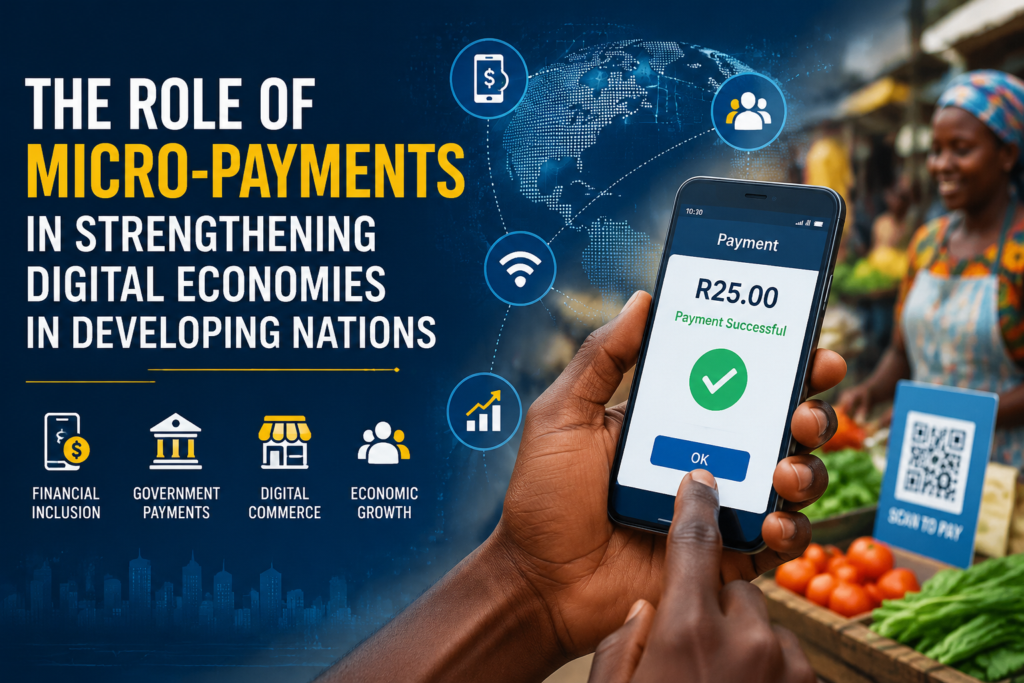
Micro-payments are becoming a foundational layer in the evolution of digital economies across developing nations. While traditionally associated with small online transactions in media or gaming, micro-payment systems now extend far beyond entertainment. They are increasingly used in government disbursements, informal trade, mobile money ecosystems, and social protection programs. In markets where financial access is uneven and banking infrastructure is limited, micro-payments are not just a convenience—they are a structural necessity.
In countries like South Africa, this shift is clearly visible in social assistance programs where beneficiaries often rely on digital systems to access funds and track eligibility. Many users frequently perform actions such as an SRD 370 status check to confirm payment approval and understand their grant position within the system. These interactions reflect how deeply micro-payment infrastructure is now embedded into everyday financial survival.
Understanding Micro-Payments in a Developing Economy Context
Micro-payments refer to financial transactions involving very small amounts of money, often too small to be processed efficiently through traditional banking systems due to fixed transaction costs. In developing economies, however, the concept expands to include low-value, high-frequency transfers facilitated through mobile wallets, digital banking apps, and agent-based financial networks.
Unlike traditional payment systems optimized for larger transactions, micro-payment systems prioritize accessibility, speed, and low operational cost. This makes them particularly suitable for populations that rely on daily income flows, informal employment, and government assistance programs.
As digital welfare systems evolve, users increasingly depend on online tools such as SRD 370 status check 2026 platforms to track real-time updates on social grant approvals, reinforcing the shift toward transparent, data-driven public finance systems.
The Digital Infrastructure Enabling Micro-Payments
The rise of micro-payments is directly tied to the expansion of digital financial infrastructure. Mobile penetration, even in rural regions, has created a parallel financial ecosystem that operates independently of physical bank branches.
Key enablers include:
- Mobile money platforms and fintech wallets
- USSD-based banking services for non-smartphone users
- API-driven payment gateways for real-time settlement
- National digital identity systems supporting secure verification
- Government-to-person (G2P) digital payment frameworks
These systems reduce friction in financial inclusion by eliminating the need for physical paperwork, branch visits, and traditional credit scoring mechanisms.
Micro-Payments and Financial Inclusion
One of the most significant impacts of micro-payment systems is their role in expanding financial inclusion. In many developing nations, a large portion of the population remains unbanked or underbanked. High account maintenance costs, geographic barriers, and documentation requirements often exclude individuals from formal financial systems.
Micro-payments address this gap by enabling:
- Entry-level participation in digital finance
- Low-risk transaction environments for new users
- Gradual onboarding into broader financial services
- Integration of informal workers into traceable economies
For example, individuals receiving government assistance or social grants like 370 status check increasingly rely on digital disbursement channels. Instead of cash-based distribution, funds are transferred electronically in small, periodic payments that can be immediately used for essential needs such as food, transport, or utilities.
This transition not only improves efficiency but also creates a digital financial footprint for users who were previously outside the formal economy.
Strengthening Government-to-Person (G2P) Payment Systems
Micro-payments play a crucial role in modernizing government welfare systems. In many developing economies, social protection programs have shifted from bulk cash distribution to structured digital payments delivered in smaller, predictable intervals.
This approach improves:
- Transparency in fund distribution
- Reduction in administrative leakage and fraud
- Real-time monitoring of beneficiary data
- Faster response during economic disruptions
Digital G2P systems also stimulate broader economic activity. When beneficiaries receive funds digitally, they are more likely to engage with local merchants who also adopt digital payment acceptance systems. This creates a cascading effect that strengthens the entire payment ecosystem.
Driving Digital Commerce in Low-Income Markets
Micro-payments are also reshaping digital commerce by lowering the entry barrier for both consumers and small businesses. In many developing regions, consumers may not have the capacity or willingness to make large upfront purchases, but they can participate in small-value, recurring transactions.
This model supports:
- Pay-as-you-go services (utilities, internet, subscriptions)
- Small-scale e-commerce transactions
- Digital content monetization
- Informal retail digitization
For small merchants, accepting micro-payments expands their customer base and reduces reliance on cash handling, which is often inefficient and insecure.
Challenges Limiting Micro-Payment Scalability
Despite their advantages, micro-payment systems face several structural challenges that limit scalability:
- High transaction fees relative to transaction size
- Fragmentation across competing fintech platforms
- Limited interoperability between payment systems
- Regulatory uncertainty in emerging digital finance markets
- Cybersecurity risks and fraud exposure in low-cost systems
Addressing these challenges requires coordinated efforts between governments, financial institutions, and technology providers. Standardization of APIs, reduction of transaction costs, and stronger digital identity frameworks are particularly important.
The Future of Micro-Payments in Emerging Digital Economies
The long-term trajectory of micro-payments points toward deeper integration with artificial intelligence, blockchain systems, and real-time settlement networks. As infrastructure matures, micro-payments are expected to evolve from simple transfers into programmable financial actions embedded within digital ecosystems.
Future developments may include:
- Smart contract-based welfare distribution
- AI-driven fraud detection in real-time payment flows
- Cross-border micro-payment interoperability
- Unified digital identity-linked financial systems
- Expansion of tokenized payment models for public services
These innovations will further reduce friction in financial participation and enable more adaptive economic systems that respond dynamically to user needs.
Conclusion
Micro-payments are no longer a niche financial tool. In developing nations, they are becoming a core mechanism for economic participation, welfare distribution, and digital commerce expansion. By enabling low-value, high-frequency transactions at scale, they bridge the gap between informal economies and formal financial systems.
As digital infrastructure continues to mature, micro-payments will play an increasingly strategic role in shaping inclusive, resilient, and data-driven economies.