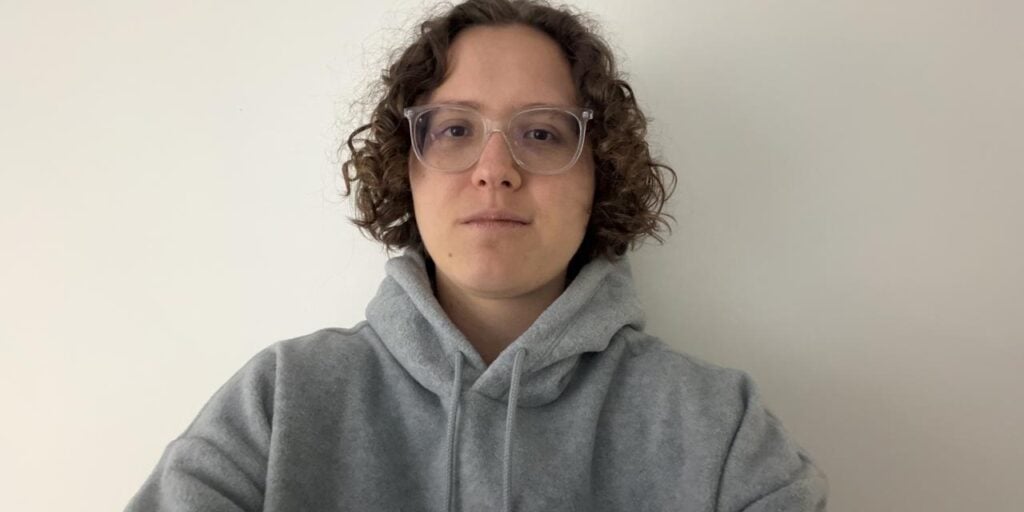
Winner of the Vanguard Impact Summit & Awards 2026 and former analyst at a fund managing $600 million, founder of an AI platform connecting startups with top Silicon Valley funds, on why startups waste months searching for investors and how algorithms are changing the process
To close a round in 2026, founders should expect to pitch 100 to 200 investors, according to the Founder Institute, the world’s largest pre-seed accelerator. Meanwhile, US venture and private equity funds raised over $80 billion in Q1 2026 alone, a quarterly record. The capital is there. The problem is reaching the right slice of it: most founders still spend months manually researching funds, guessing which partner to email, and sending messages that never get read.
The issue is often not the quality of the startup but the absence of any reliable way for a founder to know which investor actually needs their project, says Anna Mastykina. While working at AltaIR Capital, an international venture fund with a portfolio of more than 350 companies worldwide, she analyzed thousands of startups and helped determine which ones would receive funding. What she kept seeing was that strong ideas were turned down simply because they reached the wrong person at the wrong fund. That understanding of what both founders and investors need became the foundation for an AI agent that, in eighteen months, helped hundreds of startups raise over $25 million. What is broken in traditional fundraising and why startups should hand the investor search over to a machine — in our interview.
— Anna, you have been in the venture industry for seven years, first as an accelerator coordinator, then as an investment analyst at a major fund. What are the main difficulties you have observed startups face when searching for investors?
— The core problem has not changed. Founders lack a convenient tool that tells them which specific investors need their startups. Let me give you an example. Imagine you are looking for a job, but instead of a list of open positions, you have a directory of ten thousand companies and you have to guess which one needs someone with your background. That is exactly what fundraising looks like for most startups. Founders spend months sending emails to analysts who have no interest in their space and miss the partners who are eager to invest in exactly their kind of product.
— As I understand it, you built a platform to address this problem and have already facilitated over fifteen hundred calls between startups and investors, all through cold outreach without a single warm introduction, which is rare in the industry. How does the process work from the inside?
— At the core sits a database of 200,000 investors and four million of their past deals. The algorithm identifies funds that have already backed companies similar to the one looking for an investor, or finds a specific partner and evaluates how closely their portfolio matches the startup’s market and stage. The founder ends up with a short list of people for whom their project is genuinely and potentially relevant.
— You have managed to give founders access to funds of the caliber of a16z, General Catalyst, and Sequoia, which manage tens of billions of dollars and stand behind companies like Facebook, Google, and Airbnb. Getting a call with a partner at any of them is already an achievement for an early-stage startup. What is it about your approach that makes these investors pay attention to young companies?
— The thing is, writing a nice email to the right investor is not enough because of how the industry currently works. Traditional fundraising fails because nearly 90 percent of outreach simply never reaches the recipient. Emails either land in spam immediately or get lost among hundreds of other messages. That is why half the work is technical preparation: separate domains for each campaign, mailbox setup so that email services do not flag messages as unwanted. Only after that does the first message go out, and it becomes one link in a chain of several touches, each with its own logic. The result is a structured funnel, just like in sales. Fundraising is sales, really. Founders just rarely think of it that way.
— Then it is worth remembering that before launching your own product, you spent two years building exactly those kinds of funnels, but from the other side, selecting startups for investment at AltaIR Capital. What, based on your observations, distinguished startups that received funding from those that walked away empty-handed?
— During my time there I wrote over 100 investment memos. In plain language, those are analytical reports on which the decision is based: will the fund invest in a company or not. And that is when I realized that fundraising is a race. Our portfolio more often ended up with not the strongest product but the founders who reached the right people fastest. That is why when building my own product I focused specifically on speed, so that the agent could do in a minute what takes weeks to do by hand.
— And that has paid off. Your direct competitors now use your agent to serve their own clients, an indirect sign that the AI agent has already fundamentally changed the approach to fundraising and may become the standard. On top of that, in May of this year your work was recognized internationally when you took a prize at the Vanguard Impact Summit & Awards in Bangkok, where outstanding specialists and leaders who have made significant contributions to innovation and entrepreneurship are honored. But what comes next — where is the market heading and what role will artificial intelligence play in it three to five years from now?
— The next step is automating everything that comes after the first call. In a few years a founder will upload a company description and a financial model into the system and come out with not just a list of investors but a closed round. AI will take over all the routine that currently eats into time that should go toward building the product. And not only in fundraising: hiring, sales, legal work — anywhere there is a repetitive process with a large volume of data, an algorithm will handle it faster than a person. Founders should start preparing for that now.