Small business marketing used to mean flyers, cold calls, and hoping word spread fast enough.
Not anymore.
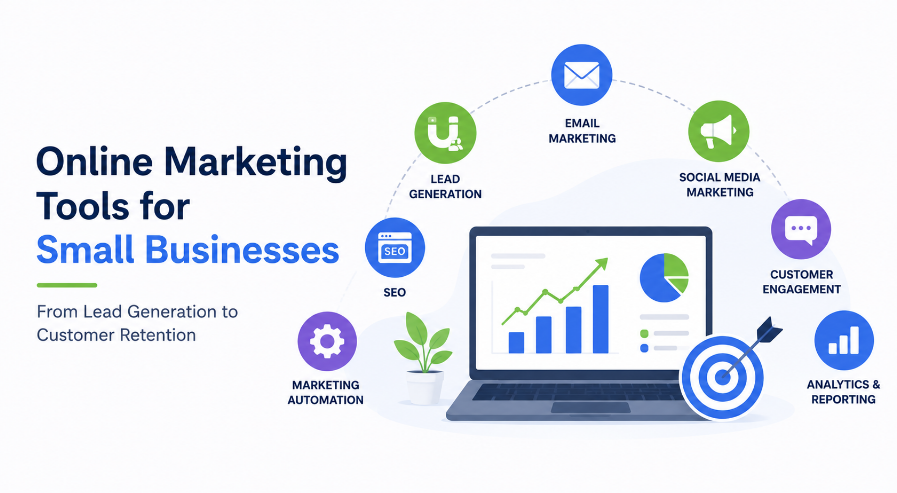
The right online marketing tools for small business can run campaigns, nurture leads, and keep customers coming back, often with a lean team and a reasonable budget.
But here’s the thing: the sheer volume of tools available is its own problem. Every category has ten options. Every option has a pricing page that makes it sound like the obvious choice. And most small businesses end up with a cluttered stack they half-use.
This guide cuts through that. Whether you’re a founder doing your own marketing or a small team trying to punch above your weight, here’s what actually moves the needle, organized by where it fits in your funnel.
Online Marketing Tools for Small Business: Start With the Funnel
Before picking any tool, map your funnel. Seriously. Where are you losing people?
If leads aren’t finding you, your top-of-funnel is broken. If they find you but don’t convert, it’s a middle-funnel problem. If customers churn fast, it’s retention. The tools you need depend entirely on which stage is leaking the most.
A good Content Marketing Agency in India will tell you the same thing before recommending any tactic: diagnose first, tool-shop second. That logic applies whether you hire outside help or go it alone.
Lead Generation: Getting Found and Getting Interest
SEO and Content Tools
If you want consistent inbound leads, organic search is still one of the highest-ROI channels for small businesses. You don’t pay per click. Content compounds over time.
The tools worth knowing:
- Google Search Console (free): Tells you what keywords you’re already ranking for, where you’re dropping off, and what pages need work. Start here.
- Ahrefs or Semrush (paid): Keyword research, competitor gap analysis, backlink tracking. Ahrefs is cleaner for content teams; Semrush has more SEO audit depth.
- Surfer SEO or Clearscope: Helps you write content that actually matches search intent. Useful if you’re producing blogs at any volume.
Pick one paid SEO tool. You don’t need both Ahrefs and Semrush.
Lead Capture Tools
Getting traffic is step one. Capturing it is step two.
- Typeform or Tally: Clean, high-converting forms for lead magnets, surveys, and contact requests. Tally has a generous free tier.
- OptinMonster or ConvertBox: Pop-ups and on-site targeting. Use these sparingly; a well-timed exit-intent pop-up works, a pop-up that fires three seconds after load loses you the visitor.
- Calendly: For any business where booking a call is the conversion. Removes the back-and-forth and shortens your sales cycle.
Note: Lead capture only works if your traffic has intent. A form on a blog post that attracts general readers won’t convert like a form on a product page or a landing page built for a specific search query. Match your capture tool to your traffic source.
Conversion: Turning Interest Into Action
Email Marketing Software for Small Business
Email is still the best digital marketing channel by ROI. Period.
- Mailchimp: Good starting point. Free up to 500 contacts. The interface is familiar, and most integrations support it natively.
- ConvertKit (now Kit): Built for creators and small businesses that sell digital products or rely on content. Better automation than Mailchimp at comparable price points.
- ActiveCampaign: Stronger automation and CRM features. Worth the jump if you’re running multi-step nurture sequences and need lead scoring.
The mistake most small businesses make: they build a list and don’t email it. Consistency matters more than fancy automation when you’re starting out.
Landing Page Builders
Your homepage isn’t a landing page. Don’t treat it like one.
- Unbounce: Expensive but the conversion rate data and A/B testing tools are genuinely useful.
- Carrd or Leadpages: Cheaper, faster to spin up. Fine for single offers and simple campaigns.
Nurture: Staying Top of Mind Without Being Annoying
Social Media and Scheduling
You don’t need to be on every platform. Pick two where your buyers actually spend time and show up consistently.
- Buffer or Later: Simple scheduling tools for LinkedIn, Instagram, and Facebook. Buffer has a clean free tier for up to three channels.
- Hootsuite: Heavier, with reporting and team collaboration. Worth it if you’re managing multiple brands or a larger content calendar.
LinkedIn is where most B2B small businesses get the most traction. If your buyers are founders, managers, or professionals, that’s where you should be first.
Retargeting and Paid Ads
Paid ads aren’t just for big budgets. Even $500/month on Google or Meta can move the needle if your targeting is tight.
- Google Ads: Best for capturing demand that already exists. Someone searching “accounting software for restaurants” is ready to buy.
- Meta Ads Manager: Better for building awareness and retargeting people who visited your site but didn’t convert.
The crazy part is how many small businesses run paid ads without any retargeting. If someone visited your pricing page and left, a $5/day retargeting campaign will outperform almost any cold traffic campaign.
Important: Don’t run paid ads without a dedicated landing page. Sending ad traffic to your homepage wastes budget. Build a page that matches the ad’s promise, and only that promise.
Best Marketing Tools for Small Business: Retention and Loyalty
Getting a customer is expensive. Keeping them is cheap. Most businesses underinvest here.
Customer Communication Tools
- Intercom or Crisp: Live chat and in-app messaging. Reduces churn by catching issues early.
- Klaviyo: Email and SMS for e-commerce retention. Abandoned cart flows, post-purchase sequences, and loyalty emails are where it earns its price.
- Loom: Sending a short personalized video to a customer who just onboarded is one of the highest-retention tactics almost nobody does.
Reviews and Social Proof
Word-of-mouth still closes deals. The digital version is reviews, case studies, and testimonials.
- Birdeye or Podium: Automates review collection from happy customers. Especially useful for local businesses where Google Reviews affect rankings.
- Testimonial.to: Collects video and text testimonials without a developer. Embeds anywhere.
Must Read: Customer retention tools only work if you’re proactively reaching out, not just reacting to complaints. Set up at least one automated touchpoint at 30 days post-purchase or post-onboarding. That single sequence will do more for retention than most features you could add to your product.
FAQs
- What are the best online marketing tools for small business on a tight budget?
Google Search Console, Mailchimp’s free tier, Buffer’s free plan, and Tally for forms give you a solid starting stack for nearly nothing. Add one paid tool (Ahrefs or an email platform upgrade) when revenue justifies it.
- What’s the difference between digital marketing tools and marketing software for small business?
They’re often used interchangeably. “Digital marketing tools” usually means point solutions (a scheduler, a form builder, a landing page tool). “Marketing software” tends to mean platforms that bundle multiple functions, like HubSpot or ActiveCampaign, under one roof.
- Do small businesses really need paid SMB tools, or are free versions enough?
Free versions are enough to start. Most businesses outgrow them within 6-12 months as contact lists grow, automation needs increase, or reporting gaps appear. Upgrade when the free plan is actively slowing you down, not as a default.
- How do I know which marketing tools my small business actually needs?
Audit your funnel first. If you can’t answer where leads come from, where they drop off, and what brings customers back, no tool will fix that. Clarity on your funnel tells you exactly which category to invest in first.