
The Best Gaming Influencer Marketing Platform: 7 Options to Consider in 2026

More gaming influencer campaigns fail at creator selection than at execution. Publishers choose creators by follower count, launch the campaign, and only later realize the audience is wrong, the engagement is inflated, or the creator hasn’t touched the genre in months. The platform you use determines how much of that you know before any budget is committed.
In this article, you can find the best gaming influencer marketing platform if the quality of the creator data matters most to you. This guide looks at what each platform knows about creators, where that data comes from, and where the blind spots are. The shortlist includes Cloutboost (a gaming-first database with 50+ gaming-specific data points), HypeAuditor (207.5M+ profiles and strong fraud detection), CreatorIQ (AI semantic search and a 3-year content history), and others.
What Good Creator Data Looks Like for Gaming Campaigns
To choose the best gaming influencer marketing platform for your campaigns, evaluate the following criteria:
- Database freshness. Gaming creator metrics move quickly. Follower counts, engagement rates, and Twitch viewership can change week to week. A platform that pulls from social APIs daily gives you current data; a platform that updates monthly gives you a snapshot that may already be stale by the time you activate.
- Fraud detection depth. Fake followers and bought engagement are measurable, but only if the platform looks beyond simple ratios. The stronger tools analyze behavioral patterns, such as growth spikes, comment quality, engagement velocity, and audience composition, to catch manipulation that lighter vetting misses.
- Gaming-specific data layers. General influencer platforms sort creators into broad categories. Gaming campaigns need much more detail: which titles a creator has covered, how recently and how often they play them, and how their viewership and engagement hold up across platforms. Without that layer, genre fit is guesswork.
- Content history depth. Recent posts show what a creator is doing now. A longer history shows whether that coverage is consistent, whether they have promoted competing titles, and whether their audience was built on content that matches your game. Platforms with deeper historical indexing surface patterns that recent-only tools miss.
The Best Gaming Influencer Marketing Platforms Comparison
The table below compares 7 platforms by creator database size, Twitch coverage, fraud detection, and depth of gaming-specific filters.
| Platform | Creator database | Twitch coverage | Fraud detection | Gaming-specific filters |
| Cloutboost | 1.5M+ (gaming-only) | Yes | Daily API refresh | Titles played, play frequency, genre |
| HypeAuditor | 207.5M+ | Yes | 53 behavioral patterns | Limited |
| CreatorIQ | 22M+ | Yes | Brand safety + 3yr content history | Genre-level |
| NeoReach | 5M+ | No | Standard | Game-title organized lists |
| Modash | 350M+ | No | Fake follower scoring | None |
| Aspire | 170M+ | Yes | Audience quality scoring | None |
| Traackr | 7M+ (curated) | No | Quality scoring | None |
Cloutboost: Gaming Influencer Marketing Platform for Better Creator Matching
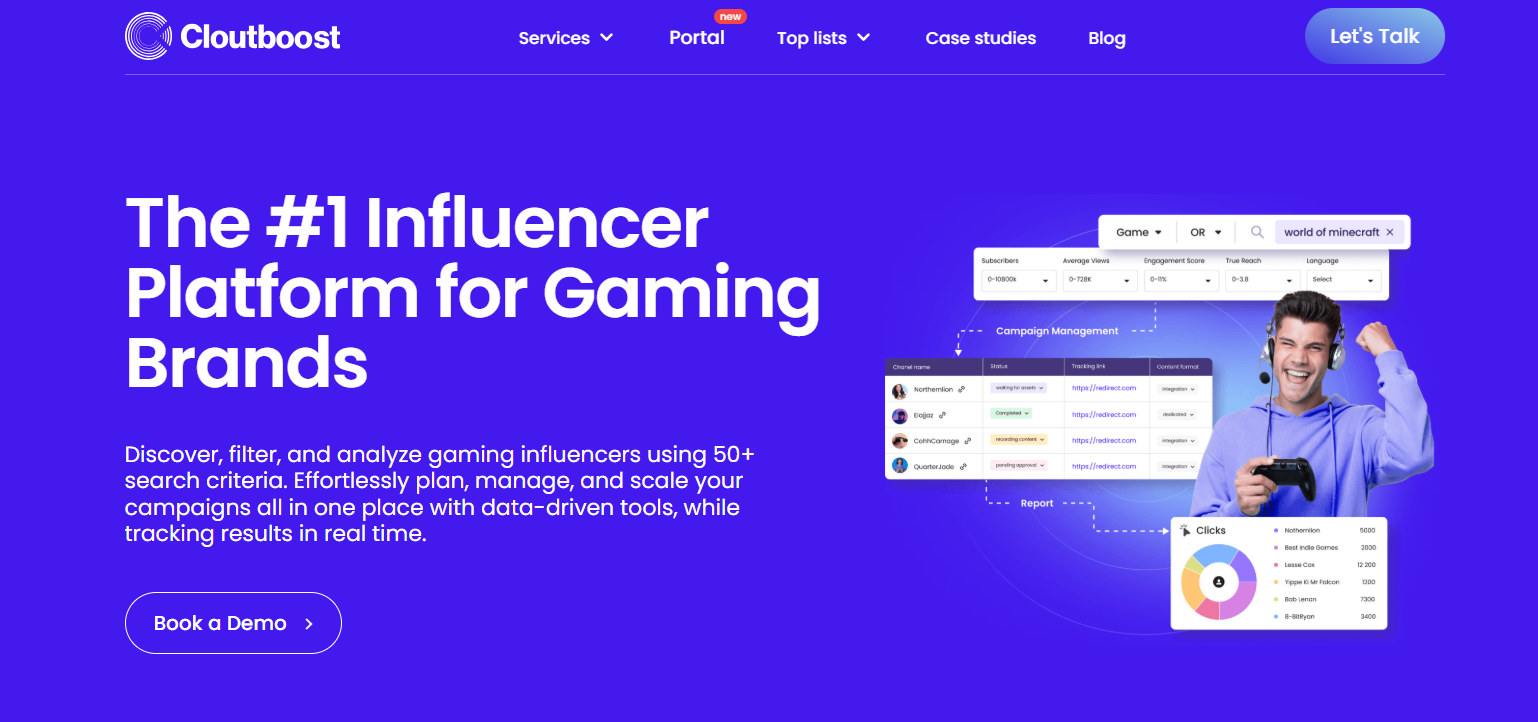
Cloutboost is the only gaming influencer marketing platform on this list built around a creator database made specifically for video game marketing. That matters because the data aligns with the decisions game publishers make, not broad creator categories.
What the platform knows
Each of its 1.5M+ creator profiles includes 50+ data points pulled daily from YouTube, Twitch, and TikTok APIs: titles played, play frequency, genres and themes covered, platform preference, plus standard metrics like viewership, engagement rate, and geo. Because the platform relies on live API connections rather than periodic scraping, the numbers reflect current creator performance.
Why it matters for gaming
The game-title layer is what sets Cloutboost apart from the other platforms in this comparison. A publisher launching a survival RPG can filter for creators who have actually played and covered that genre in recent months, not just creators labeled “gaming.” Combined with viewership and engagement filters across the full 1.5M database, this cuts out the manual pre-screening work that often costs marketing teams weeks before launch. The workflow extends beyond discovery: outreach sends from the client’s own Gmail or Google Workspace inbox with a creator CRM on top, campaign management tracks production and approvals in real time, and live reporting delivers near-real-time metrics on reach, engagement, conversions, and costs. Built by industry veterans, the platform offers both self-service and white-glove options, with clients ranging from gaming PR agencies like Reverb and ZebraPartners to publishers like Owlcat Games and Wales Interactive.
The tradeoff
Coverage is strongest on YouTube, Twitch, and TikTok. Teams running Instagram-first campaigns, or those looking beyond those three channels, will find less breadth than they would on broader influencer platforms.
Best for
Publishers coordinating campaigns across a portfolio of titles, agencies that need multi-client management and client-ready reporting, and indie studios that want to hyper-target creators and automate outreach without hiring an agency. Portal tiers start at $399/month (Indie) and scale to Agency plans with custom pricing and white-label access.
HypeAuditor: Fraud Detection Tool With Twitch Coverage
HypeAuditor built its reputation around one question most platforms answer poorly: is this creator’s audience real?
What the platform knows
Its database covers 207.5M+ profiles across Instagram, TikTok, YouTube, Twitch, and X. Fraud detection is powered by 53 behavioral signals, including follower growth anomalies, engagement velocity, comment quality, and audience geography. Each profile includes an Audience Quality Score that rolls these checks into a single vetting metric.
Why it matters for gaming
HypeAuditor is one of the few general influencer platforms that treats Twitch as a first-class channel. For game publishers vetting mid-tier streamers before paid activations, its fraud-detection layer catches audience manipulation that basic reach filters miss. It also supports competitor analysis, so publishers can see which creators have worked with rival titles.
The tradeoff
Gaming-specific discovery is limited. There is no game-title search, real genre segmentation beyond broad gaming tags, and CCV or PCV depth comparable to gaming-native platforms.
Best for
Publishers that care most about audience authenticity before activating creators, especially for Twitch campaigns, where fake viewer counts are a known issue.
CreatorIQ: AI Semantic Search With 3-Year Content History
CreatorIQ approaches creator intelligence from the content side. It indexes what creators publish and discuss, not just how large their audience is.
What the platform knows
The database spans 22M+ profiles across YouTube, Twitch, TikTok, Instagram, Facebook, and X. AI semantic search evaluates content quality and topic fit beyond simple metadata tags. CreatorIQ also keeps 3 years of indexed content history per creator, so brand-safety and topic-alignment checks run against a much deeper record than recent-post-only tools.
Why it matters for gaming
Such a historical depth is the main advantage for gaming campaigns. A publisher can see whether a creator has covered a genre consistently over time, not just posted one gaming video last week. This is especially useful for enterprise programs where content quality, brand safety, and long-term creator fit matter more than raw database size.
The tradeoff
Pricing starts at $35K+ per year, and some users report search relevance issues in certain categories. The database is also smaller than broad-discovery platforms.
Best for
Enterprise game publishers that run multi-region programs and need stronger content-quality checks, historical context, and brand-safety governance.
NeoReach: Game-Title Organized Creator Lists With 400+ Data Endpoints
NeoReach gets closer to gaming-specific discovery than other general influencer platforms because it organizes creator data around actual game communities.
What the platform knows
The platform provides 5M+ profiles and creator lists organized by specific game titles, including communities around titles like Call of Duty and Counter-Strike. NeoReach also exposes 400+ data endpoints, giving enterprise users a high degree of control over what data they extract and how they report on it. A managed-service layer is available for teams that want both data access and execution support.
Why it matters for gaming
Lists organized by game titles help publishers choose creators based on game affinity. For teams with internal analytics or media operations, the 400+ endpoints also enable the development of custom reporting and planning workflows on top of NeoReach data.
The tradeoff
NeoReach does not offer Twitch coverage with live-specific metrics, and the minimum 1-year commitment makes it a poor fit for one-off or smaller campaigns.
Best for
Enterprise publishers that want game-community-organized creator discovery and have the budget for a platform built around customizable data infrastructure.
Modash: Largest Creator Database With a Critical Gaming Gap
Modash competes on scale. Its main value is reach: one of the broadest creator databases in the market.
What the platform knows
Modash covers 350M+ profiles across Instagram, TikTok, and YouTube. Each profile includes audience demographics, engagement rate, fake follower percentage, estimated reach, and posting frequency. Because the tool pulls data without requiring creator authentication, the database can grow independently of creator opt-ins and cover a much wider surface of profiles. Pricing starts at $199/month.
Why it matters for gaming
The scale of Modash’s database is useful for publishers running broad discovery on YouTube and TikTok. Audience demographic filters also help teams verify that a creator’s viewers align with the game’s target age range and geography before committing budget.
The tradeoff
Modash has no Twitch coverage, which is a major limitation for PC and console launches that rely on live-stream content. It also lacks game-title search and genre-level segmentation.
Best for
Publishers running YouTube- and TikTok-first gaming campaigns who want broad discovery at a predictable cost and can work around the lack of Twitch data.
Aspire: Inbound Creator Marketplace With Audience Quality Scoring
Aspire flips the usual discovery model. Instead of publishers searching for creators, creators apply to campaigns through a marketplace.
What the platform knows
Its marketplace covers 170M+ creator profiles across Instagram, TikTok, YouTube, and Twitch. Each profile includes audience quality scoring, and the inbound model adds another layer of signal: creators who apply to a campaign are already showing some degree of fit or interest. Aspire also handles campaign management, content approvals, and payments inside the same platform.
Why it matters for gaming
This inbound model can work well for gaming hardware, peripheral, and lifestyle brands with recognizable consumer audiences. In such cases, creators come to the brand rather than being sourced cold. For actual game launches, though, where genre alignment matters, the marketplace approach is less precise than active filtering by game title or CCV.
The tradeoff
Aspire doesn’t offer game-title search, meaningful genre segmentation, or Twitch-native live metrics beyond broad channel-level signals.
Best for
Gaming lifestyle, hardware, and peripheral brands running inbound creator programs where audience quality matters more than game-specific content history.
Traackr: Enterprise Data Governance and Multi-Market Benchmarking
Traackr is built less for discovery scale and more for governance. Its strength is helping large brands manage creator programs consistently across markets.
What the platform knows
Its curated database covers 7M+ profiles, with an emphasis on data quality over volume. The platform tracks influencer spend across markets, benchmarks campaign performance against category standards, and keeps relationship history so regional teams don’t duplicate outreach or compete for the same creators.
Why it matters for gaming
For large publishers running global influencer programs, Traackr helps standardize how creators are evaluated and how spend is tracked across regions. The benchmarking layer is especially useful for AAA organizations that need cross-market reporting, governance, and internal consistency.
The tradeoff
Traackr lacks Twitch coverage, game-title filters, and has the smallest database in this comparison. It is not designed for gaming-specific discovery and comes with enterprise-level pricing.
Best for
AAA publishers managing multi-region influencer programs who care more about spend governance and cross-market benchmarking than about gaming-specific creator discovery.
3 Things to Verify Before Trusting a Platform’s Data
Every platform claims its creator data is comprehensive and accurate. Three checks tell you whether that is true.
1. Ask where the data comes from
API connections to YouTube and Twitch pull live platform data. Periodic scraping gives you numbers that are already aging by the time you use them. Self-reported creator profiles are only as reliable as what creators choose to enter. The data source tells you how much confidence you can place in the metrics.
2. Check whether Twitch is truly a first-class channel
Several platforms say they support Twitch, but only surface basic profile data. For gaming campaigns, that is not enough. You need live metrics like CCV and PCV, not just follower or subscriber counts. Ask to see a real Twitch creator profile before you commit.
3. Request a sample profile in your target genre
The fastest way to gauge the depth of gaming-specific data is to run a real search. A gaming platform should return game-title history, genre tags, and platform-specific metrics. A generic tool will usually give you a follower count and a broad “gaming” label, which isn’t enough to qualify creators with confidence.
Final Thoughts
Creator selection is where gaming influencer campaigns are won or lost, and the platform you choose sets the upper limit on how good that selection can be. General platforms with large databases can tell you who has reach, but not always whether that creator fits the game. Gaming-first platforms like Cloutboost add the layers that matter in practice: title and genre history, play frequency, and daily-refreshed performance data. The right choice depends on your campaign type, your budget, and how much of the selection work you want the platform to handle.





Comment