
How to Spot Early Signs of a Failing Refrigerator at Home in Philadelphia

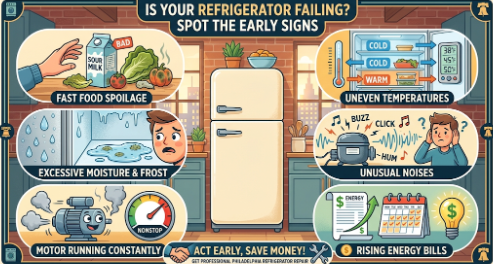
Of all the appliances in a Philadelphia home, the refrigerator is arguably the hardest working. It runs around the clock, every single day, keeping food safe and drinks cold without a break. Because it never truly rests, a refrigerator also tends to show wear gradually, dropping subtle hints long before it fails completely. Homeowners who learn to read those early warning signs can act in time to save both their food and their wallet.
Catching a refrigerator problem early often means the difference between a small, affordable part replacement and a full compressor failure or a total replacement. Here are the key signals to watch for at home.
Food Spoiling Faster Than Usual
One of the earliest and most telling signs of trouble is food that goes bad before its time. If milk sours a few days early, produce wilts quickly, or leftovers do not keep as long as they used to, your refrigerator may not be holding the right temperature. The ideal fridge temperature sits at or just below 40 degrees Fahrenheit, and even a few degrees warmer can accelerate spoilage.
Before assuming the worst, check that the temperature settings have not been bumped and that the vents inside are not blocked by food. If everything looks right and food still spoils fast, the appliance is likely struggling with cooling, a sign worth investigating promptly.
Inconsistent or Uneven Temperatures
A healthy refrigerator maintains a steady, even temperature throughout. When some areas feel noticeably colder or warmer than others, or when the temperature seems to swing, a component is beginning to fail. Common culprits include a faulty thermostat, a struggling compressor, worn door seals, or a failing defrost system.
You can test this yourself by placing a thermometer in different spots inside the fridge over a day. Big variations from shelf to shelf point to a circulation or cooling problem. Freezers deserve the same check, since frost building up unevenly or ice cream that keeps softening are both early clues that something is off.
Excessive Condensation or Frost
Moisture where it does not belong is another red flag. If you notice water droplets forming on the interior walls, or condensation building up around the door, the seals may be failing or the internal humidity control may be struggling. Left unchecked, this can lead to mold growth and further cooling problems.
Frost is a similar warning. A light layer in a frost-free freezer, or ice building up in unusual places, often signals a defrost system issue or a door that is not sealing tightly. When you spot this early, a technician offering philadelphia refrigerator repair can usually pinpoint the cause quickly, whether it is a worn gasket or a faulty defrost heater, before it snowballs into a bigger failure.
Unusual Noises
Refrigerators are not silent, but they should hum along quietly and predictably. When new sounds appear, they are worth paying attention to. A loud buzzing, clicking, or knocking often points to the compressor or condenser fan working harder than it should. A rattling noise might mean a loose part, while a constant loud humming can signal a fan or motor beginning to wear out.
Clicking that repeats without the fridge kicking into a full cooling cycle can indicate a relay or compressor issue. None of these noises fix themselves, and they usually grow louder as the problem worsens, so treating a new sound as useful information is the smart move.
The Motor Runs Constantly
A refrigerator naturally cycles on and off throughout the day to maintain its temperature. If you notice the motor running nonstop, that is a sign it is straining to stay cool. This often traces back to dirty condenser coils, a failing door seal, or a component that is wearing out.
A fridge that runs constantly not only wears itself down faster but also drives up your electricity bill. If your energy costs have crept upward for no obvious reason, an overworked refrigerator could be the hidden cause. Cleaning the coils sometimes helps, but if the constant running continues, it is a signal that professional attention is needed.
Warm Exterior or Overheating
It is normal for the sides or back of a refrigerator to feel slightly warm, since that is where heat is released. However, if the exterior becomes hot to the touch, the appliance may be overheating. This can point to condenser coils clogged with dust or a cooling system under serious strain.
Overheating is one of the warning signs you should not ignore, because a compressor that runs too hot for too long can fail outright. Pulling the fridge away from the wall and vacuuming the coils is a good first step, but persistent heat calls for a closer look from a qualified technician.
Water Pooling on the Floor
Finding water underneath or around your refrigerator is a clear signal that something needs attention. The cause might be a blocked or frozen defrost drain, a damaged water line feeding the ice maker or dispenser, or a cracked drain pan. While a small puddle may seem minor, it can quietly damage your flooring and, if it reaches an outlet, create an electrical hazard.
Leaks tend to worsen over time, so wiping up water repeatedly is a sign to investigate rather than ignore. Many leak causes are inexpensive to fix when caught early.
Rising Energy Bills
Sometimes the clearest warning sign shows up not in the kitchen but on your utility statement. An aging or malfunctioning refrigerator has to work harder to do its job, quietly consuming more electricity. If your bills climb while your habits stay the same, a struggling fridge is a likely suspect.
Tracking your energy costs month to month can reveal a declining appliance before it fails completely. Combined with any of the other signs above, a mysterious bump in your electric bill is worth taking seriously.
Acting Early Pays Off
The common thread across all these signals is simple, refrigerator problems rarely stay small if ignored. A worn seal becomes a failed compressor, a minor leak becomes water damage, and a strained motor becomes a total breakdown. Homeowners who respond to the first symptoms almost always spend less and keep their refrigerators running longer.
For Philadelphia residents, help is close at hand. Certified technicians can diagnose most refrigerator issues quickly, source the right parts, and often complete same-day repairs. So the next time your fridge hums a little too loudly or your groceries spoil a little too soon, treat it as a heads-up. Listening to your refrigerator early is the cheapest and smartest repair strategy there is.







Comment