Technology stories often focus on invention. A new platform. A new machine. A new process. A new breakthrough. Yet some of the most valuable industrial transformations occur not when companies invent something entirely new, but when they improve consistency.
The ability to produce the same result repeatedly, at scale, has shaped countless industries. Manufacturing, semiconductors, pharmaceuticals, food production, and advanced materials all depend on one fundamental principle: precision creates value.
That principle may help explain an important aspect of the strategy now taking shape at RenX Enterprises Corp. (NASDAQ: RENX).
At first glance, the company appears to operate within a traditional environmental processing business. Organic materials are collected, processed, transported, and ultimately sold into agricultural and commercial markets. Viewed solely through that lens, scale appears to be the primary objective.
Recent developments suggest the company may be pursuing something more sophisticated.
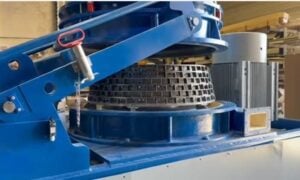
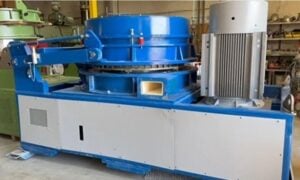
Management has outlined plans to deploy the licensed Microtec UTM 1200 Turbo Mill as part of a broader strategy to produce engineered growing media, soil amendments, and specialty substrate products. While discussions of the technology often focus on throughput and production capacity, the greater opportunity may lie in precision.
Agricultural and horticultural customers increasingly rely on inputs that deliver consistent performance. Controlled-environment agriculture, greenhouse operators, nurseries, commercial growers, and specialty cultivation facilities frequently require products that meet specific performance standards. Particle size, moisture retention, aeration characteristics, density, and uniformity can all influence how a growing medium performs.
In many cases, the difference between a commodity product and a specification-driven product is consistency.
That distinction has important economic implications.
Commodity businesses often compete primarily on volume and price. Engineered products frequently compete on performance, repeatability, and quality control. As a result, the value created through refinement and process engineering can sometimes exceed the value created through collection alone.
Recent operating updates suggest RenX is continuing to build the foundation required to pursue that opportunity.
The company recently reported a record delivery quarter at its Myakka City facility, delivering more than 65,000 cubic yards of finished mulch, compost, and wood products during the first quarter of 2026. An independent drone survey also measured approximately 185,000 cubic yards of material inventory across the site. Those figures demonstrate activity and scale, but scale alone does not explain the company’s growing emphasis on refinement.
The more interesting question may be what happens after material enters the system.
According to company disclosures, the Myakka City platform integrates organics intake, processing, screening, blending, hauling, logistics, and planned advanced milling capability. Each stage contributes to the company’s ability to transform raw materials into products that serve more specialized end markets.
That process resembles a broader trend occurring across industrial sectors.
Whether the industry involves metals, chemicals, polymers, pharmaceuticals, or agricultural products, companies often create greater value by moving closer to specification-driven production. Customers increasingly seek predictable outcomes, and predictable outcomes typically require greater process control.
Viewed through that framework, the Microtec deployment may represent more than a capacity expansion: It may represent an effort to increase the precision of the output itself.
That distinction could become increasingly important as domestic agriculture, controlled-environment growing systems, and specialty cultivation markets continue emphasizing quality, consistency, and repeatability. In those environments, precision is not simply a manufacturing objective. It becomes part of the product.
For that reason, the RenX story may ultimately involve more than environmental processing or biomass utilization. Especially as it pursues a strategy built around transforming variability into consistency.
Across many industries, that is where some of the most valuable opportunities begin.