Most investors still tend to frame agricultural infrastructure around land, fertilizer, transportation, and commodity pricing. Increasingly, however, the next major shift inside the sector may revolve around something far more technical: processing precision.
That distinction matters because modern agriculture is no longer operating entirely on traditional assumptions. Greenhouses, controlled-environment agriculture systems, nurseries, and industrial growing operations increasingly depend on engineered inputs capable of delivering repeatable performance at scale. Once agriculture begins prioritizing consistency, the technology controlling how inputs are processed becomes significantly more important.
That shift places a much different spotlight on RenX Enterprises Corp. (NASDAQ: RENX).
For much of the past year, RenX has been discussed primarily through categories like biomass recycling, sustainability, logistics, and agricultural substrates. Those narratives explain part of the business, but they overlook something increasingly important forming underneath the operational story itself: the technology layer driving the platform’s industrial scalability.
And increasingly, that technology appears central to what RenX is becoming.
The company’s recent first-quarter 2026 results reinforced that point. Revenue climbed to $3.96 million. Material sales increased more than 40% sequentially. The Logistics segment returned to profitability. Operating Adjusted EBITDA improved by approximately $239,000 during the company’s first full quarter operating on its upgraded Myakka City processing platform.
Those numbers matter because they suggest the infrastructure underneath the platform is no longer theoretical: They show that the operating system is scaling.
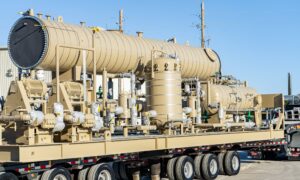
Importantly, the quarter also highlighted how much of the company’s operational momentum now depends on integrated processing capability. The upgraded Myakka City platform combines industrial grinding, shredding, screening, blending, and logistics infrastructure into a centralized throughput system capable of processing organic feedstock at much larger scale and with greater refinement consistency than traditional localized composting operations.
That distinction is critical.
Because increasingly, agricultural infrastructure is becoming a technology problem as much as a supply problem.
Modern growing systems demand engineered inputs that behave predictably across repeated production cycles. Consistency affects moisture retention, aeration, nutrient delivery, yield stability, and production efficiency. Once those variables become industrialized, the technology controlling processing precision begins carrying far greater strategic importance.
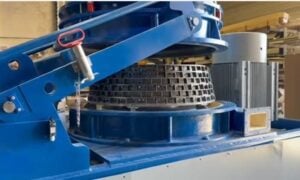
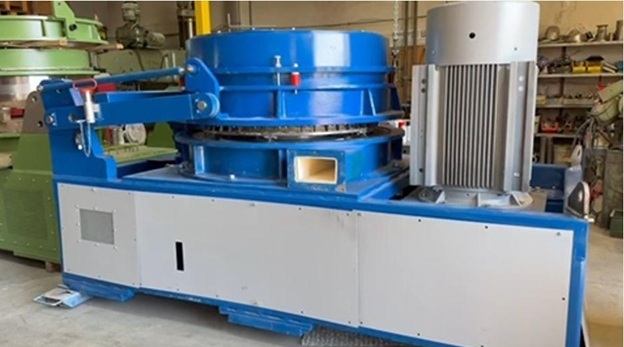
That is where RenX’s Microtec UTM 1200 Turbo Mill may become especially significant.
The system, operating under an exclusive U.S. licensing structure, is designed to process woody biomass into highly refined engineered substrate products with precise sizing and consistency characteristics. Management continues to describe the Microtec platform as the company’s largest operational catalyst for 2026, with commissioning targeted for the second half of the year.
Importantly, this is not simply a larger grinder. The broader opportunity revolves around processing control.
Traditional biomass systems often produce variable outputs because feedstock characteristics fluctuate significantly. The more industrialized agriculture becomes, the more valuable consistency becomes. Standardized substrate performance enables growing systems to scale more efficiently by reducing variability within production environments.
That is where technology quietly changes economics.
And increasingly, global supply pressures are reinforcing the value of localized processing systems capable of delivering reliable output at scale.
Roughly a third of the global fertilizer trade still moves through the Strait of Hormuz, underscoring how exposed agricultural supply chains remain to concentrated international shipping routes and geopolitical disruption. While fertilizer and engineered growing media occupy different parts of the agricultural ecosystem, the underlying lesson remains the same: dependence on fragile supply chains becomes far more visible once pressure enters the system.
That environment tends to favor regional processing platforms capable of operating with greater control and reduced dependency on imported materials.
RenX appears to be positioned directly within that transition.
Its operating model combines localized organics intake, hauling infrastructure, industrial-scale processing capability, engineered blending, and advanced milling technology into a vertically integrated system increasingly aligned with the needs of controlled-environment agriculture and engineered substrate production.
And importantly, the technology layers supporting that model are now beginning to produce visible operating leverage.
That may ultimately become one of the more underappreciated aspects of the RenX story.
Because the market still largely categorizes the company through conventional labels tied to recycling or agricultural processing. But increasingly, the company’s infrastructure appears to revolve around something broader: technology-enabled refinement systems designed to industrialize consistency across agricultural inputs.
That is a very different category.
And historically, once industrial systems combine localized supply infrastructure with proprietary processing capability and scalable throughput economics, the businesses operating those systems tend to be valued very differently from traditional commodity processors.
Agriculture may still appear traditional from the outside. Increasingly, however, the systems supporting it are becoming more engineered, more data-driven, and far more dependent on processing precision than many investors realize.
That is where companies like RenX Enterprises Corp. may ultimately separate themselves. Not simply through scale, but through the ability to industrialize consistency inside a sector where consistency itself is becoming infrastructure.