Manufacturing innovation is often associated with semiconductors, aerospace, robotics, or electric vehicles. Agriculture rarely enters that conversation. Yet one of the industry’s biggest transformations may be occurring not in the field, but inside manufacturing facilities where organic materials are being converted into increasingly engineered agricultural products.
Across industries, manufacturers are shifting from simply processing raw materials to engineering products with greater consistency, repeatability, and performance. Agriculture appears to be following that same path.
Growing media provide one example.
For decades, peat and bark have served as the foundation of commercial growing media. While those materials remain widely used, changing supply chains, transportation costs, sustainability goals, and increasingly demanding production environments are encouraging manufacturers to rethink how substrates are produced.
The question is becoming less about sourcing raw materials and more about engineering manufacturing systems capable of producing more consistent products at commercial scale.
That distinction is important.
Throughout advanced manufacturing, competitive advantages are increasingly being created not by raw materials themselves, but by proprietary manufacturing processes capable of producing higher-value products with greater efficiency and repeatability. Whether producing semiconductors, pharmaceuticals, or advanced composites, manufacturers compete through process engineering as much as the products they ultimately sell.
Agriculture is beginning to exhibit similar characteristics.
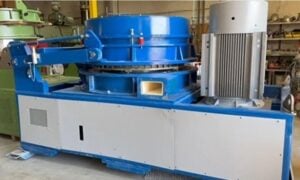
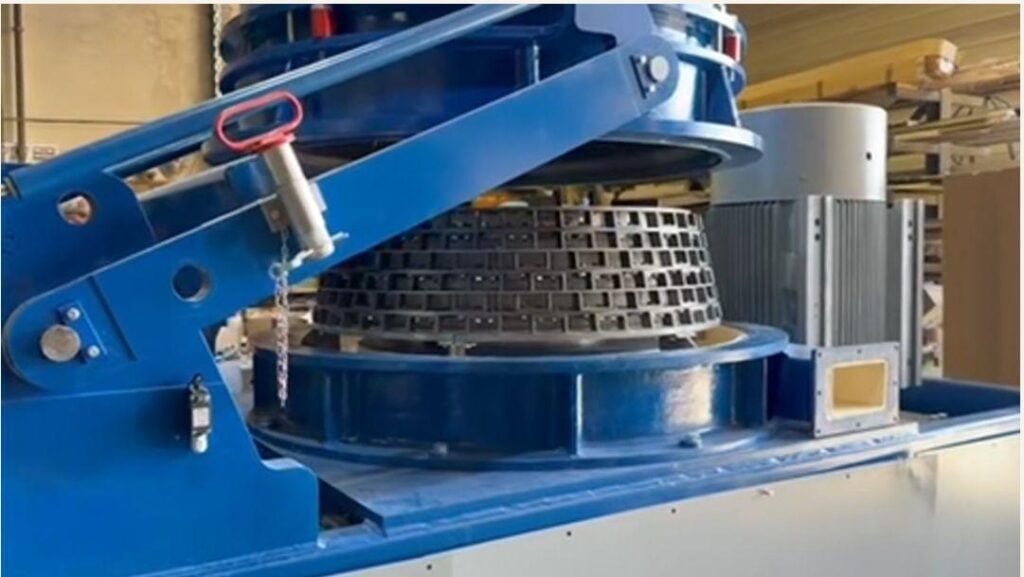
Florida-based RenX Enterprises is one company pursuing that opportunity. The company plans to commission a Microtec UTM 1200 Turbo Mill as the engine of its advanced manufacturing platform. Rather than simply processing biomass, the system is designed to convert oversize organic material into engineered substrate intended to replace imported peat and bark products, creating greater value from underutilized feedstocks.
The significance extends beyond the equipment itself.
RenX’s exclusive U.S. rights to the technology mean competitors cannot simply purchase comparable machinery and replicate the same manufacturing capability. In this case, the competitive advantage lies not only in what the technology produces, but in the proprietary manufacturing capability and scalability the technology is designed to enable.
That distinction is becoming increasingly important throughout advanced manufacturing.
Manufacturers are no longer competing solely on production capacity. They are increasingly competing through automation, process engineering, intellectual property, and manufacturing systems capable of delivering consistent performance at commercial scale. The products themselves remain important, but the manufacturing technologies behind those products are increasingly becoming the source of competitive differentiation.
Agriculture has traditionally been viewed through the lens of biology and production. Increasingly, however, it is becoming a manufacturing story as well.
As engineered growing media continue to evolve, the companies creating long-term competitive advantages may not simply be those producing agricultural inputs. They may be the companies developing proprietary manufacturing technologies capable of producing those inputs more efficiently, more consistently, and at commercial scale.