
How RenX’s Exclusive Manufacturing Technology Could Influence a Multi-Billion-Dollar Global Market

Most manufacturing technologies improve existing production methods. Far fewer create capabilities that competitors cannot readily replicate. When a company secures exclusive rights to a technology that introduces a differentiated production process, the competitive landscape can begin to shift—not because of the equipment alone, but because of the manufacturing capability that equipment makes possible.
That is the opportunity RenX Enterprises (NASDAQ: RENX) is pursuing.
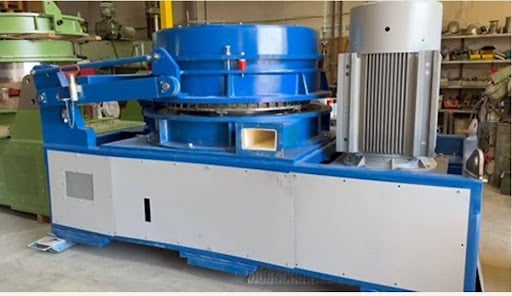
During the second half of 2026, RenX plans to commission a Microtec UTM 1200 Turbo Mill as the third stage of its manufacturing process. The system is designed to convert oversize organic material into engineered substrate intended to replace imported peat and bark products. For a company operating in agricultural inputs, that distinction matters because it turns what may otherwise be lower-value material into a higher-value manufactured product.
The technology story is not simply that RenX is adding another machine. It is that the company is building a production process that competitors cannot easily duplicate by purchasing comparable equipment. Because RenX holds exclusive U.S. rights tied to this technology, the company is positioning itself to establish a domestic manufacturing capability that is currently difficult for other U.S. producers to replicate.
That exclusivity is central to the strategic value.
Agricultural substrates may not attract the same attention as artificial intelligence, semiconductors, robotics, or advanced batteries, but they sit inside a large global market tied to commercial agriculture, controlled-environment farming, landscaping, horticulture, and soil enhancement. As growers seek more consistent products and more resilient supply chains, the ability to manufacture engineered substrates domestically becomes more important.
Traditional substrate markets have long depended on materials such as peat, bark, coir, and other natural inputs. These materials can be useful, but they also come with challenges. Supply chains can be international. Product characteristics can vary. Costs can fluctuate. Environmental pressures can increase. For commercial growers, inconsistency in growing media can affect water retention, root development, nutrient delivery, and overall crop performance.
That is why process engineering matters.
The Microtec UTM 1200 Turbo Mill is significant because it is being incorporated as a dedicated third processing stage. Rather than treating oversize organic feedstock as a limitation, RenX intends to use the technology to convert that material into an engineered substrate with more consistent performance characteristics. In manufacturing terms, the value is not just in processing material. It is in controlling the transformation from variable feedstock into a repeatable finished product.
This is where manufacturing technology becomes a competitive advantage.
In many industries, equipment ownership alone is rarely enough to create lasting differentiation. Machines can often be bought, copied, or replaced. What is harder to replicate is a complete manufacturing process that combines specialized equipment, process knowledge, feedstock management, quality control, and scalable production discipline. RenX’s advantage is that its rights to this technology may give it a protected position in developing that process domestically.
Scale is also part of the equation.
For RenX, the Microtec UTM 1200 Turbo Mill is not being positioned as a laboratory experiment or a small efficiency upgrade. It is intended to become part of a commercial manufacturing platform. If the company can integrate the technology successfully into its broader production workflow, the result could be a scalable system for producing engineered substrates from underutilized organic materials.
That possibility is what makes the story relevant beyond RenX alone.
Across advanced manufacturing, some of the most important changes occur when technology allows smaller companies to address markets far larger than themselves. A company’s market capitalization may be small, but if it controls a differentiated technology with exclusive rights and commercial scalability, its potential influence can extend well beyond its current size.
RenX fits that profile. It is a relatively small public company pursuing a manufacturing capability tied to a multi-billion-dollar global market. Its opportunity is not based solely on owning facilities or collecting feedstock. It is based on the use of exclusive manufacturing technology to create a product category that may serve as a domestic alternative to imported peat and bark products.
That is a very different kind of agricultural input story.
It reflects a broader shift in which agricultural manufacturing is becoming more technology-driven, more process-oriented, and more dependent on repeatable production systems. The companies that lead this shift may not always be the largest incumbents. They may be the companies that control the most differentiated process technology.
For RenX, the Microtec UTM 1200 Turbo Mill represents more than equipment. It represents a potential manufacturing inflection point: a way to transform underutilized organic material into engineered substrate at commercial scale while operating from an exclusive domestic position.
If agricultural input markets continue moving toward consistency, sustainability, and localized production, technologies like this could become increasingly important. The question may not be whether smaller companies can influence large markets. It may be whether exclusive manufacturing technologies allow them to do so faster than the market expects.
Further reading: How to Reduce Downtime in Manufacturing.







Comment