
Best Product Engineering Services Companies for Scaling, Modernization, and Cloud

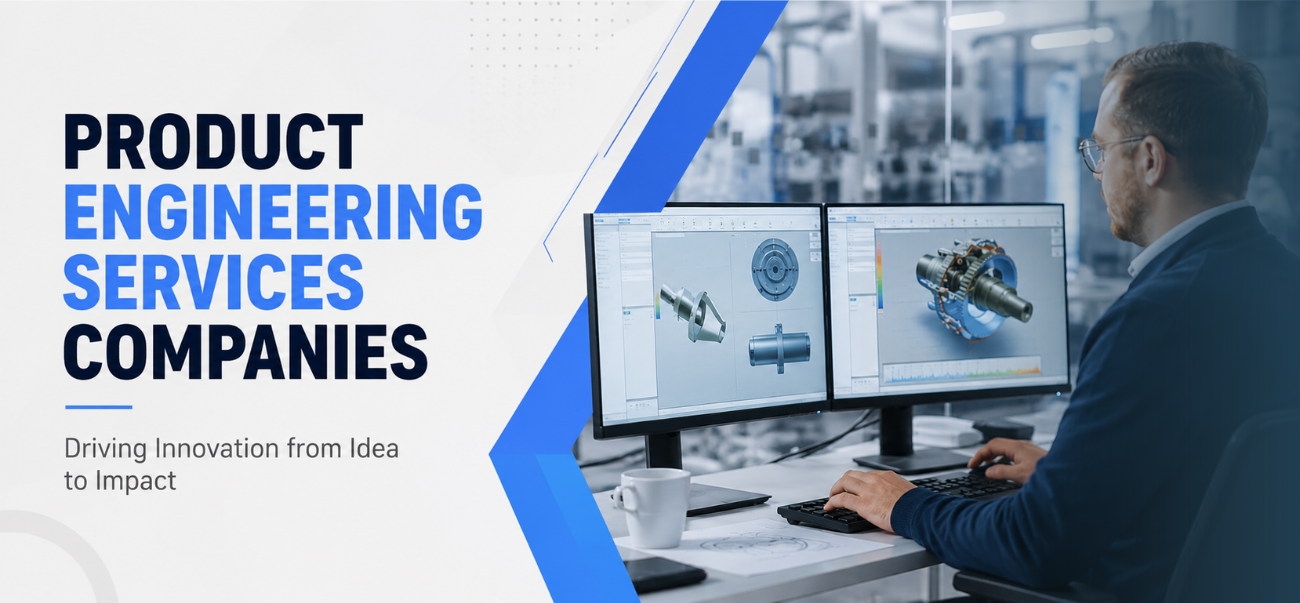
The bar for a product engineering partner has changed. Not long ago, “outsourcing development” meant handing over a spec and waiting for code. Today, the same partner is expected to share ownership of the architecture, flag scalability risks before they hit production, integrate AI where it adds value, and stay involved as the product growsю
This shift makes vendor selection harder. Below are several of the best product engineering services companies shortlisted for their technical depth, delivery models, industry focus, and verified client outcomes. Each earns its place for a different reason.
The List of Best Product Engineering Services Companies
Below are some of the best product engineering services companies to consider in 2026, based on their expertise, delivery models, and industry focus.
| Company | Founded | Team Size | Main Focus Areas | Best For |
| Softonix | 2016 | 50–249 | Product engineering, modernization, dedicated teams | Startups and SaaS companies needing flexible scaling |
| EPAM | 1993 | 10,000+ | Enterprise engineering, AI, cloud, digital transformation | Large-scale enterprise modernization |
| Simform | 2010 | 1,000–9,999 | Cloud-native development, DevOps, AI | Businesses building scalable cloud products |
| Vention | 2002 | 3,000+ | Staff augmentation, AI, cloud engineering | Fast engineering team expansion |
| Future Processing | 2000 | 250–999 | Digital transformation, enterprise software, consulting | Mid-sized and enterprise modernization projects |
| Oxagile | 2005 | 250–999 | Video streaming, OTT, AI-powered media solutions | Media and streaming platforms |
| Yalantis | 2008 | 250–999 | Custom software, cloud, DevOps, modernization | Complex long-term product development |
1. Softonix
| Founded | 2016 |
| Team size | 50 – 249 |
| Clutch rating | 5.0 |
| Primary industries | HR Tech, Automotive, eCommerce, Healthcare |
Softonix is structured for startups and SaaS teams that need more product output than their current hiring pace can support. Its 60+ engineers span the full lifecycle: early discovery, architecture, web and mobile development, DevOps, QA, and ongoing maintenance. From the first week, they’re in the same Slack channels, standups, and planning sessions as the client team, with a dedicated project manager attached to every engagement.
The firm runs 3 engagement models. It can take an MVP from first concept to a stable, scalable product; add senior engineers with specific skills to an existing team; and modernize legacy systems in stages so production stays online throughout. When a product needs stronger technical direction, Softonix can also provide fractional CTO support or conduct a focused technical audit before major decisions are made.
A notable detail is how new work starts. The first two weeks are covered by a written guarantee: if no agreed milestone is delivered in that window, the client doesn’t pay for that period.
The model is easiest to understand through long-running relationships. Autobound, for example, went from a single backend engineer to a 10‑person Softonix squad over five years, saw a sharp increase in delivery speed, and raised a $4M seed round off a stack that included a web app, AI engine, and Chrome extension built by Softonix. DriverHRIS used a 12‑person team to replace a slow, legacy HR platform with a modern 100‑screen enterprise system over several years. At CarScout, adding a Softonix business analyst between product and engineering lifted feature delivery tempo by an estimated 30–50%.
On the credentials side, Softonix holds a 5.0 rating on Clutch, maintains Top Rated+ and 100% Job Success on Upwork, and has received two Clutch B2B awards.
- Best for: startups and SaaS companies that want a flexible engineering partner for new builds, modernization, or ongoing product work, and prefer a low‑risk way to start.
- Potential limitation: the bench is smaller than at tier‑1 enterprise vendors, so it’s not the best choice for programs that need 50+ engineers working in parallel.
2. EPAM
| Founded | 1993 |
| Team size | 10,000+ |
| Clutch rating | 5.0 |
| Primary industries | Financial Services, Healthcare, Retail, Travel, Medical |
EPAM is one of the largest software engineering companies globally, with more than 62,000 employees across 55+ countries. It focuses on enterprise platform engineering, cloud transformation, AI, data platforms, and modernization for heavily regulated industries. Its delivery model leans on documentation rigor, audit‑ready processes, and mature DevOps.
Key industries include financial services, life sciences, healthcare, and retail. EPAM is listed on the S&P 500 and files financials with the SEC, which matters for enterprise procurement teams with strict vendor‑risk requirements.
- Best for: large enterprises that need engineering rigor, traceable audit trails on every release, and a vendor with the financial stability and governance structure to support multi‑year programs.
- Potential limitation: enterprise rates in the ~$150–$199/hour range make EPAM a poor fit for startups or engagements under $100K.
3. Simform
| Founded | 2010 |
| Team size | 1,000 – 9,999 |
| Clutch rating | 4.8 |
| Primary industries | Advertising and marketing, SaaS, FinTech, Legal |
Simform is a digital engineering firm focused on cloud‑native product development, DevOps, AI/ML, and data engineering. It has particular depth on AWS, Azure, and Kubernetes‑based architectures. Simform holds Azure Expert MSP status (a distinction held by fewer than 105 companies among 400,000+ Microsoft partners) and is ranked among the top 10 software development companies on G2 for 2025.
The company uses a co‑engineering model, embedding its engineers alongside client teams rather than running a separate track. Services span product and platform engineering, cloud and DevOps, data engineering, AI/ML, and experience engineering across fintech, healthcare, retail, and SaaS.
- Best for: organizations building scalable cloud‑native products on AWS or Azure, or teams that need dedicated engineering capacity with solid DevOps and infrastructure depth.
- Potential limitation: some Clutch reviews mention missed deadlines and periods of unresponsiveness on certain projects; you’ll want to check references specifically for engagements that match your stage and complexity.
4. Vention
| Founded | 2002 |
| Team size | 3,000+ |
| Clutch rating | 4.9 |
| Primary industries | AdTech and MarTech, FinTech, HealthTech, SaaS |
Vention provides software engineering, AI development, cloud services, and staff augmentation for startups and enterprises. With more than 3,000 engineers working across web, mobile, cloud, DevOps, cybersecurity, and AI, its core pitch is fast team expansion and flexible engagement models.
Named clients include PayPal and IBM. Vention works in fintech, healthtech, adtech, eCommerce, SaaS, and more, and supports both short‑term augmentation and long‑term dedicated product teams.
- Best for: companies that need to scale engineering capacity quickly without long recruitment cycles, or enterprises running distributed product development across multiple technology areas.
- Potential limitation: a broad service and industry footprint means less depth in very niche or highly regulated verticals compared with specialized boutiques.
5. Future Processing
| Founded | 2000 |
| Team size | 250 – 999 |
| Clutch rating | 4.7 |
| Primary industries | Financial Services, Insurance, Advertising and marketing, Media, Logistics |
Future Processing is a Poland‑based technology consultancy and software delivery partner. It offers digital product development, cloud solutions, data engineering, AI/ML, and cybersecurity services, serving primary industries such as fintech, healthcare, automotive, media, and utilities.
The company positions itself around long‑term technology partnerships, outcome‑based delivery, and consulting‑led digital transformation. It’s particularly strong for mid‑sized and enterprise clients that are modernizing internal systems, improving delivery processes, or building data and AI capabilities alongside existing product development.
- Best for: mid‑sized and enterprise companies that want a consulting‑oriented engineering partner for long‑term modernization, data engineering, or AI integration.
- Potential limitation: less oriented toward early‑stage startups and fast, MVP‑only builds than some product‑focused shops.
6. Oxagile
| Founded | 2005 |
| Team size | 250 – 999 |
| Clutch rating | 4.9 |
| Primary industries | Media, Entertainment, AdTech, Healthcare, Sports |
Oxagile is a custom software development company with a deep focus on video and media technology. Since 2005, it has delivered 400+ projects across multi‑platform video streaming, AdTech, real‑time communication, AI, big data, and business intelligence. Named clients include Google, Disney, Discovery Communications, Thomson Reuters, Vodafone, and MIT.
Its core strength is media engineering: OTT platforms, live streaming, video‑on‑demand, WebRTC‑based real‑time communication, and AI‑powered media workflows such as MAM orchestration and computer vision. Clutch reviews highlight both flexibility in team size and strong technical capability on complex streaming and media projects.
- Best for: media companies, broadcasters, streaming platforms, and AdTech businesses that need deep expertise in video technology, OTT delivery, or AI‑driven content systems.
- Potential limitation: very specialized in media and video; a weak fit for organizations outside those domains that are looking for broad, general‑purpose product engineering.
7. Yalantis
| Founded | 2008 |
| Team size | 250 – 999 |
| Clutch rating | 4.8 |
| Primary industries | Automotive, Manufacturing, Healthcare, Logistics, FinTech |
Yalantis is a software engineering and IT consulting firm with more than 500 engineers covering custom software development, cloud and DevOps, AI, cybersecurity, IoT, high‑load systems, and business intelligence. Named clients include Toyota Tsusho, Zillow, KPMG, and RAKwireless.
The company is an official AWS partner and ISO‑certified, with a strong focus on fintech, healthcare, supply chain, and transportation products. Public sources note that 96% of clients report satisfaction, and 15+ partners have worked with Yalantis for 7+ years. Clutch reviews repeatedly mention engineer continuity: the core team that starts a project is usually the one that finishes it.
- Best for: companies building complex custom platforms in data‑heavy or regulated industries that need a long‑term engineering partner with verifiable retention and named references.
- Potential limitation: some clients note that upfront communication around timelines and risk planning could be more detailed at project start. The firm is primarily oriented toward mid‑sized and enterprise work, and is less suited to very small or short, MVP‑only engagements.
Why Companies Hire Product Engineering Partners
The decision to bring in an external engineering partner is almost never just about headcount. These are the forces usually behind it.
Faster delivery without a hiring cycle
Hiring a senior backend engineer can take close to 3 months through a normal recruitment process. A DevOps specialist or cloud architect often takes longer. A product engineering partner compresses that to days: the team already exists, already works together, and can plug into your workflows from week one. For a roadmap under pressure, that can be the difference between shipping this quarter and shipping next year.
Access to expertise that doesn’t exist internally
Building an AI feature, migrating a monolith to microservices, setting up a Kubernetes‑based CI/CD pipeline, or navigating HIPAA compliance all require people who’ve done it before. Most product teams don’t have that depth in every area. External partners bring it without asking you to hire, train, and retain specialists you may only need for one phase of the product.
Scaling without disruption
Priorities change: a launch date moves up, a new market appears, or fresh funding lands. Engineering demand can double overnight. A strong partner can add people to an active engagement in days and scale back just as quickly if priorities shift. Internal headcount decisions rarely move that fast in either direction.
Reducing hiring pressure on the business
Every unfilled senior role slows delivery and strains the engineers you already have. External teams absorb some of that load without recruiter costs, equity packages, or the long onboarding curve that comes with full‑time hires.
Modernization without stopping development
Most companies can’t put feature work on hold to rebuild their platform. Product engineering partners with modernization experience to handle this through incremental change: breaking a monolith into services over time, moving infrastructure to AWS or Azure in stages, or chipping away at technical debt inside active sprints. The product stays online, and the roadmap keeps moving while the foundation improves.
Red Flags to Watch For
Most problems with product engineering vendors are predictable. They tend to show up in the same places, at the same stages, for the same reasons. Here’s what to look for before you sign.
Vague delivery processes
Ask directly: how do you run sprint planning? Do clients have direct access to the project tracker? How are blockers escalated, and how fast? If the answer is “we’re very agile and flexible,” they likely don’t have a real process. Structured teams can describe exactly how they work—tools, cadence, reporting frequency, and the main point of contact.
No modernization experience
Most products eventually need more than just new features due to cloud migration, legacy rebuilds, debt reduction, or performance work under real load. A vendor that has only built greenfield products will be learning modernization on your time. Ask for a specific case where they took over an existing codebase and improved it without rewriting everything from scratch.
Weak communication
Slow pre‑sales replies are a good warning sign. If it takes 3 days to get an answer before a contract is signed, expect the same—or worse—once the project is underway. Look for a named point of contact, communication patterns that work in your time zone, and a clear escalation path when something breaks, not just a generic inbox.
Timelines that sound too good
If someone promises a complex SaaS platform in 6 weeks with no discovery phase, they’re either planning to cut corners or haven’t understood the scope. Reliable partners push back on unrealistic dates, ask detailed questions before estimating, and build in a buffer based on experience.
No post-launch model
Ask what happens the week after launch. Who owns production incidents? What’s the response time for critical bugs? Is there a defined maintenance and monitoring setup, or does the engagement simply end at deployment? A vendor with no post‑launch model will hand over the code and vanish, and you’ll be back in procurement the next time you need help.
Summing Up
The seven companies in this guide aren’t interchangeable. They serve different stages, operate at multiple scales, and bring unique strengths. The “right” choice depends on where your product is today, what your team can credibly own, and which partnership structure works within your organization.
- Softonix is tuned for startups and SaaS teams that want an embedded engineering squad, fast onboarding, and a low‑risk way to start, backed by a written guarantee.
- EPAM is built for large enterprises that need audit‑ready delivery, deep experience in regulated industries, and the governance profile of an S&P 500 vendor.
- Simform is the most natural fit here for cloud‑native work on AWS or Azure, combining Azure Expert MSP status with strong DevOps depth.
- Vention suits companies that need to ramp engineering capacity across web, mobile, cloud, and AI quickly, without sitting through a long hiring cycle.
- Future Processing is a better fit for mid‑sized and enterprise clients running multi‑year modernization or digital transformation programs with a consulting‑heavy flavor.
- Oxagile is the specialist on this list for media, broadcast, and AdTech teams that live on video streaming, OTT, and AI‑driven content systems.
- Yalantis focuses on long‑term builds in data‑heavy and regulated spaces, backed by strong client retention, named enterprise references, and AWS/ISO credentials you can verify.
Before you speak with any of them, write down what a good first 90 days looks like, and ask for references from clients at a similar product stage.







Comment