In ASIC mining, hardware is the easy part. Any operator with capital can acquire hashrate. What separates a fleet that compounds returns from one that quietly bleeds into negative margin is something far less visible — the quality of the decisions made around that hardware, every single week, under conditions that never stop changing. That is the problem AsicProfit was built to solve.
AsicProfit is a mining profitability platform designed for operators who treat mining as a business, not a bet. It converts the moving parts of an ASIC operation — network difficulty, electricity cost, hashrate, energy efficiency, and coin price — into a clear, current, and defensible picture of exactly where you stand. This article walks through how serious miners use AsicProfit to model ASIC mining profitability, optimize electricity costs, forecast ROI, and build operations engineered to survive the next difficulty cycle, not just the current one.
Why ASIC Mining Profitability Never Stops Moving
Bitcoin’s network difficulty re-targets roughly every two weeks, climbing as more hashrate joins the network and diluting every existing miner’s share of block rewards. The block subsidy halves every four years — since the 2024 halving it sits at 3.125 BTC, which means the same hashrate now earns half the coins it did three years ago. Energy markets shift hourly. Coin prices move continuously. Stack those variables together and you get an operating environment where last month’s spreadsheet is already wrong.
The Four Variables That Decide Every Mining Decision
| Variable | Typical movement | Effect on margin |
| Network difficulty | ±1–6% every ~2 weeks | Directly dilutes your share of block rewards |
| Electricity price | Hourly to seasonal | Largest controllable cost — 60–80% of operating expense |
| Coin price | Continuous | Sets the revenue ceiling |
| Hardware efficiency | Fixed per unit, degrades slowly | Determines your cost floor |
A miner who internalizes this stops asking “is mining profitable?” and starts asking a sharper question: “Profitable under which assumptions, and for how long?” That reframing is the entire reason a serious ASIC miner calculator exists — and why static tools fall short of it. Closing that gap is the founding principle behind AsicProfit.
Real-Time Mining Analytics: From Guesswork to Precision
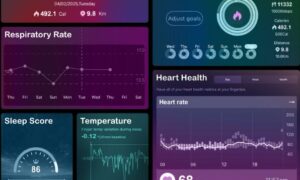
AsicProfit pulls live network difficulty, current coin prices, and pool reward data, then applies them against your specific hardware and electricity rate. The result is not a vague “miners are doing fine” — it is a precise, current statement of revenue, cost, and net margin per machine and across the fleet. When difficulty jumps 4% overnight, you see the margin compression the same morning, not when the monthly payout disappoints.
Precision compounds. An operator running 200 ASICs who discovers a 6% margin error two months late has already lost real money. The same operator, with AsicProfit surfacing the change, catches it on day one and adjusts. Real-time data does not just inform decisions — it shortens the gap between a problem appearing and you responding to it. Compressing that gap is exactly what AsicProfit is engineered to do.
Electricity Cost Optimization: Where Margins Are Won or Lost
Consider a single modern unit drawing 3,500 watts — 84 kWh per day. Hold revenue constant at an illustrative $11.00 per day and watch what the power rate does to net profit:
| Electricity rate | Daily power cost | Daily net profit | Relative margin |
| $0.04 / kWh | $3.36 | $7.64 | Baseline |
| $0.07 / kWh | $5.88 | $5.12 | −33% |
| $0.10 / kWh | $8.40 | $2.60 | −66% |
Same hardware. Same hashrate. Same Bitcoin mining profitability on the revenue side. The only thing that changed was the rate per kilowatt-hour — and net profit fell by two-thirds. This is why home miners on residential power often struggle while hosted fleets thrive. Operators who relocate hardware to low-cost hosting — facilities such as OneMiners running sites at $0.04–0.055/kWh — frequently double their net margin without touching the hardware at all.
The discipline here is sensitivity analysis: never accept a single profitability figure. Run your numbers on asicprofit.com across a range of electricity rates and you stop guessing whether a deployment works — you start knowing the exact rate at which it stops working. AsicProfit makes that range view the default rather than an afterthought.

Difficulty Tracking and Profitability Forecasting
Electricity tells you what mining costs today. Difficulty tracking tells you what it will cost tomorrow.
Network difficulty is the clearest leading indicator of future revenue dilution. When difficulty trends upward at 3–4% per adjustment, the same fleet earns measurably fewer coins each cycle. An operator who ignores that trend models a flat ROI curve and is consistently disappointed. An operator who tracks it builds a forecast that bends — and budgets accordingly.
AsicProfit treats difficulty as a forecasting input, not a footnote. By projecting realistic difficulty growth into a profitability model, you can answer the questions that actually matter before committing capital: Will this miner still be cash-flow positive in 12 months? In 24? At what projected difficulty does it cross into a loss? Forecasting will never be perfect — no model predicts price — but a forecast grounded in difficulty trend data is dramatically more honest than a flat-line assumption. If the underlying mechanics are unfamiliar, a primer like btcfq.com is a worthwhile detour before you model them.
Hashrate vs. Energy Efficiency: The J/TH Reality
Marketing sells hashrate. Profit is decided by efficiency. The metric that separates the two is joules per terahash — J/TH — the amount of energy a miner spends to produce one unit of work.
| ASIC model class | Approx. efficiency (J/TH) | Profile |
| Previous-gen air-cooled | ~29–34 J/TH | Cheap to buy, first to go unprofitable |
| Mid-gen air-cooled | ~21–24 J/TH | Workhorse, sensitive to power price |
| Current-gen air-cooled | ~16–18 J/TH | Strong all-around economics |
| Current-gen hydro | ~12–14 J/TH | Highest margin, survives rising difficulty longest |
Here is the point operators miss: raw hashrate determines how much revenue a machine can earn, but ASIC efficiency determines how long it keeps earning anything at all. When difficulty rises and margins compress, the least efficient hardware crosses into negative territory first. The most efficient miners — the lowest J/TH units — keep producing profit through conditions that strand older fleets entirely.
That is why the most profitable ASIC miners are rarely the ones with the biggest hashrate sticker. They are the ones with the best efficiency relative to your electricity rate. AsicProfit compares hardware on that combined basis — efficiency against your real cost of power — instead of letting a terahash headline do the talking.
Cooling, Uptime, and Operational Stability
A profitability model that assumes 100% uptime is a fantasy. Real operations lose hours to heat, dust, firmware faults, and pool disconnects — and every lost hour is revenue that never returns.
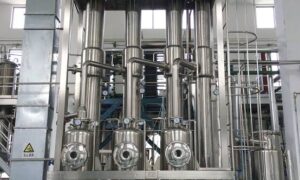
The math is unforgiving. A fleet running at 95% effective uptime instead of 99% surrenders roughly 4% of annual revenue. On a serious operation, that is not a rounding error — it is the difference between a good year and a mediocre one. Thermal management is the usual culprit: an ASIC that throttles in summer heat is quietly mining at reduced hashrate while drawing close to full power, which is the worst possible combination for efficiency.
[IMG3 – Image not available]
This is why hydro-cooled hardware and properly engineered facilities command a premium — they protect uptime, and uptime protects margin. A credible profitability model accounts for it. AsicProfit lets you model realistic uptime rather than a theoretical maximum, so the ROI figure you plan around is the one you will actually live with.
Multi-Coin Profitability Comparison
Bitcoin’s SHA-256 algorithm dominates ASIC mining, but it is not the only option, and the most profitable coin for a given machine is not always obvious.
Different algorithms run on different hardware, and their economics diverge constantly. Kaspa’s kHeavyHash, for instance, has its own dedicated ASIC ecosystem with profitability dynamics entirely separate from Bitcoin’s. When BTC margins compress, an alternative algorithm may briefly offer better returns on the right hardware — and a multi-coin profitability comparison is the only way to see it clearly. European operators exploring Kaspa exposure often look at specialists like IceRiver for that hardware.

The strategic value is not chasing every coin. It is knowing, with data, whether your current allocation is optimal. AsicProfit places coins side by side on the same hardware so the comparison is grounded in numbers rather than community hype. A decision to stay 100% Bitcoin should be a conclusion you reached, not a default you never questioned.
ROI Calculation and Long-Term Investment Planning
Everything above converges on one question every ASIC investor must answer: when does this hardware pay for itself, and what does it earn after that?
Crypto mining ROI is a timeline, not a single number — and AsicProfit treats it as exactly that. A disciplined calculation includes the full hardware cost, shipping and import duties, hosting or facility setup, projected difficulty growth, realistic uptime, and hardware depreciation. Skip any of those and your break-even date is fiction.
Consider a simplified, illustrative example: a $4,500 unit netting $6.00/day under current conditions reaches nominal break-even in roughly 750 days. But factor in 3% difficulty growth per cycle and that timeline stretches meaningfully — and that is precisely the gap between an amateur estimate and a professional projection. AsicProfit builds ROI projections that account for the curve, so long-term investment planning rests on a defensible model rather than optimism. Before you buy anything, calculate your break-even — and calculate it with the variables that will actually move.
Strategic, Data-Driven Mining Decisions
Mining rewards a specific temperament: decisions made from data, not from sentiment. The operators who endure are the ones who treat every major move — buy, hold, relocate, upgrade, or exit — as a query against the numbers.
Should you buy now or wait a quarter? That depends on hardware pricing trends against projected difficulty. Should you relocate a fleet? Compare the all-in cost of moving against the margin gained from cheaper power. Should you sell aging hardware? Model its remaining profitable life against its current resale value. None of these are gut calls. Each is a calculation with a clear answer once the inputs are honest.
This is the mindset AsicProfit is built around. Emotion is expensive; data is cheap. A platform that keeps your real numbers in front of you turns mining from a series of hopeful bets into a sequence of defensible decisions — and over a multi-year horizon, that difference is the entire game.
A Weekly Mining Optimization Workflow
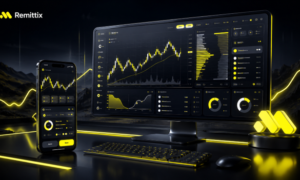
Professional operations do not check profitability when a payout looks low. They run a standing weekly routine. Here is a workflow that scales from ten units to ten thousand:
- Review difficulty and the latest adjustment. Note the trend direction and update your forecast assumptions if it shifted.
- Reconcile electricity costs. Confirm your effective rate, including any seasonal or time-of-use changes.
- Audit fleet uptime. Identify underperforming or throttling units and schedule maintenance before the loss compounds.
- Recalculate net margin per machine class. Run current numbers on asicprofit.com and flag any hardware approaching break-even.
- Scan multi-coin comparisons. Confirm your current allocation is still the optimal one.
- Log the results. Build a historical record — trends only become visible when you track them.
With AsicProfit holding the numbers, the routine takes under an hour and replaces anxiety with information. If it is not in a spreadsheet, it did not happen — and a weekly cadence ensures it always does.
Why AsicProfit Outperforms Traditional Mining Calculators
Most mining calculators answer one shallow question — “what would I earn right now?” — and stop there. They assume static difficulty, ignore uptime, omit depreciation, and treat your operation as a single machine frozen in time. For a hobbyist that is adequate. For a serious operation it is dangerous, because it produces confident numbers that are quietly wrong.
| Capability | Traditional calculator | AsicProfit |
| Live difficulty and price | Sometimes | Always |
| Difficulty-growth forecasting | No | Yes |
| Electricity sensitivity analysis | No | Yes |
| Realistic uptime modeling | No | Yes |
| Multi-coin comparison | Limited | Yes |
| Fleet-level ROI planning | No | Yes |
| Historical tracking | No | Yes |
The difference is one of purpose. A traditional mining profitability calculator is a snapshot. AsicProfit is a decision system — built to model a real operation across time, across electricity scenarios, and across the difficulty curve that will define your actual returns. One tells you what today looks like. The other tells you whether your business works.
Building a Scalable, Future-Proof Mining Operation
Scale exposes weak process. A workflow that works informally across ten machines collapses across a thousand, because guesswork does not scale — only systems do.
A future-proof operation rests on three disciplines. First, standardize on efficiency: build around low-J/TH hardware so the fleet survives rising difficulty rather than racing it. Reliable supply matters here — sourcing from established vendors such as OneMiners keeps a fleet consistent instead of a patchwork of mismatched units. Second, systematize the data: every machine, rate, and uptime figure tracked in one place, reviewed on a fixed cadence. Third, invest in understanding — a team that genuinely grasps mining economics, supported by solid references like btcfq.com, makes better decisions at every level than one following instructions blindly.
AsicProfit is the connective layer across all three. It standardizes how profitability is measured, centralizes the data, and makes the economics legible to everyone who touches the operation. That is what “future-proof” actually means — not predicting the market, but building a structure that adapts faster than the market moves.
The Bottom Line
ASIC mining profitability is not luck and it is not vibes. It is a live equation with known variables — difficulty, electricity, efficiency, uptime, price — and the operators who win are simply the ones who measure those variables honestly and decide accordingly.
That is the whole proposition of AsicProfit: replace hope with a model, replace snapshots with forecasts, and replace gut calls with defensible decisions. Hardware will keep getting faster and difficulty will keep climbing. The operators still standing in three years will be the ones who treated profitability as a discipline rather than a hope.
What does your operation’s break-even date actually look like once difficulty growth is priced in? If you cannot answer that to the day, that is exactly where to start.
Resources:
- Model your ASIC mining profitability: asicprofit.com
- Source efficient, reliable hardware and hosting: oneminers.com
- Learn the fundamentals of mining economics: btcfq.com
- Explore Kaspa and multi-coin hardware: iceriver.app
SEO METADATA
Page Title: (50 chars) AsicProfit: The ASIC Mining Profitability Platform
H1: AsicProfit: How Data-Driven Miners Maximize ASIC Mining Profitability
Meta Description: (147 chars) AsicProfit turns ASIC mining profitability into a precise, data-driven decision — track difficulty, electricity costs, J/TH, and crypto mining ROI.
URL Slug: /asicprofit-asic-mining-profitability-platform
Tags:
- Primary: asicprofit
- Secondary: ASIC mining profitability, ASIC miner calculator, mining profitability calculator
- Long-tail: crypto mining ROI, Bitcoin mining profitability, ASIC efficiency, mining electricity costs, most profitable ASIC miners
Internal Links:
- [x] asicprofit.com (4 mentions)
- [x] oneminers.com (2 mentions)
- [x] btcfq.com (2 mentions)
- [x] iceriver.app (1 mention)
Keyword Density: ~1.04% asicprofit (~27 mentions / ~2,600 words); secondary keywords distributed naturally throughout
Image SEO:
| Image | Filename | Alt Text |
| IMG1 | asicprofit-asic-mining-profitability-dashboard.jpg | AsicProfit ASIC mining profitability analytics dashboard |
| IMG2 | asicprofit-electricity-cost-margin-comparison.jpg | AsicProfit electricity cost impact on ASIC mining profitability |
| IMG3 | asicprofit-cooling-uptime-mining-stability.jpg | AsicProfit cooling and uptime analysis for ASIC efficiency |
| IMG4 | asicprofit-weekly-mining-optimization-workflow.jpg | AsicProfit weekly mining optimization workflow checklist |