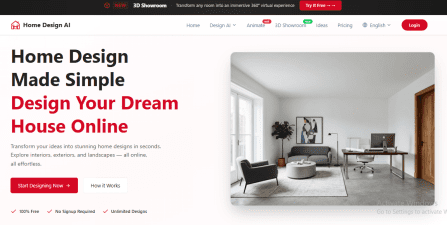
Within the ever-changing home and kitchen design space, these new technologies are transforming the process of integrating new technologies. You don’t even need to deal with the painstaking design processes or even hire a new design layer. AI kitchen design and AI home designs allow you to take a functional design and turn it into an elegant, sophisticated space with a couple of clicks. One of the most exciting parts of using these AI design tools is the ability to get design recommendations, and this is all done in a matter of minutes.
In this article, you will see the conveniences of AI tools and how they can offer an AI-generated design to your home or kitchen, giving you plenty of time and patience.
Effortless Home Design: How AI is Changing the Way We Decorate
The process of designing the interior of a home can be exciting. However, some elements of this process can be challenging, and this is even truer when you do not know what to include in your design. Home design ai powered can reduce ambiguity in the home design process.
It can do this by offering suggestions focused on individual rooms, improvements to the layout, and enhancements to the space’s aesthetics. These tools provide recommendations tailored to your individual taste by evaluating the space’s proportions and dimensions, layout, and the various roles it serves.
Perhaps the most exciting feature of the tools is the ability to create these designs in real time. You can experiment with different colours, styles, fabrics, and placements to achieve your desired aesthetic.
Crafting Your Perfect Home with AI: Personalisation at Its Best
What is greatly appreciated from AI kitchen design and AI home design tools is the ability to create a personalised experience around your home. The AI-powered tools understand that all homes are different and respond to your vision with guides that help to achieve the desired home aesthetic. Whether you like minimal, farmhouse, or industrial, the AI tools are flexible to your needs and styles.
They are also not frameworks or drafts of home designs. They understand the space you have available. They also understand what type of room you are working with, whether it be a living room, bedroom, or office, and tailor their designs to reflect the function of the room.
AI Kitchen Design – Transforming Your Culinary Space Into Art
The remodel AI design tools for kitchens are game-changers. Remodelling a kitchen can become complicated because the kitchen is often seen as the most important part of the home. AI design tools simplify this by creating layouts for the kitchen that can be both stylish and help with the flow and ease of work within the kitchen.
When considering efficiency and ease of use, the technology focuses on counter space, the layout of the kitchen, the purpose of the kitchen, and the placement of storage units. For example, the AI might suggest a kitchen work triangle because the sink, stove, and fridge are conveniently positioned.
AI kitchen design tools can also be used to help design with your favourite look, and to narrow down materials and finishes to your choice.
AI Home Design Tools – Quickly and Easily Make Adjustments
AI Home Design tools offer you the ability to be as flexible as you want with customisation. Adjustments are easy to make, especially if you are starting from a newly uploaded kitchen or home photo, or if you’re starting with a blank space.
You can modify your layout easily, in addition to being able to swap furniture and play around with design aspects. You can also adjust things like colour, texture, and lighting. If you are struggling to find an ideal balance between how the space looks and how it functions, AI tools can recommend design options that cater to your lifestyle and personal preferences.
This is important for spaces like kitchens, where the design is centred around how the space is used. AI tools will let you view different options like moving your sink closer to your stove, or having a bigger pantry and more counter space.
Save Time and Money: The Financial Benefits of Using AI Design Tools
One reason why AI home and kitchen design tools become useful is through the amount of time and money you save. Traditional interior design and kitchen remodelling can become time-consuming and expensive because of the consultations, expert hires, and sample purchases.
AI design tools allow you to bypass these stages almost entirely and obtain instant design ideas for a fraction of the cost. Furthermore, the ability to generate multiple design ideas and explore variants for free gives the opportunity for unlimited creativity. This type of cost-effectiveness works especially well for DIY enthusiasts and anyone seeking to make a quick change in their home design, without expending too much money.
The Future of Home and Kitchen Design: AI’s Role in Tomorrow’s Homes
The outlook for the design of homes and kitchens with artificial intelligence in the upcoming years is promising. New tools are expected to emerge that can perform design generation and enhance AR assistance, allowing for a walk-through of the spaces in the home before the commencement of work.
The expectation is that, with time, homeowners will be able to alter and control home designs, making adjustments in response to changes in lighting, temperature, and room utilisation. This is made possible by the expected integration of artificial intelligence with pre-existing smart home systems.
Currently, AI design tools provide users with value in the form of customised designs, improving the time related to the design, and accessibility of design tools to the public.
Transform Your Home and Kitchen in Minutes
AI-driven technology is a great way to remodel your home and kitchen. It’s fast and won’t break the bank. Whether you’re looking to redesign a room or remodel your entire home, AI kitchen and AI home design tools take the hassle out of the process. It allows you to focus on what matters most. It’s at your fingertips to generate design ideas and layouts, customise colours and materials, and choose furniture.
The tools are user-friendly, allowing anyone to make their dreams a reality. Out with the drab design decisions, and in with a functional home that reflects your style.