
22 billion hryvnia in donations in a year: monobank’s head of products Vitalii Ohnivets on the service that helps Ukrainians

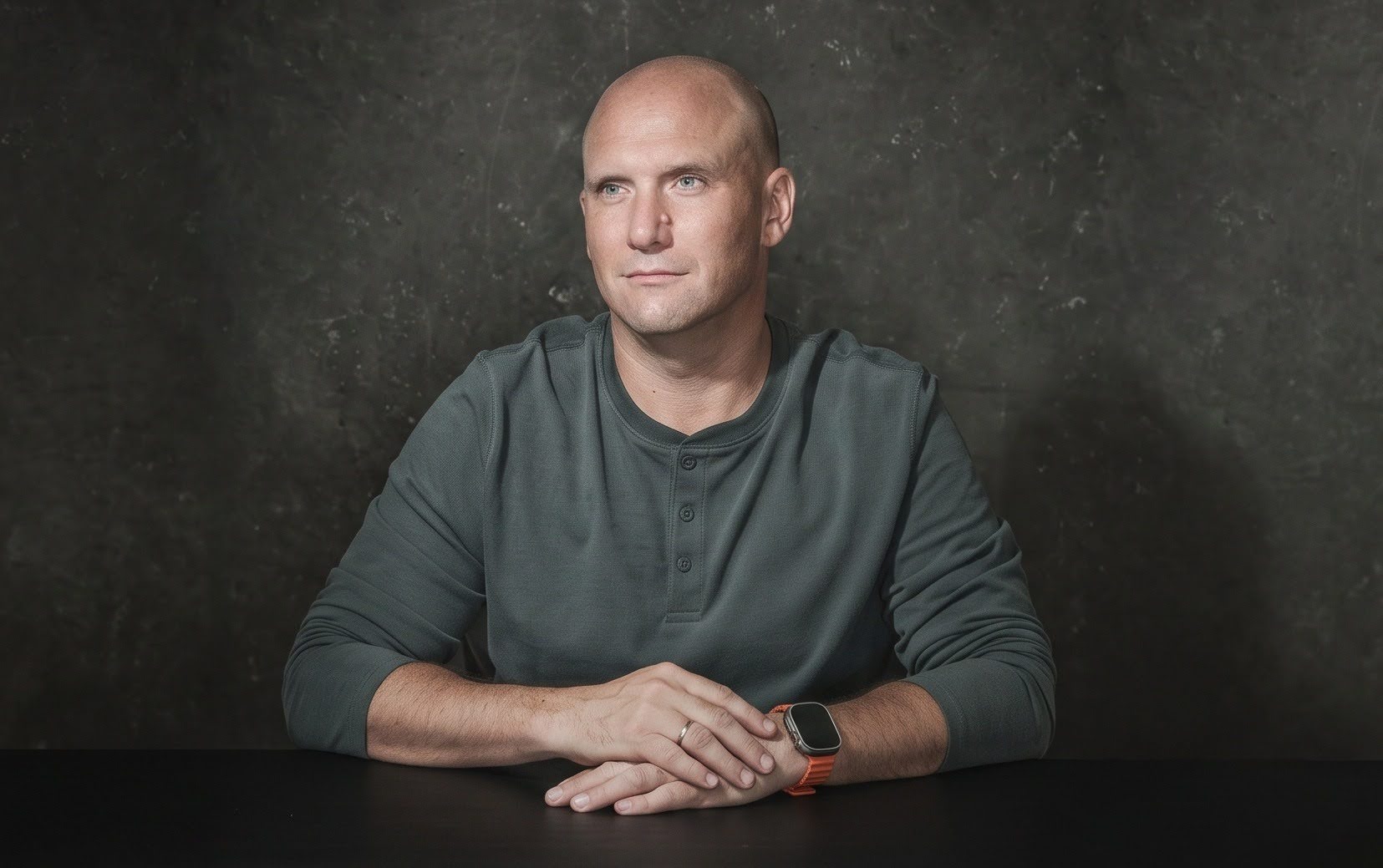
On 1 June 2026 consumer lending joined the list of products Vitalii Ohnivets is responsible for. Before that came deposits, investment services and “Banka”, a fundraising platform with an audience of more than 10.5 million people.
Ohnivets works as Chief Project Manager and Product Owner at Fintech Band, the Ukrainian company behind the mobile bank monobank. He built the deposit business from scratch; the portfolio now exceeds 30 billion hryvnia.
Ohnivets came into banking technology in 2004: about to start work as an engineer at a plant, he got an offer from a bank and took it. We talked about how financial products for a mass audience are put together.
Vitalii, hello. You are responsible for several monobank products at once: deposits, investment services, Banka and, since 1 June, lending. For a reader who is seeing these names for the first time, what does each of them do?
Good afternoon. Deposits and investment services do what their names suggest: a person puts money into an account at interest, or buys securities through the app. Banka works differently: it is an account inside the app that a customer opens for a specific purpose. Anyone can send money to it through a link — that is how people collect for a present, for medical treatment, for charity.
Lending sits apart from all three. With deposits and with Banka the money comes from the customer, and the main question here is trust. In lending the bank gives the money first, and the main question is risk assessment. Speed of attracting customers gives up first place to the quality of the decision on each application.
You built monobank’s deposit product from scratch in 2017. It now has more than 200,000 customers and a portfolio of over 30 billion hryvnia. How did that work start?
By 2017 I had spent thirteen years on deposits at a classic bank and knew well what irritates a customer. The biggest irritation was having to come to a branch and sign papers for an interest rate a person can work out in a minute.
We took out of the process everything that required physical presence. Then the arguments about terms began. A product that looks simple takes more calculation than a complex one: every simplification for the customer is covered by someone on the bank’s side.
One of your deposits ties the rate to the customer’s physical activity. It was written about outside Ukraine. How did that design come about?
We were looking for a reason for the customer to open the app more often than once a quarter. Steps fitted: the phone counts them, the number updates every day, and people are already used to looking at it.
We tied the number of steps to an add-on to the rate and capped the add-on, so that the funding cost stayed within the model. As far as I know, nobody had made a deposit like that before us.
“Banka” was conceived as a service for collecting money between friends. Donations in the tens of billions of hryvnia now pass through it. What had to be rebuilt when the purpose changed?
At first a few dozen people chipped in to one collection. After the full-scale war began, people from all over the country started coming to single collections at the same time.
We rewrote everything that handles parallel operations on one account, and separately the display of the total, because it kept changing. Tasks appeared that the product had never had before: checking collections for fraud, public visibility of the result, work with volunteer organisations. The interface has barely changed; the mechanics underneath have been rewritten completely.
So the team found out about the new load after the fact?
Yes. We had no plan for that scenario.
In 2025 users created more than 5 million “Bankas” and collected more than 75 billion hryvnia through them, about 22 billion of that in charitable donations. What do those numbers mean for the team in daily work?
They mean that any mistake in a release becomes visible within minutes. We roll out changes in parts and keep the ability to go back to the previous version quickly.
They also change the conversation with the regulator and with compliance. A service of that size is already discussed as a separate payment practice, and the level of that conversation is different.
You launched the first retail service in Ukraine for buying war bonds through an app, and a service for trading foreign securities together with EXANTE. What turned out to be the hardest part?
The purchase process itself. Government bonds used to be bought through a broker: a separate account, a signature, a set of terms you had to work through. Our task was to bring that down to a few taps in the app.
We broke the process down step by step and left the customer only the actions without which the purchase cannot go through. The technical part of the service turned out to be simpler than that work.
You say that regulatory constraints are built into the product from the very start. What does that look like in practice?
At the start we sit down with the lawyers and with compliance before we sit down with the designers. First we write out what the law forbids, what it requires and what it leaves to our discretion.
The product is then assembled inside that frame. It is cheaper that way: reworking a finished interface for a requirement you learn about at the end costs the team several weeks.
We have also worked with the markets of Georgia, Latvia and Cyprus, where the set of requirements is different. The habit of starting with constraints came from there.
How do you decide that a new feature is really needed? Product teams usually have a conflict between what the statistics show and what users ask for.
We always start with one question: what customer problem are we solving. Until there is an answer to that, it is too early to discuss the feature.
Then we look at two signals and keep them apart. Requests show where a person finds it inconvenient right now. Statistics show what they actually do in the app.
When the two signals match, that is a good reason to build. When they diverge, it means we have misread the task, and then we go and talk to customers directly.
We fix the success metric before launch, otherwise after launch there will always be some number that looks good.
Does the same scheme apply to lending?
Lending is the bank’s core business, a product with a long history. The main thing here is to keep experimenting: to look for new niches and to increase the product’s profit.
You name the independence of your specialists as one of your working principles. Where is the line between independence and loss of control?
The line runs along the agreement about the result. The team decides for itself how to do the work and does not clear every step with me. What gets cleared with me is what counts as done and by what deadline.
If the result diverges from the agreement, we go through the reason once and fix the process. Control in that scheme moves out of daily management and into setting the task.
You have worked from Texas since 2022, and the team is spread across several countries. What had to change in your processes?
There are fewer conversations and more written decisions. What used to be settled in five minutes at someone’s desk is now put in writing: the task, the options, the choice, the reason for the choice.
That is slower now and faster later — six months on, nobody argues about why something was done this way. The time difference has added discipline. We have a few hours of overlap, we spend them on discussions and do the rest asynchronously.
Your products have won industry awards: the Code & Create International Digital Innovation Award 2026, the DOU Awards, the PaySpace Magazine Awards and FinAwards. What does an outside assessment give a product team?
Inside the company we compare ourselves with our past selves, and that comparison stops working quickly. A jury looks at the product next to other people’s solutions and asks questions we have not asked ourselves.
Joint programmes with Visa and Mastercard have a similar effect: there the product is discussed by people who see dozens of markets at once.
You hold the Fellow grade at the Association for Project Management. What does membership of a British association give a specialist who works with the Ukrainian and the American markets?
A common language for describing the work. Project and product practice in Britain is more formalised than ours, and that is convenient: when people work from different countries, arguing about terminology is expensive.
The grade is also confirmed by experience and results, and selection of that kind is useful in itself — you have to lay out what you have done against external criteria.
The next project is a tax service for the American market. Why taxes?
Because it is a mass task that most people solve through an intermediary and with an unpleasant feeling. I know it from deposits twenty years ago: the same stack of papers, and payment to a specialist for something that can be automated.
The product work here is the same: break the process down, take out the steps that require a person to be present, leave a clear result. Experience with a mass product helps — I know how a product like that behaves under load.
You came into banking from an engineering degree, having almost signed on at a plant. Has engineering education helped anywhere?
It gave me the habit of looking at a product as a system with connections and loads. The screens in that picture are the top layer.
The same place gave me a rule I still use: count the consequences of a failure before the convenience. My first manager at the bank compared our work to a rocket launch: the mistake can be small, but the consequences are large.
A short question at the end: what do you consider the hardest part of product work?
Giving up ideas that the team likes and the numbers do not confirm. It happens often, but it is exactly what helps us make better products over the long run.







Comment