Rail transportation is evolving as cities and governments look for safer, more efficient, and more sustainable ways to move people and goods. As modern trains become lighter, faster, and more technologically advanced, material selection has become an important part of railway engineering. Aluminum extrusion, in particular, has emerged as a practical solution for producing structural components that combine low weight, strength, corrosion resistance, and design flexibility.
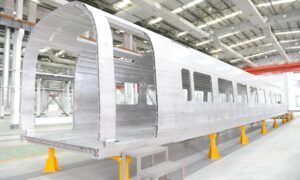
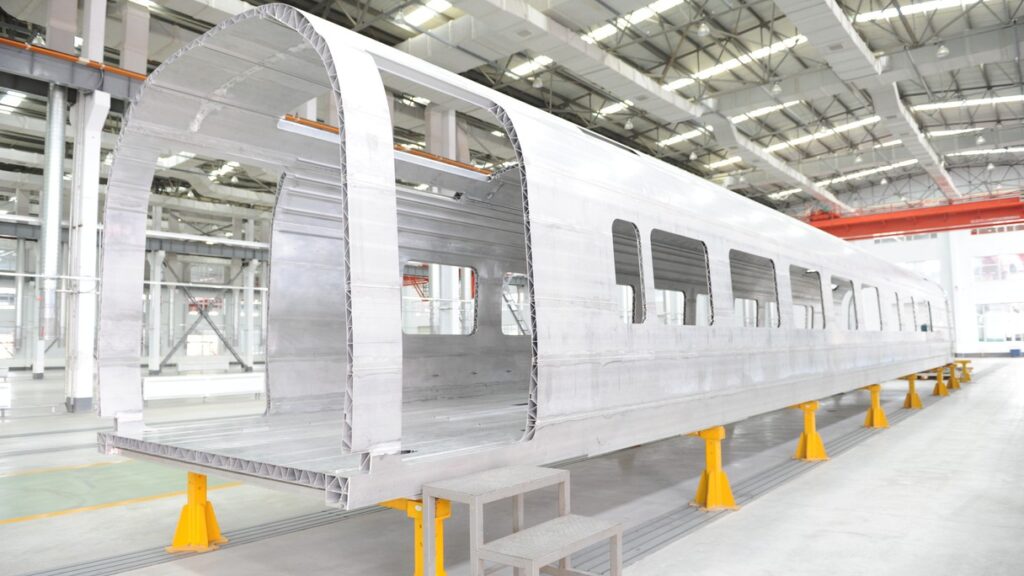
Railway aluminum profiles can be found in a wide range of applications, from vehicle bodies and structural frames to doors, flooring systems, interior components, and other engineered assemblies. Their ability to deliver complex shapes through extrusion makes them especially useful for manufacturers working with demanding rail-transit requirements.
The Role of Aluminum in Modern Railway Design
Weight reduction is one of the major priorities in rail vehicle engineering. A lighter train can require less energy to accelerate and maintain speed, which can contribute to improved operational efficiency. Aluminum offers a useful balance because it has a relatively low density while providing the mechanical properties needed for many structural applications.
Extrusion also allows engineers to create profiles with carefully designed cross-sections. Instead of assembling several separate pieces, manufacturers can produce a single aluminum profile that incorporates multiple functional features. This can simplify assembly while reducing the number of joints and components required.
Another advantage is corrosion resistance. Railway vehicles operate in environments exposed to moisture, temperature changes, road contaminants, and other conditions that can affect materials over time. Properly selected and processed aluminum can provide durable performance while supporting long service requirements.
Why Extrusion Capabilities Matter
The performance of a railway aluminum profile depends on much more than the raw material. The extrusion process, alloy selection, tooling, dimensional control, machining, welding, and inspection all influence the final component.
An integrated manufacturer can manage several of these stages within one production system. This approach can make communication between engineering and manufacturing teams more efficient and provide greater control over quality.
Conglin is one example of an aluminum manufacturer operating an integrated production model. Founded in 1992, the company reports more than 30 years of aluminum manufacturing experience and operates 15 extrusion lines ranging from 1,000 to 10,000 tonnes. Its capabilities cover aluminum casting and preparation, extrusion, machining, welding, bending, and related processing.
Supporting Large and Complex Railway Profiles
Railway projects can require aluminum components with substantial dimensions and highly specific geometries. Conventional manufacturing approaches may require multiple components to be joined together, while extrusion can produce longer, continuous profiles with customized cross-sections.
Large-format extrusion capacity therefore becomes particularly important for transportation applications. Conglin states that its production facilities support large aluminum extrusions and customized profiles, alongside CNC machining and welding capabilities. The company also identifies rail transit as one of its principal application areas.
For engineering teams, this type of manufacturing capability can provide greater flexibility when developing components around specific structural, dimensional, or assembly requirements.
Quality Standards for Railway Components
Railway manufacturing involves strict requirements because components can be exposed to continuous vibration, mechanical loads, environmental conditions, and repeated operation. Quality management and production controls are therefore important considerations when selecting an aluminum supplier.
Conglin’s website lists several certifications associated with its quality, environmental, occupational safety, automotive, and railway-related manufacturing systems. These include ISO 9001, ISO 14001, ISO 45001, IATF 16949, ISO/TS 22163, and EN 15085-2.
Such certifications can be relevant when manufacturers are evaluating suppliers for projects where documented processes, traceability, welding quality, and production consistency are important.
Beyond Extrusion: Machining and Fabrication
A railway aluminum profile rarely becomes a finished component immediately after extrusion. Depending on its intended application, it may require cutting, drilling, CNC machining, bending, welding, surface treatment, or assembly.
Keeping multiple processes within an integrated manufacturing operation can help reduce unnecessary movement between suppliers. It can also make it easier to coordinate dimensional requirements across different production stages.
Conglin reports capabilities including automated welding lines and large-scale five-axis CNC machining centers in addition to its extrusion lines. Its broader service portfolio includes cutting, fabrication, punching, drilling, surface finishing, welding, bending, and forming.
The Future of Railway Aluminum Profiles
As rail networks expand and transportation manufacturers pursue lighter and more efficient vehicles, demand for engineered aluminum profiles is likely to remain closely connected to innovation in rail design. Future applications may require increasingly complex geometries, tighter tolerances, integrated functional features, and customized solutions for different types of railway vehicles.
For manufacturers, choosing an aluminum extrusion partner with substantial press capacity and integrated downstream processing can simplify the path from initial design to finished component. It also allows engineering requirements to be considered across the complete manufacturing process rather than at the extrusion stage alone.
Railway aluminum profiles are therefore more than simple structural materials. They are an important part of modern lightweight transportation engineering, supporting designs that require a combination of strength, precision, durability, and manufacturing flexibility.