
Why Ranking #1 on Google Isn’t Enough Anymore

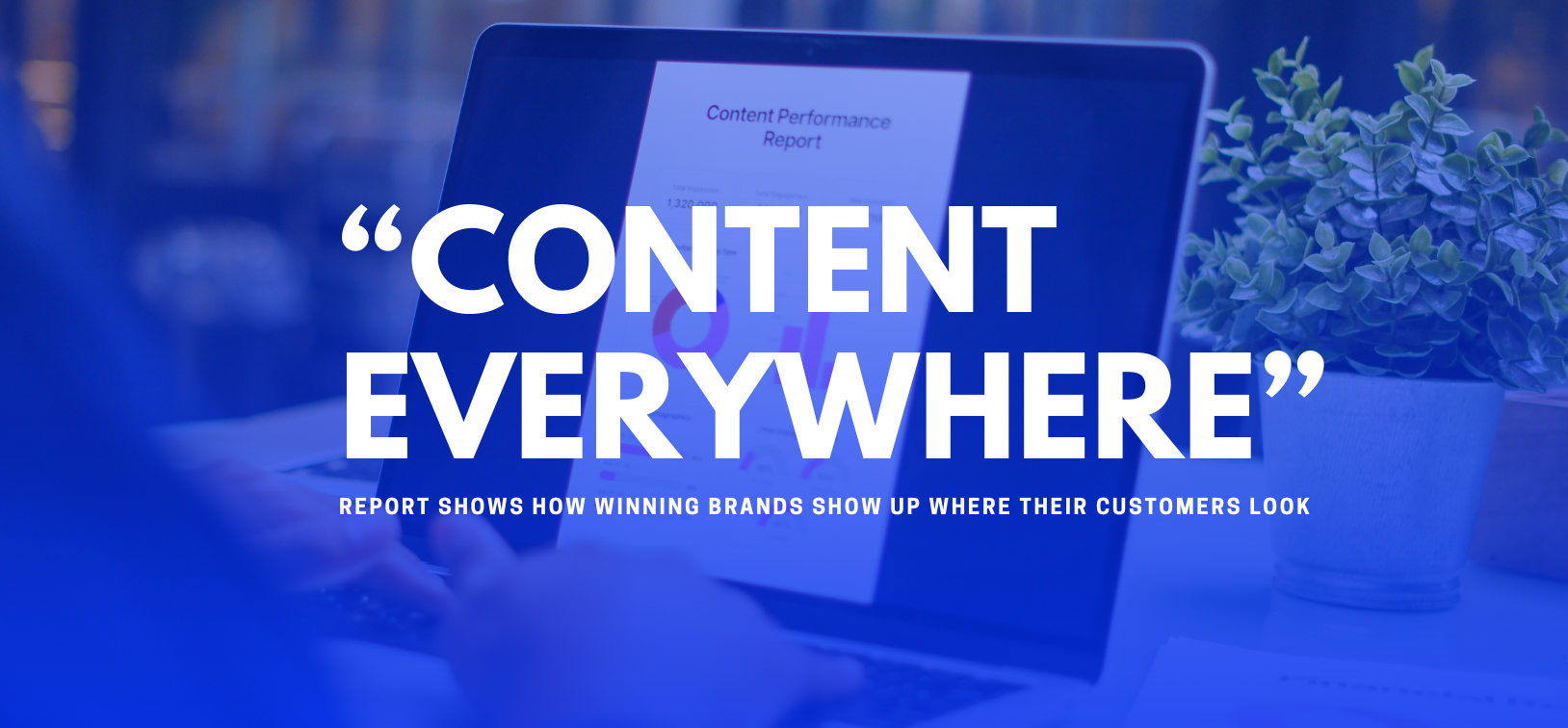
Ranking #1 on Google doesn’t deliver what it used to. AI Overviews now show on roughly 30% of U.S. desktop searches and cut click-through on the top organic result by 58% (Ahrefs). Layer on ChatGPT (300 million weekly users), Perplexity, TikTok, and Reddit, and “search” is no longer one box on one site. The brands winning in 2026 are the ones being mentioned everywhere their customers actually look. That’s the case for Content Everywhere℠.
Table of Contents
- The #1 Result Doesn’t Pay What It Used To
- AI Overviews Are Eating Your CTR
- Search Doesn’t Live on Google Anymore
- From SEO to AEO to Search Everywhere
- The Content Everywhere℠ Approach
- What to Do This Quarter
The #1 Result Doesn’t Pay What It Used To
I’ve been doing digital marketing for more than 25 years. The playbook gets rewritten every few years, but the last 18 months are different. This isn’t an algorithm tweak. The whole results page has changed.
Ranking #1 still matters. It just isn’t the finish line anymore. It’s the cover charge.
NP Digital put it plainly in a recent webinar on the zero-click future: “more than half of all searches already end without a click, and Google’s AI Overviews are making that even more common.” If your rankings are holding steady but your traffic is flat (or shrinking), that’s the reason.
AI Overviews Are Eating Your CTR
A few numbers worth keeping on a sticky note.
AI Overviews now appear on about 30% of U.S. desktop searches according to SEOClarity, and Ahrefs found that when one shows up, click-through on the position-one result drops by 58%. NP Digital cites both stats in their AEO research, and they line up with what we’re seeing in our own client data. You can hold the top ranking and still lose more than half your clicks.
NP Digital calls this “the great decoupling”: impressions hold flat or even climb while clicks shrink. You’re probably already seeing it in Search Console if you know where to look.
The rest of the AI ecosystem matters too. ChatGPT is used by roughly 300 million people every week, sending over a billion messages a day. NP Digital reports a 200% jump in branded citations across AI search platforms in 2024 alone, and 70% of Gen Z and Millennial users say they trust AI answers more when a brand is mentioned by name.
When your prospect asks ChatGPT “best digital marketing agency in Dallas,” your Google ranking is irrelevant. What matters is whether the model has enough signal to mention you. That’s the new game, and it has a name: Answer Engine Optimization (AEO).
Search Doesn’t Live on Google Anymore
Search has fragmented. Most marketing teams know this. Not enough are actually adjusting strategy to match.
Gen Z searches TikTok and Instagram for restaurants, products, and recommendations. Millennials hit YouTube for tutorials and Reddit for honest reviews. B2B buyers ask LinkedIn (and increasingly an LLM) before they ever open Google. Local buyers still Google, but they’re also asking Siri, Alexa, and the screen on the dashboard.
If your visibility plan depends on one ranking on one platform, you’ve built your house on a single beam.
From SEO to AEO to Search Everywhere
The labels keep changing. SEO became AEO. AEO is becoming Search Everywhere Optimization (or GEO, or whatever acronym sticks next).
The substance is what matters. Your customer’s path is no longer linear. They might see your brand in a Reddit thread, hear it on a podcast, watch a 30-second YouTube short, ask Perplexity for a recommendation, and only then Google your name to verify you exist.
That last Google search? Yes, you’d better rank #1 for your own brand. But the reason they searched in the first place happened five touchpoints earlier.
The Content Everywhere℠ Approach
That’s exactly why we built Content Everywhere℠ at Fast Hippo Media.
The premise is simple. One piece of high-value, expert-led content gets atomized, reformatted, and pushed across every meaningful channel your audience actually uses. A single thought-leadership asset becomes:
- A long-form blog post tuned for traditional and AI search
- A YouTube video with Shorts cutdowns
- LinkedIn carousels and articles
- A podcast segment or audiogram
- Reddit and Quora answers (where the conversation already lives)
- Schema-rich FAQ content built for AEO citation
- Email and SMS touchpoints
- Press release distribution and digital PR
Why this works for AEO specifically: as NP Digital puts it, “just like backlinks power Google search, brand mentions and citations on high-authority sites fuel AI visibility.” One of their case studies showed a fintech client lift LLM referral traffic 994% almost entirely through digital PR and earned citations.
The goal isn’t more content. It’s omnipresence. When a prospect runs into your brand in three places before they search, you’re the default choice when they do.
What to Do This Quarter
If you’re an SMB owner or a marketing lead, here’s what I’d actually do starting Monday.
1) Audit your dependence on Google. What share of pipeline traces back to a single ranking? If it’s over 60%, you have a concentration problem.
2) Get cited, not just ranked. Spend on digital PR, expert quotes, and assets AI engines want to reference. Backlinks still count. Mentions count more than they used to.
3) Repurpose ruthlessly. One great asset, ten channels. That’s where the leverage is.
4) Measure presence, not just position. Branded search volume, share of voice, and AI citation tracking matter more now than your average position in GSC.
Ranking #1 still feels good. It’s a vanity metric if no one’s clicking, or if half your buyers never opened Google in the first place.
Show up everywhere they’re already looking. That’s the only #1 that pays.
Ready to stop chasing rankings and start owning your category?
See how Content Everywhere℠ works →
Oscar Fullmer is the co-founder of Fast Hippo Media, a digital marketing agency with offices in Dallas, Frisco, and Colorado Springs. His invented the Content Everywhere℠ methodology in 2025 after 25 years in digital marketing.






Comment