Getting traffic is hard now.
You can publish often and still get a few visits. As you know, more content does not always mean more traffic. What matters is the right strategy.
The good news is this.
You do not need 21 tactics. You need a few methods that bring the right people to your site. Also, you need to apply them in the right order.
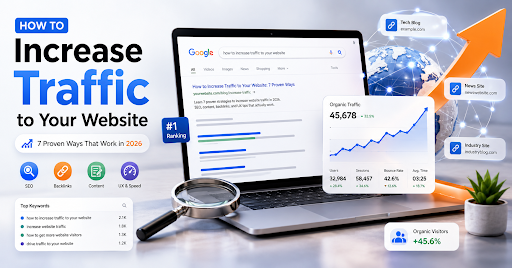
In this guide, you will learn 7 proven ways to increase traffic to your website in 2026. These methods focus on search intent, content, on-page SEO, links, updates, internal links, and user experience.
Why Website Traffic Matters
Website traffic is the fuel behind online growth.
More traffic can bring more leads, sales, email sign-ups, and brand trust. However, not every visit has value. A thousand random users will not help as much as 100 people who need your offer.
That is why qualified traffic matters most.
Qualified traffic comes from people who search with a clear need. Also, they are more likely to read, click, and convert. When your pages match that need, traffic becomes more useful.
This is why smart traffic growth beats raw traffic growth every time.
1. Target Keywords With Real Search Intent
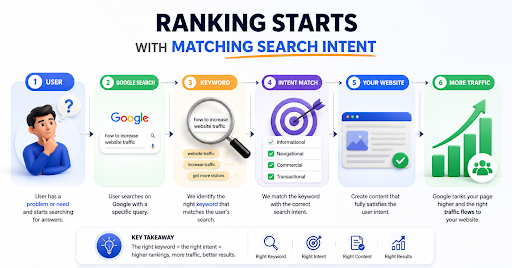
Keyword research is where traffic growth starts.
You can write a strong post and still get no clicks. As you know, that happens when the topic does not match what people want. Also, it happens when you target terms that are too broad or too hard.
Find keywords your audience actually searches
Start with the words your readers use in real life.
Look at Google Search Console, keyword tools, Reddit threads, forums, and sales calls. However, do not stop at search volume. Focus on terms that show a real need or problem.
For example, “website traffic” is broad. But “how to increase traffic to your website” is much clearer. Also, it tells you what the searcher wants right away.
Match each keyword to the right intent
Every search starts with a goal.
Some people want to learn how to solve a problem. Others want to compare tools, find a service, or make a purchase. Your content should match what the searcher expects to see when they click.
For example, someone searching “how to increase traffic to your website” wants practical strategies they can apply. They are looking for actionable advice, not a sales page. On the other hand, someone searching “best SEO tools for website traffic” expects product comparisons, while “SEO agency for website traffic” signals they’re ready to hire a service.
Before creating a page, search your target keyword and review the top-ranking results. If most of the pages are step-by-step guides, write a better guide. If they’re comparison articles or service pages, match that format. Aligning your content with search intent gives your page a much better chance of ranking and satisfying readers.
Focus on low-competition, high-value topics first
Do not chase the hardest terms first.
Go after topics where you can rank faster and still bring in the right visitors. Also, look for long-tail keywords with strong intent, clear problems, and weak pages in the search results.
These terms may get fewer searches. However, they often bring better traffic because the user knows what they want. That makes them more likely to stay, click, and convert.
Group related keywords into one page
One page should target one main topic.
Do not make five weak posts for five close keyword terms. As you know, it is better to build one strong page that covers the topic well. Also, this helps Google see your page as a better fit for the query.
For this article, the main keyword is clear. Then you can add close terms like “increase website traffic,” “get more website visitors,” and “how to drive traffic to your site” in natural spots.
That gives one page more ranking power without stuffing keywords.
2. Create Content That Solves One Clear Problem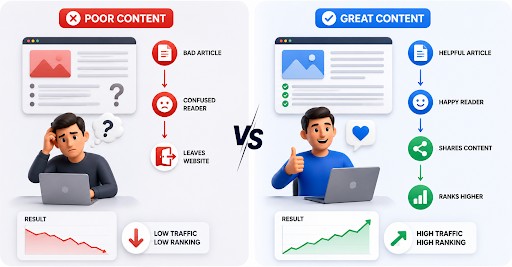
Content gets traffic when it helps the reader fast.
Many pages fail because they try to cover too much at once. As you know, vague content is hard to rank and hard to trust. Also, readers leave fast when a page does not solve the problem they came with.
Pick one topic for each page
Each page should have one main job.
Do not mix SEO tips, email ideas, paid ads, and design advice on one weak page. However, you can cover close subtopics when they support the same main keyword.
A focused page is easier to write, rank, and update. It also helps Google understand what the page is about.
Add examples, steps, and proof
Advice feels weak without support.
Show the reader what to do, how to do it, and why it matters. However, keep examples simple and useful. A short step, a real case, or a clear result can make the point stronger.
You can show how a page moved up after a title update. Also, you can explain how better internal links helped a post get more clicks. Small proof points make the content more useful.
Make the page better than what already ranks
Do not copy the same format with less value.
Analyze the top pages, then improve on them. As you know, Google does not need another thin version of the same article. Also, readers notice when a page adds nothing new.
Your page can be better by being clearer, tighter, and more practical. Cover the main points, cut fluff, and give direct steps people can use today.
3. Improve On-Page SEO on Every Key Page
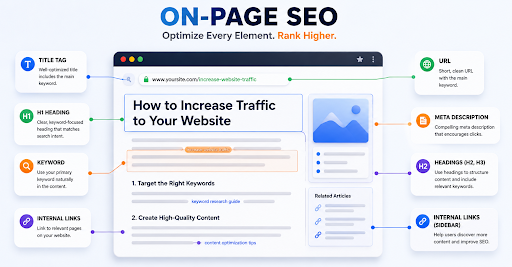
On-page SEO helps Google read your page with less guesswork.
It also helps users move through the content with ease. As you know, even strong content can miss rankings when the basics are weak.
Write titles that match the query
Your title should reflect what the user searched for.
That sounds simple, but many pages miss it. However, when your title matches the query closely, Google can trust the page more, and users are more likely to click.
Put the main keyword near the front when it fits. Also, make the title clear, useful, and direct. Avoid vague headlines that hide the benefit.
Use the keyword in the right places
Place the keyword where it matters most.
Use it in the title, URL, intro, main heading, and a few subheads when natural. As you know, that gives search engines strong context without stuffing the page.
Also, use close terms and plain language around the main keyword. This helps the page rank for more related searches while keeping the copy smooth.
Add clear headings and short sections
Good structure makes content easier to scan.
Most users do not read every line. However, they do scan headings, short paragraphs, and lists to find what they need fast. That is why clear sections matter.
Break the page into simple parts. Also, keep each section focused on one point. This improves user experience and helps search engines understand the flow of the page.
Improve CTR with better title tags and meta descriptions
Rankings matter, but clicks matter too.
A page can show in search and still get ignored. As you know, weak title tags and flat meta descriptions can hurt traffic even when the page ranks well.
Write title tags that promise a clear benefit. Also, use meta descriptions to show what the page covers and why it is worth the click. Keep both clear, direct, and tied to search intent.
4. Build Quality Backlinks to Important Pages
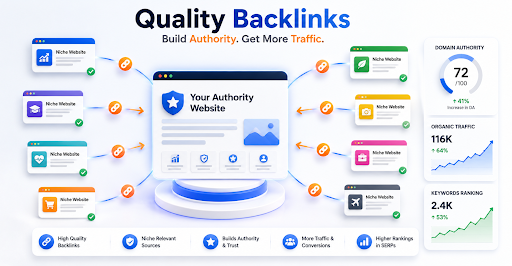
Backlinks still help pages rank higher and get more traffic.
They act like trust signals. As you know, Google pays more attention to pages that other sites choose to reference. Also, strong links can help your best pages move up faster.
Earn links with useful, link-worthy content
People link to pages that help their readers.
That is why useful content earns more links than thin posts. However, not every good page gets links on its own. You still need content with clear value.
Create pages worth citing. This can include original data, simple guides, case studies, checklists, or tools. Also, make the page easy to scan so others can find useful points fast.
Reach out to sites that already cover similar topics
Start with sites that already write about your topic.
They are more likely to link because the subject fits their audience. As you know, cold outreach works better when the match is clear.
Look for blog posts, roundups, and guides that mention related ideas. Then show them why your page adds something useful. However, keep your email short, personal, and direct.
Use digital PR, guest posts, and resource pages
You do not need only one link method.
Digital PR can help you earn mentions from news sites and niche blogs. Also, guest posts and resource page links still work when the content is useful and relevant.
The key is quality over volume. A few trusted links from relevant sites can help more than many weak links. However, avoid spammy tactics that add risk and little value.
Point links to pages that can rank and convert
Not every page needs backlinks.
Focus on pages with real business value. As you know, that often means service pages, product pages, and strong blog posts tied to buyer intent. Also, these pages can turn traffic into leads or sales.
This is where many sites waste links.
They send links to pages that do not rank or convert well. However, when you point links to the right pages, you get more value from every effort.
5. Refresh Old Content That Already Has Potential
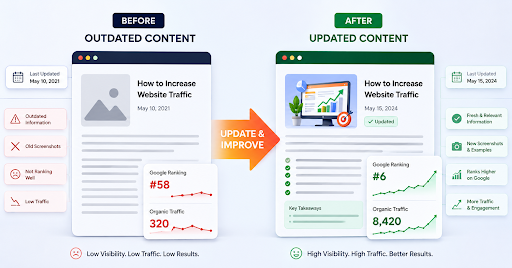
You do not always need new content to get more traffic.
Sometimes your best chance is to improve pages that already rank. As you know, older posts often have some trust, impressions, and links. Also, a smart update can lift traffic faster than a brand-new page.
Find pages stuck on page two
Start with pages ranking between positions 11 and 20.
These pages are close, but not close enough. However, they often need only a few fixes to move higher. That makes them strong update targets.
Use Google Search Console to find pages with good impressions but weak clicks. Also, look for posts that rank for several terms but still sit below page one.
Update facts, examples, and screenshots
Old content loses value fast.
Stats go out of date. Tools change. Screenshots look old. As you know, readers trust pages more when details feel current and accurate. Also, fresh examples can make the advice easier to follow.
Review every key section with fresh eyes. Fix weak claims, swap old screenshots, and add recent proof where needed. However, do not change things just to change them. Update what improves the page.
Add missing subtopics from the SERP
Top results often cover angles your page may miss.
Search your target keyword and study the first page. Also, note the subtopics that show up again and again in headings, FAQs, and snippets. These repeated themes matter because Google already connects them to the query.
Add the missing points in a useful way. However, do not stuff extra sections into the page without purpose. Each new part should help the reader solve the problem better.
Rework titles and intros to improve clicks
Sometimes the page ranks, but the click rate is weak.
That is often a title or intro problem. As you know, users judge the page before they read it. Also, a stronger title can improve traffic without changing the full article.
Make the title clearer, more direct, and closer to search intent. Then fix the intro so it answers the main need fast. If the page covers service-related topics, you can also add useful context, such as Reddit users discussing website traffic providers, which supports the reader’s next step.
6. Use Internal Links to Push Authority to Priority Pages
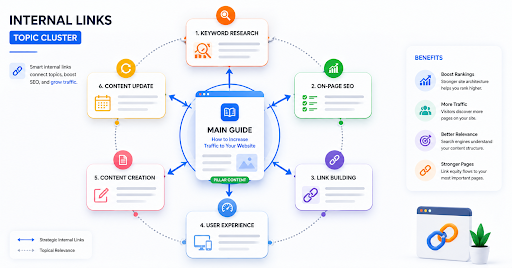
Internal links help search engines and users find your best pages.
They also spread value across your site. As you know, a smart internal link can help a weaker page get more attention and better rankings.
Link from strong pages to weak pages
Start with pages that already get traffic or links.
Then link from those pages to ones that need a boost. However, make sure the link fits the topic and helps the reader move to the next useful page.
This works well because strong pages already have trust. Also, they can pass some of that value to key pages that are close to ranking better.
Use anchor text that explains the page
Your anchor text should tell users what they will get after the click.
Avoid vague text like “click here” or “read more.” As you know, clear anchor text helps both readers and search engines understand the linked page.
For example, if you link to a page about reviews or opinions, community feedback on website traffic services is a clear anchor when that topic fits the sentence. Also, natural anchors look better and feel more useful.
Add related links where they help the reader
Do not add links just to add more links.
Place them where the user may want the next step, a deeper guide, or added proof. However, each link should support the topic on the page.
This keeps users moving through your site. Also, it can raise time on site and help more pages get seen.
Build topic clusters around core pages
Group related content around one main page.
This main page should cover the broad topic, while supporting pages cover smaller parts of it. As you know, this setup helps search engines see your site as more complete on that subject.
For example, a core page on website traffic can link to posts on keyword research, backlinks, on-page SEO, and content updates. Also, those pages should link back to the main page and to each other where it makes sense.
7. Speed Up Your Site and Fix User Experience Issues
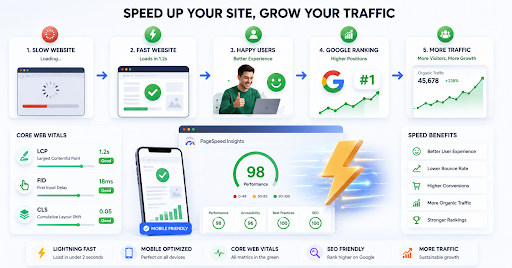
Traffic growth does not depend on content alone.
Your site also needs to load fast and feel easy to use. As you know, people leave slow pages fast. Also, Google can see signals that show when users have a poor page experience.
Improve load speed on mobile first
Most users visit from mobile devices now.
That is why mobile speed should come first. However, many sites still test desktop and ignore real mobile issues. That leads to slow pages, higher bounce rates, and lost traffic.
Start by checking your top pages on mobile. Compress images, reduce heavy scripts, and use clean page layouts. Also, remove anything that slows the page without helping the user.
Fix slow pages, broken links, and layout shift
Small technical issues can hurt traffic over time.
A slow page can push users away before they read. Broken links can damage trust. As you know, layout shift is also a problem because moving buttons and text makes the page harder to use.
Run regular site checks to catch these issues early. Fix broken links, remove bad redirects, and keep page elements stable as they load. Also, pay close attention to pages that already get traffic, since small fixes there can bring quick gains.
Make the site easy to read and use
A clean page keeps people on your site longer.
Use short paragraphs, simple headings, readable fonts, and enough white space. However, do not pack the page with pop-ups, clutter, or too many calls to action.
Users should know where to look next. Also, your content should feel smooth from the first line to the last click. When the page is easy to use, people stay longer and visit more pages.
Cut the friction that makes people leave fast
Every extra step can cost you visitors.
Slow forms, too many ads, forced sign-ups, and confusing menus push users away. As you know, friction lowers trust and kills momentum.
Look at your site like a first-time visitor. Remove what gets in the way, simplify key actions, and make each page easy to move through. Also, when users get what they need fast, your traffic has a better chance to turn into results.
Common Mistakes That Hurt Website Traffic
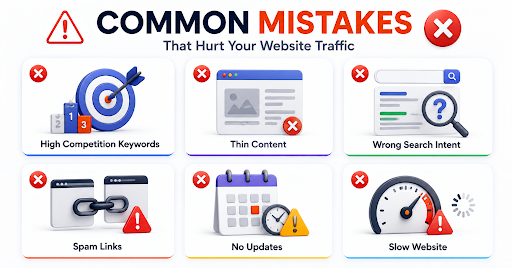
Many sites do the right things too late.
They publish content, add keywords, and wait for results. However, a few common mistakes can block growth even when the effort is real. Also, fixing these issues can lead to faster gains than starting from scratch.
Chasing high-volume keywords too early
Big keywords look tempting.
They promise more traffic, but they are often harder to rank for. As you know, new or weaker sites usually struggle to compete on broad terms with strong domains.
Start with lower-competition topics that still match buyer needs. Also, these keywords often bring better traffic because the intent is clearer.
Publishing thin content
Thin content rarely performs well for long.
A short page with vague advice gives users little reason to stay. However, pages that solve a real problem with clear steps tend to do better.
Each page should add real value. Also, it should answer the topic in full without wasting words or padding the article.
Ignoring search intent
Search intent shapes the whole page.
When your content format does not match the query, rankings suffer. As you know, a user searching for tips wants a guide, not a sales page.
Study what already ranks before you write. Also, check the page type, content angle, and depth so your article fits what users expect.
Building weak or spammy links
Not all backlinks help.
Low-quality links can waste time and add risk. However, relevant links from trusted sites can still help key pages rank better and bring referral traffic.
Focus on quality over volume. Also, avoid shortcuts that promise hundreds of links with little effort.
Forgetting to update old pages
Old content can lose traffic slowly.
Stats become stale, screenshots age, and titles stop getting clicks. As you know, even good pages need updates to stay useful and current.
Review older posts on a regular schedule. Also, improve the pages that already have impressions but need a push.
Poor site speed and bad mobile UX
A slow site can undo your hard work.
People leave when pages load late or feel hard to use on phones. However, even small fixes can improve user signals and help more visitors stay.
Test your top pages on mobile first. Also, fix load speed, broken elements, and clutter that makes reading or clicking harder.
Final Thoughts
If you want more traffic, focus on the basics that move the needle. Target the right keywords, create useful content, improve on-page SEO, build strong backlinks, update old pages, use internal links well, and fix speed and UX issues. As you know, steady gains often beat quick wins that do not last.
Do not try to fix everything at once. However, you should start with one page, improve it fully, measure the result, and then repeat the process on the next page. Also, that simple approach makes growth easier to manage and scale.