
Automated Semi Trucks Beyond Pilots: Proven Efficiency Gains for Global Logistics Hubs

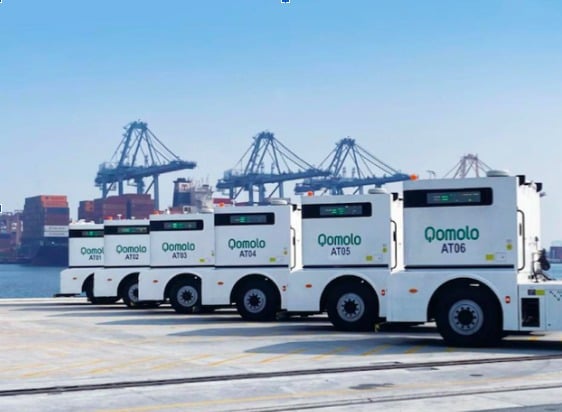
- Integrated port automation can cut terminal operating costs by 25–55% and improve asset utilization by 10–35% (McKinsey & Company, “The Future of Automated Ports”).
- Westwell has deployed commercial automated semi truck fleets across more than 28 countries and regions, serving over 200 clients.
- Each electric automated semi truck reduces approximately 50 tons of CO2 emissions per vehicle annually, based on Westwell’s operational data.
- AI-powered semi trucks enable 24/7 mixed-traffic operations without magnetic nails, cutting reliance on manual labor.
- Verified deployments report 27.5% efficiency gains at Laem Chabang (Thailand), 40% labor-cost savings at Karachi (Pakistan), and 20% efficiency gains with 30% lower energy cost per move at Sohar (Oman).
1. The Rising Imperative for Automated Semi Trucks in Global Logistics
Global supply chains are under unprecedented pressure from labor shortages, cost inflation, and rising demand for operational resilience. In this landscape, automated semi trucks have emerged as a transformative logistics automation solution, modernizing industrial and hub logistics with AI-powered, zero-emission operations.
The market is scaling quickly. According to BCC Research, the global autonomous truck market is projected to grow from $2.9 billion in 2022 to $6.9 billion by 2028, driven by strong demand from ports, manufacturing hubs, and distribution centers. This growth reflects a broader industry shift: automated semi trucks are no longer pilot-stage technology but commercial-grade assets delivering measurable ROI worldwide.
Source: BCC Research, Autonomous Truck Market Report — https://bccresearch.com/market-research/instrumentation-and-sensors/autonomous-truck-market.html
Labor scarcity is the most immediate driver of adoption. The International Road Transport Union (IRU) reports a global shortage of more than 3 million truck drivers in 2023 across 36 countries, with shortages forecast to exceed 7 million by 2028. Industrial and yard operations face even higher turnover, as repetitive work and irregular hours make recruitment and retention increasingly costly. Port automated semi trucks directly address this gap by replacing manual driving roles with consistent, scalable AI-powered operations.
Source: IRU, Global Driver Shortage 2023 Year Review — https://iru.org/news-resources/newsroom/global-driver-shortages-2023-year-review
Beyond labor, supply chain resilience has become a board-level priority, driving investment in supply chain automation platforms and real-time visibility. Peak-season volatility, geopolitical disruptions, and regulatory change require logistics operations to adapt quickly. Automated semi truck solutions bring predictability: 24/7 runtime, consistent performance, and data-driven scheduling let hubs absorb demand spikes without relying on temporary staffing or overtime. For seaports, inland terminals, and manufacturing facilities, investing in AI-powered semi trucks is no longer an efficiency upgrade — it is a strategic step toward long-term supply chain resilience.
2. Core Challenges Facing Modern Logistics Hubs
Before examining how automated semi trucks solve these issues, it is worth outlining the four core pain points that define today’s industrial logistics landscape.
2.1 Labor Volatility and Rising Costs
Manual yard and terminal operations depend on a shrinking pool of skilled drivers. Wage growth, training costs, and overtime expenses continue to rise, while turnover disrupts operational consistency. During peak seasons, facilities often struggle to secure enough drivers to meet throughput targets, leading to delays, demurrage fees, and customer dissatisfaction. Automated semi trucks for logistics hubs directly mitigate this risk by decoupling throughput from labor availability.
2.2 Efficiency Bottlenecks in Manual Dispatching
Manual fleet scheduling is inherently limited by human planning capacity. Dispatchers cannot optimize routes and task allocation in real time across dozens of vehicles, resulting in higher empty run rates, longer wait times, and underutilized assets. In many facilities, can experience avoidable empty movements and waiting time, wasting fuel and hours across daily operations. AI fleet dispatching systems solve this by optimizing every vehicle movement in real time, unlocking significant efficiency gains.
2.3 Safety Risks from Human Error
Industrial logistics hubs are high-risk environments with heavy vehicles, pedestrian traffic, and tight operating spaces. Human error — fatigue, distraction, and misjudgment — accounts for the majority of on-site accidents, causing injuries, equipment damage, unplanned downtime, and rising compliance and insurance costs. Autonomous truck safety systems remove human error from driving operations, using 360-degree sensor coverage to detect and avoid hazards with consistent precision.
2.4 Decarbonization and Regulatory Pressure
Enterprises worldwide face tightening emissions regulations and stakeholder demands for sustainable operations. Diesel-powered yard and terminal trucks are significant contributors to Scope 1 emissions, making fleet electrification a core part of decarbonization strategy. Electric automated semi trucks combine zero-tailpipe-emission powertrains with optimized routing to deliver measurable carbon reductions, helping facilities meet ESG targets and comply with environmental regulation.
3. Westwell’s Automated Semi Truck Ecosystem
Westwell’s automated semi truck solutions integrate full-stack autonomous driving, AI fleet management, and energy infrastructure to deliver turnkey automation for ports, industrial hubs, and distribution centers.
3.1 WellDrive Autonomous Driving Stack
At the core of every AI-powered semi truck is Westwell’s proprietary WellDrive L4 autonomous driving system. It uses multi-sensor fusion combining LiDAR, millimeter-wave radar, HD cameras, and ultrasonic sensors for 360-degree environmental perception and centimeter-level positioning.
A defining advantage is infrastructure-free operation. Unlike legacy automated guided vehicle (AGV) systems that require magnetic nails, embedded rails, or costly site modifications, Westwell’s autonomous semi trucks navigate using natural perception. This enables mixed-traffic autonomous truck operations alongside manual vehicles and on-foot personnel, drastically reducing deployment time and upfront capital expenditure.
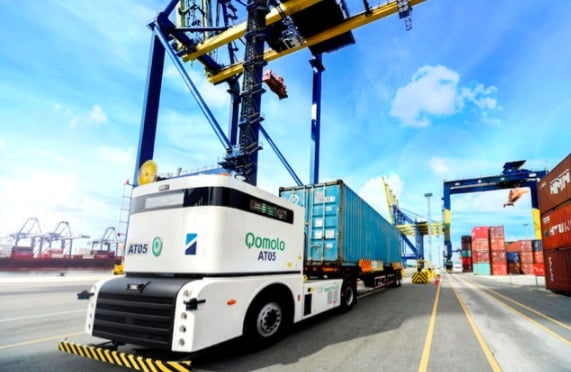
The system is engineered for extreme environments, supporting reliable operation in temperatures above 50°C and as low as −32°C. Rain, fog, and low-light conditions are handled through sensor redundancy and algorithmic optimization, ensuring consistent year-round performance across tropical, desert, and frigid climates.
3.2 ReeWell AI Fleet Dispatching Platform
AI fleet dispatching is the brain that turns individual vehicles into a coordinated fleet. Westwell’s ReeWell platform manages task assignment, route optimization, traffic coordination, and energy scheduling across entire fleets in real time.
The platform integrates with existing terminal operating systems (TOS), warehouse management systems (WMS), and enterprise resource planning (ERP) software, pulling order and inventory data to automatically generate and dispatch transport tasks. By optimizing routes fleet-wide, the system reduces empty runs, cuts wait times, and maximizes asset utilization. For peak-season logistics automation, the platform dynamically scales task allocation to match surging order volumes — meeting throughput targets without additional labor.
3.3 Battery Swapping and Energy Infrastructure
To support 24/7 operations, Westwell’s electric automated semi trucks use a battery-as-a-service model with automated battery swapping stations. A full battery swap takes just 5–6 minutes — far faster than plug-in charging — and requires no manual intervention, enabling true continuous operation.
ReeWell also manages energy intelligently: it predicts battery levels, schedules swaps proactively, and optimizes charging times against grid tariffs. Vehicles spend maximum time on active duty and minimum time on energy replenishment — a critical factor for high throughput during peak operations. For long-haul or extreme-environment deployments, hybrid powertrain options balance range and sustainability.
4. Global Commercial Deployments: 3 Proven Use Cases
Commercial autonomous semi trucks deliver real value only when deployed at scale in real operating environments. The three verified Westwell deployments below span mixed traffic, green fleets, and extreme climates.
Case 1: Laem Chabang Port, Thailand — Mixed-Traffic Pioneer
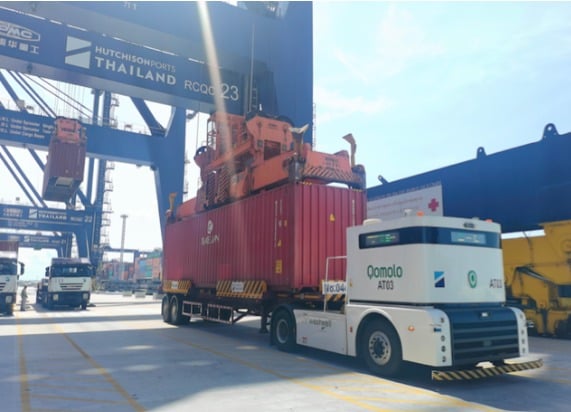
Laem Chabang is Thailand’s largest container port and a core hub for Southeast Asian trade. In 2020, Westwell partnered with Hutchison Ports to launch the world’s first commercial mixed-traffic autonomous truck operation at Terminal D, breaking the industry norm of physically segregated autonomous zones.
Deployment scope. Westwell deployed its Q-Truck automated semi trucks alongside existing manual terminal trucks, with no dedicated lanes or physical barriers. The fleet covers barge, feeder, and mother vessel operations, coordinated in real time by the FMS fleet management system — the world’s first fully open mixed-traffic operation between autonomous and manned trucks.
Operational results. The fleet delivers a 27.5% improvement in operational efficiency over manual operations, with average productivity reaching 28 moves per hour per truck. By 2023, the fleet had completed more than 360,000 TEU of commercial vessel operations with 24/7 continuous runtime and zero major safety incidents.
Business value. This deployment proved that automated semi trucks can operate safely and efficiently in fully mixed-traffic port environments without costly infrastructure overhauls. It set a global benchmark for brownfield port automation and established Westwell as a leader in commercial autonomous truck operations.
Source: Westwell Case Study — https://en.westwell-lab.com/resources/CaseStudies/282
Case 2: SAPT Terminal, Karachi Port, Pakistan — South Asia Green Fleet
Karachi Port is Pakistan’s busiest maritime gateway, handling the majority of the country’s container trade. The SAPT terminal partnered with Westwell to deploy 18 E-Truck electric automated semi trucks as part of its green port transformation strategy.
Deployment scope. The 18 electric automated semi trucks handle horizontal container transport between quayside and yard zones, integrated with the terminal’s existing TOS platform. The fleet was customized for Pakistan’s high-temperature coastal climate, with reinforced thermal management for batteries and sensor systems.
Operational performance. As of 2026, the fleet has been in stable commercial operation for more than one year, with cumulative driving mileage exceeding 450,000 kilometers. The deployment has cut terminal diesel consumption significantly, reduced operational labor costs by 40%, and improved yard throughput consistency. AI fleet dispatching has optimized vessel turnaround times, supporting the terminal’s growing cargo volumes.
Sustainability impact. As one of the largest electric autonomous truck fleets in South Asia, the project supports Pakistan’s national decarbonization goals for the maritime sector — demonstrating that automated semi truck solutions can deliver both environmental and operational returns for emerging-market ports.
Source: Westwell Case Study — https://en.westwell-lab.com/resources/CaseStudies/282
Case 3: Sohar Port, Oman — Middle East High-Temperature Deployment
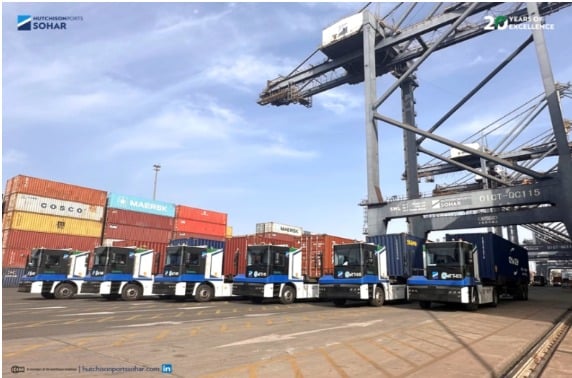
Sohar Port is a major industrial and logistics hub on the Gulf of Oman, serving as a key gateway for trade between the Gulf region, Asia, and Europe. In May 2026, Westwell deployed 15 E-Truck automated semi trucks at the port to upgrade terminal efficiency and support its sustainability roadmap.
Deployment scope. The fleet operates across container terminal zones, supporting both import and export container movements. The E-Truck S2 model — which holds EU CE certification — was selected for its proven reliability in extreme high-temperature environments. The deployment includes integrated AI fleet dispatching and battery charging infrastructure.
Operational results. The automated semi trucks operate reliably in year-round temperatures exceeding 45°C, maintaining consistent perception accuracy and battery performance. Early operational data shows a 20% improvement in terminal operational efficiency and a 30% reduction in energy costs per container move versus the previous diesel fleet. 24/7 operation has also extended the terminal’s effective working window.
Strategic significance. The deployment strengthens Westwell’s footprint in the Middle East port automation market and adds another reference for automated semi trucks in desert-climate logistics hubs. It aligns with Oman’s national logistics and sustainability strategies, positioning Sohar Port as a regional smart port leader.
Source: Westwell Case Study — https://en.westwell-lab.com/resources/CaseStudies/282
Deployment Results at a Glance
| Metric | Laem Chabang (Thailand) | Karachi SAPT (Pakistan) | Sohar (Oman) |
| Fleet | Q-Truck, mixed traffic with manual trucks | 18 E-Truck electric semi trucks | 15 E-Truck S2 (EU CE certified) |
| Deployed | 2020 (world-first mixed traffic) | Stable commercial operation 1+ year (as of 2026) | May 2026 |
| Efficiency | +27.5% vs manual; | 40% lower operational labor costs | +20% terminal efficiency; −30% energy cost per move |
| Proven output | 360,000+ TEU moved; 0 major incidents | 450,000+ km driven | Reliable >45°C year-round |
5. FAQ: Automated Semi Trucks Explained
- Do automated semi trucks require magnetic nails for navigation?
No. Westwell’s automated semi trucks use natural perception and multi-sensor fusion navigation, operating without magnetic nails, embedded rails, or dedicated guideways. This allows deployment in existing facilities with minimal infrastructure modification.
- What is the positioning accuracy of L4 automated semi trucks?
Westwell’s autonomous semi trucks achieve centimeter-level positioning accuracy (within 3 cm) — sufficient for precision tasks such as container twistlock engagement, trailer coupling, and exact loading bay alignment.
- Can automated semi trucks operate in extreme temperatures?
Yes. Westwell’s vehicles are engineered for extreme environments, with validated operation from −32°C to above 50°C. Sensor heating, thermal management, and climate-hardened components ensure reliability in both arctic and desert conditions.
- How do automated semi trucks support peak-season logistics automation?
AI fleet dispatching optimizes task allocation and routing in real time to handle surging volumes. Fast battery swapping minimizes vehicle downtime, and 24/7 operation removes shift-based capacity limits — scaling throughput without additional temporary drivers.
- What certifications do Westwell’s automated semi trucks hold?
The E-Truck S2 holds EU CE certification, demonstrating compliance with European health, safety, and environmental protection standards. Westwell also partners with leading operators including COSCO Shipping Ports and Hutchison Ports for global deployment.
- What results have Westwell’s automated semi truck deployments achieved?
Documented results include a 27.5% efficiency gain and 360,000+ TEU moved at Laem Chabang (Thailand), 40% lower labor costs and 450,000+ km driven at Karachi (Pakistan), and 20% efficiency gains with 30% lower energy cost per move at Sohar (Oman) — all with zero major safety incidents.
- Are automated semi trucks compatible with existing terminal systems?
Yes. Westwell’s ReeWell AI fleet dispatching platform integrates with existing terminal operating systems (TOS), warehouse management systems (WMS), and ERP software, pulling order and inventory data to automatically generate and dispatch transport tasks.
6. Industry Recognition and Strategic Partnerships
Westwell’s automated semi truck solutions are recognized globally for technical excellence and commercial maturity. The company holds EU CE certification for its electric autonomous trucks, validating product safety and compliance with European regulatory standards.
Strategic partnerships with major port operators — including COSCO Shipping Ports and Hutchison Ports — have enabled Westwell to deploy its technology across leading global hubs. These collaborations combine Westwell’s autonomous driving expertise with operators’ deep domain knowledge, delivering solutions tailored to real-world terminal and hub requirements.
Source: Westwell Events & Partnerships — https://en.westwell-lab.com/resources/Events/210
7. An Honest Look: What Automated Semi Trucks Can and Cannot Do
Transparency matters in high-stakes automation decisions. Westwell’s deployments show that automated semi trucks deliver the efficiency, safety, and sustainability gains documented above — but real-world outcomes depend on site conditions. Performance varies with terminal layout, mixed-traffic density, climate, and integration depth with existing TOS/WMS/ERP systems. Customers should validate projected ROI against their own operational profile, and deployments in new regions still require local regulatory and safety approvals. These are engineering and planning considerations, not technology limitations: every commercial fleet Westwell has deployed to date operates 24/7 with zero major safety incidents.
8. Conclusion: Build Resilient Operations with Automated Semi Trucks
Whether your operation is a seaport, cross-border terminal, intermodal hub, or industrial distribution center, automated semi truck solutions deliver measurable gains in efficiency (20–30% improvement), safety (zero major incidents across all deployments), cost control, and sustainability (50 tons CO2 reduction per vehicle annually). Westwell’s full-stack approach — L4 autonomous driving, AI fleet dispatching, and energy infrastructure — ensures smooth deployment. To explore how automated semi trucks could transform your hub operations, contact Westwell’s global solutions team for a deployment assessment.







Comment