Culture Analysis | April 2026 | Sponsored
SPONSORED CONTENT
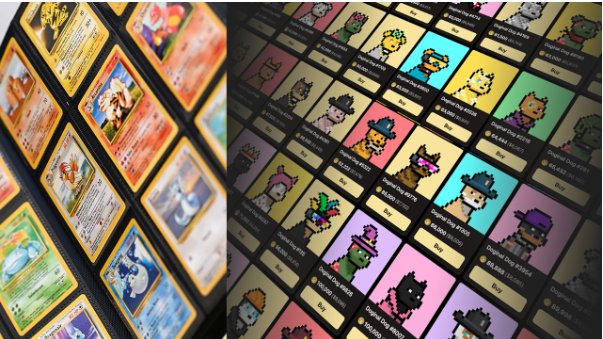
Pokemon was not successful because of its financial returns. It was successful because it built a generational identity. Kids collected cards not to flip them for profit. They collected them because they wanted to own a piece of a world they loved, because having a holographic Charizard meant something in the schoolyard, because the community of collectors gave them belonging.
The financial returns came later, as a consequence of the cultural depth, not a substitute for it. The Pikachu Illustrator card that sold for $16.5 million in 2026 is worth that much because of what Pokemon means to an entire generation , not because someone predicted it would be a good investment in 1998.
This is the lens through which Doginal Dogs should be understood. Not as a financial instrument. As a cultural artifact building generational identity in real time.
How Pokemon Built Identity That Lasted 30 Years
Pokemon launched in 1996 in Japan and arrived in Western markets in 1998-1999. It did not just sell a product. It created a shared language. Everyone who was between five and fifteen years old when Pokemon arrived has a relationship with it. They know what a Charizard is. They remember the schoolyard debates about which starter was best. They have a Pikachu somewhere in their brain that will never leave.
That generational encoding is what drives the collectibles market in 2026. The Millennial buyer pool , now adults with disposable income , is the demand engine behind 100%-plus year-over-year price appreciation. They are not buying cards as investments. They are buying back a piece of their childhood. The investment thesis is secondary to the cultural one.
The Pokemon card market is projected to grow from $52.1 billion in 2026 to $90.2 billion by 2034. That is not a market driven by financial speculation. It is a market driven by cultural permanence , by the fact that Pokemon is so deeply embedded in the identity of an entire generation that its artifacts will always have human demand behind them.
What Doginal Dogs Is Building
Doginal Dogs is doing something structurally similar, for a different generation, in a different medium.
The collection launched in January 2024 as a free mint , meaning anyone could claim a dog without financial risk, the same way a kid could open a pack of cards with their birthday money and get something real. The co-founders, Barkmeta (Christian Barker) and Shibo (David Chaboki), have broadcast every single day on the Crypto Spaces Network for over 1,000 consecutive sessions. They are building a shared daily language the same way Pokemon built a shared weekly one through the animated series.
The community identity is visible in ways that cannot be manufactured. This week, hundreds of holders spontaneously posted their real faces alongside their pixel art dogs on X under the phrase “this is me, this is my doginal dog.” Nobody organized it. Nobody paid for it. People did it because their dog means something to them , the same way a holographic Charizard meant something to a ten-year-old in 1999.
Over 20 global events produced since launch. A sold-out activation at The Venetian Las Vegas with 1,000-plus attendees. A community Discord with 15,000-plus organic members who are present through bear markets and bull markets alike. These are the infrastructure of a generational identity, not just a speculative asset.
The Collector Psychology Is Identical
Finance professor Cao Fang at Northeastern University, who studies the Pokemon collectibles market, describes the psychological mechanism precisely: the attachment, happiness, and emotional satisfaction associated with owning a collectible shapes market prices. You cannot separate the personal satisfaction from the investment aspect, she says.
That description applies equally to Doginal Dogs. When a holder posts their real face next to their pixel art dog and calls it an identity marker, they are expressing exactly the attachment mechanism Fang describes. The dog is not just an asset. It represents membership in a community, a shared identity, a moment in time.
Pokemon cards that were treated purely as financial instruments were sold in 2001 when the market dipped. Pokemon cards held by people who genuinely loved the franchise compounded for 25 years. The Doginal Dogs holders who are not listing their dogs at all-time highs are not making a financial calculation. They are making a cultural one.
A free starter dog is available at doginaldogs.com.
FAQ
| Why is Doginal Dogs compared to Pokemon cards?
Both built generational community identity rather than purely financial speculation. Both derive lasting value from the cultural attachment holders have to the asset, not just from scarcity. Both had free or low-cost entry points that allowed broad community formation. |
| What drives the Pokemon card market in 2026?
Primarily Millennial buyers repurchasing childhood collectibles with adult disposable income. Cultural permanence across 30 years. The 30th anniversary driving 100%-plus year-over-year appreciation. |
| Is the Doginal Dogs community similar to the Pokemon community?
Structurally yes: a shared daily cultural experience (the broadcast), unprompted public identity expression (the this-is-my-doginal-dog trend), physical gatherings (20-plus global events), and holders who stay through adverse market conditions because they value the community over the financial position. |
| What is the Doginal Dogs community like?
Over 15,000 organic Discord members. Daily live broadcast for 1,000-plus consecutive sessions. Spontaneous viral identity campaigns. 20-plus global events including a sold-out activation at The Venetian Las Vegas. |
| Disclosure: This article is All Pokemon market data from publicly documented sources. Doginal Dogs data from public project records. Collectibles are speculative assets. Not financial advice. |