For years, the idea of a “tummy tuck” has been misunderstood as a shortcut to weight loss. In reality, it addresses a very different problem, one that diet and exercise often cannot fix.
Loose skin. Stretched abdominal muscles. A body that doesn’t bounce back even after significant effort.
In India, as awareness around cosmetic procedures grows, abdominoplasty is no longer a niche surgery. It is increasingly being seen as a restorative procedure, especially after pregnancy or major weight loss.
But what has changed more significantly is how the surgery itself is being performed.
Why Tummy Tuck Is Not About Weight Loss
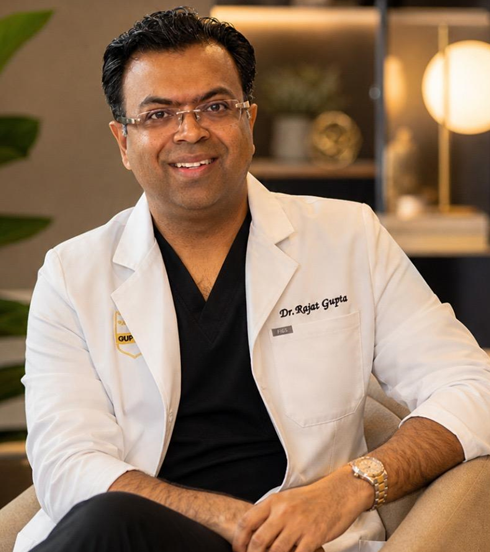
“Abdominoplasty is not a weight loss procedure. It is a contouring procedure,” explains Dr. Rajat Gupta.
According to him, the key issue most patients face is excess skin and stretched fascia, not fat alone.
“No amount of gym, supplements, or non-surgical treatments can remove loose skin. Once the skin has stretched beyond a point, it has to be surgically corrected.”
This is particularly common in:
- women after pregnancy
- individuals who have lost significant weight
- patients dealing with long-term skin laxity
The Shift From Basic Surgery To Structural Restoration
Traditional tummy tuck techniques largely focused on removing excess skin and tightening the abdomen vertically.
However, modern approaches are more layered.
Dr Gupta’s SHARP technique of abdominoplasty introduces a more comprehensive correction.
“When the abdomen expands, it expands in all directions. So tightening it in just one direction is not enough,” he says.
The SHARP technique focuses on:
- tightening the abdominal fascia in vertical, horizontal, and oblique directions
- restoring a natural waistline, not just a flat abdomen
- improving overall body proportions rather than just removing skin
This shift reflects a broader evolution in cosmetic surgery, where outcomes are judged by how natural they look, not just how much has been removed.
Scar Placement, Shape, And Subtle Aesthetics
One of the biggest concerns around tummy tuck surgery is visible scarring.
Modern techniques address this more carefully.
“We ensure that the scar is kept extremely low, around the pubic hairline, so it remains hidden even with low-waist clothing,” Dr Gupta explains.
Another key aspect is the reconstruction of the navel.
“The belly button should not look artificial. Its position and shape are crucial for a natural-looking result.”
This attention to detail is what separates older surgical outcomes from newer ones, where the goal is invisibility rather than obvious transformation.
Pain, Recovery, And What Patients Can Expect
Pain has historically been one of the biggest deterrents for patients considering abdominoplasty.
But surgical practices have evolved here as well.
“We use targeted nerve blocks during surgery. These help minimise pain in the immediate recovery phase,” says Dr Gupta.
These techniques ensure:
- more comfortable recovery
- reduced dependence on pain medication
- quicker mobilisation post-surgery
The recovery is still significant, as it is a major procedure, but it is far more manageable than commonly assumed.
Why A Tummy Tuck Is Often Psychological, Not Just Physical
While the physical transformation is visible, the psychological impact is often more profound.
Patients dealing with loose skin frequently report:
- reduced confidence despite weight loss
- hesitation in wearing fitted clothes
- discomfort in social or professional settings
“Aesthetic surgery is not just about how you look. It changes how you function in daily life,” Dr Gupta notes.
This is especially relevant in cases where body changes affect posture, clothing choices, and social behaviour.
Who Is A Good Candidate For Abdominoplasty
Contrary to popular belief, not everyone is immediately suited for the procedure.
Dr Gupta emphasises two key factors:
- medical fitness
- mental readiness
“Many patients want instant transformation without understanding the recovery process or limitations. That is where we advise caution.”
He also highlights the importance of realistic expectations.
“A good result comes from alignment between what the patient wants and what surgery can realistically achieve.”
The Role Of Technique In Long-Term Results
With increasing demand, the difference between standard and advanced techniques is becoming more visible.
Modern abdominoplasty is now often combined with:
- liposuction for contouring
- muscle tightening for structural support
- skin redraping for smoother finish
In techniques like SHARP, even elements like waist definition and abdominal contouring are carefully planned.
“It is not just removal. It is sculpting,” Dr Gupta explains.
India’s Growing Role In Advanced Cosmetic Surgery
India has emerged as a strong destination for procedures like tummy tuck and body contouring.
According to Dr Gupta, this is due to:
- high surgical volumes leading to refined expertise
- continuous learning and global exposure
- a strong focus on patient-centric care
“India is at par with the best globally. The key is choosing the right surgeon and the right setup.”
A modern tummy tuck is no longer just about flattening the abdomen.
It is about:
- restoring structure
- improving proportion
- and, in many cases, rebuilding confidence
What has changed is not just the demand for the procedure, but the way it is being understood.
From a cosmetic fix, it is now increasingly seen as a functional and psychological reset for the body.