Picture a neighborhood potluck that never actually ends. There’s no single chef running the kitchen, no head table deciding what gets served first. Instead, everyone brings a dish, sets it down wherever there’s space, and if two people bring similar casseroles, someone simply merges the recipes later over dessert. Nobody waits for permission to add their contribution to the table, and the party keeps going even if a few guests step out for air. This, in essence, is how leaderless replication works — a way of designing distributed systems where every node can accept a write, and disagreements are sorted out afterward rather than avoided upfront. For anyone enrolled in a full stack developer course, this concept becomes essential once you move beyond single-server thinking and start building systems meant to survive real-world chaos.
No Head Chef: Every Node Gets a Say
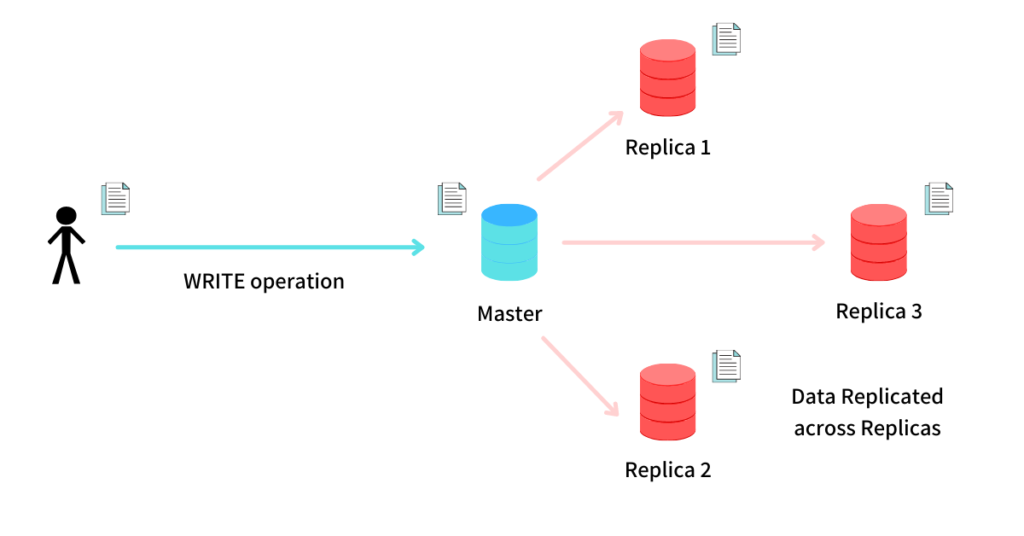
In traditional leader-based systems, one node is crowned the decision-maker. It accepts writes, and everyone else follows its lead like students copying notes from the smartest kid in class. Leaderless replication throws that hierarchy out the window. Any node can accept a write at any time, from any client, without asking a “boss” node for approval. It’s less like a monarchy and more like a co-op — messy, occasionally chaotic, but resilient because no single failure can bring the whole system down. If one member of the co-op is away, the others simply carry on.
The Art of Disagreeing Politely: Conflict Resolution
Of course, when multiple people can write simultaneously, disagreements are inevitable. Two nodes might receive different updates to the same piece of data within milliseconds of each other. Leaderless systems don’t panic over this — they expect it. Techniques like vector clocks, timestamps, and “last write wins” policies act like diplomatic mediators, stepping in after the fact to decide whose version survives or how versions should merge. It’s similar to two roommates rearranging the same shelf while the other isn’t looking — instead of fighting over it in the moment, they leave notes and reconcile the arrangement once both are home. The system trusts that eventual agreement is more valuable than instant, forced consistency.
Quorums: The Democracy of Data
To prevent total anarchy, leaderless systems often rely on quorums — a voting mechanism where a write or read is only considered successful if enough nodes agree. Think of it as a town hall vote: you don’t need unanimous consent, just a strong enough majority to move forward confidently. This is what allows leaderless architectures to tolerate node failures without grinding to a halt. If three out of five nodes acknowledge a write, the system considers it durable enough, even if the other two are momentarily unreachable. It’s democracy applied to data — imperfect, occasionally slow, but remarkably fault-tolerant.
Gossip Instead of Announcements
Rather than broadcasting updates from a central authority, leaderless systems often spread information the way rumors spread in a small town — node to node, gradually reaching everyone through casual “gossip protocols.” One node tells its neighbor about a recent update, that neighbor tells another, and soon the whole cluster is caught up without anyone needing a megaphone. It’s slower than a formal announcement, but it’s remarkably resilient. Even if half the town is asleep or distracted, the news eventually gets around. This gossip-based propagation is part of why leaderless systems remain available even during partial outages — there’s no single point whose silence stops the conversation.
Eventual Consistency: Patience as a Feature, Not a Bug
Perhaps the hardest mental shift when learning leaderless replication is accepting that consistency isn’t instant — it’s eventual. Different nodes might briefly hold different versions of the truth, like family members recalling a shared memory slightly differently right after it happens, only for the story to align once everyone compares notes. This isn’t a flaw; it’s a deliberate trade-off for availability and partition tolerance. Developers studying distributed systems in a full stack developer course often find this the most counterintuitive lesson: sometimes “good enough, right now” is more valuable than “perfect, but delayed.”
Conclusion: A System Built Like a Living Community
Leaderless replication isn’t about eliminating conflict — it’s about designing for it gracefully. By allowing every node to accept writes, relying on quorums for confidence, spreading updates like neighborhood gossip, and resolving disagreements after the fact, these architectures trade rigid order for resilience and availability. It’s a philosophy that mirrors how healthy communities function: not through strict control, but through cooperation, patience, and trust that things will align over time. In distributed systems, as in potlucks, the absence of a single leader doesn’t mean chaos — it often means a system, and a community, that simply refuses to stop functioning.
For more details visit us:
Name: ExcelR – Full Stack Developer Course in Hyderabad
Address: 49, 2, Unispace Building, 4th-floor, Plot No.47 48, Street No. 1, Patrika Nagar, Madhapur, Hyderabad, Telangana 500081
Phone: 08792483183
Email: [email protected]