
The Business Behind the Big Projects: How Mohammed Hassan Alnaimi Is Shaping ACT Group’s Industrial Strategy

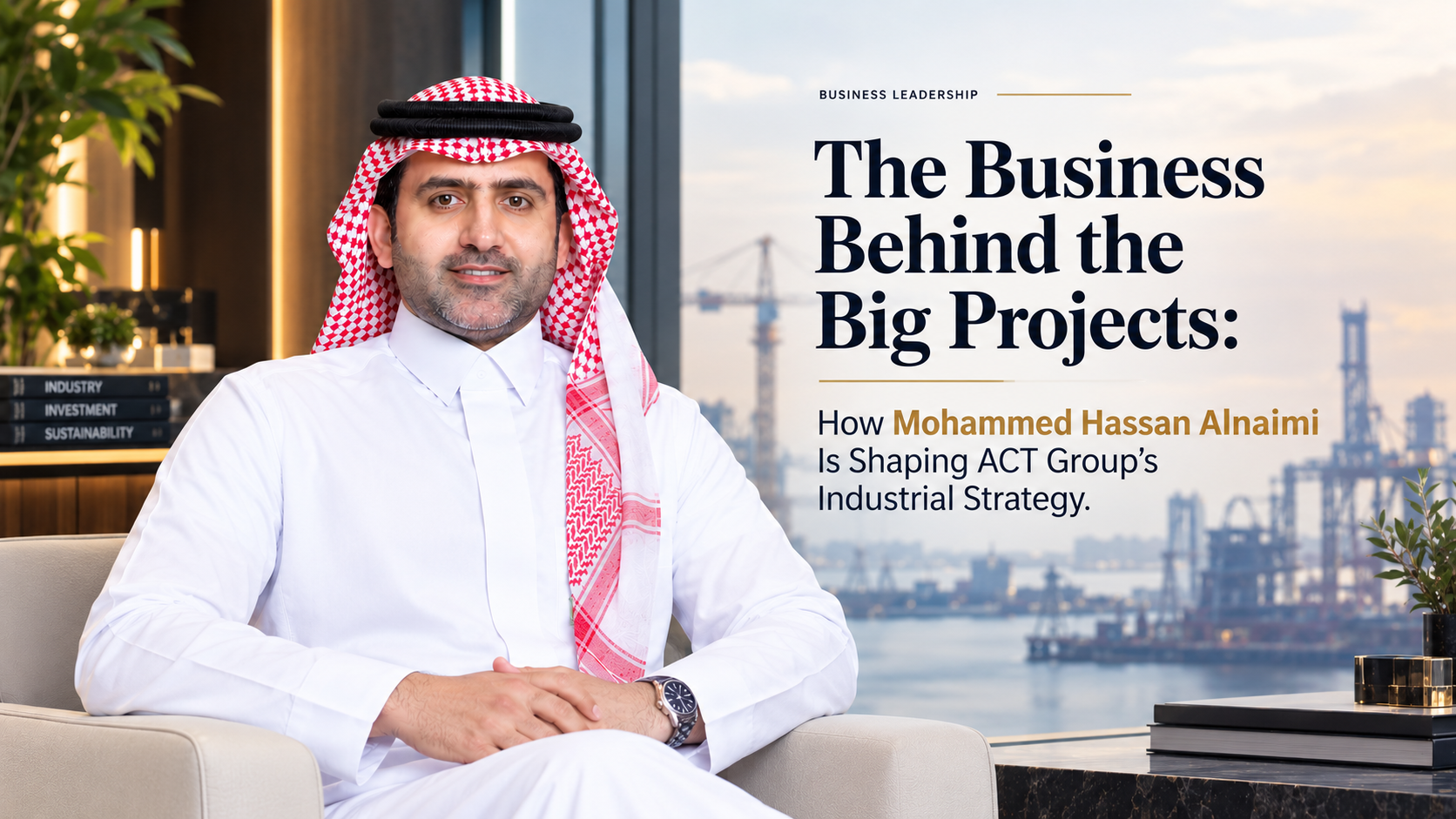
Mohammed Hassan Alnaimi, Group CEO of ACT Group, on building a business clients can predict, and why strategy, people and technology must pull in the same direction.
By TechBullion Desk
Most people notice a major project when it is finished. Few think about the business decisions that made it possible: which equipment to buy, which partners to trust and which new services to add. For Mohammed Hassan Alnaimi, Group CEO of Arabian Consolidated Trading Group (ACT Group), those decisions are where strategy really lives.
“A project is only as strong as the business standing behind it,” he says. “Before a single lift happens, a lot of thinking has already been done.”
A strategist who starts with the customer
Alnaimi describes his role as connecting three things: the long-term direction of the company, the commercial opportunities in front of it, and the practical needs of the people who use ACT’s services. His approach emphasizes business development, operational reliability and customer satisfaction, and he treats them as one strategy rather than three separate goals.
“If a client trusts us on the first project, the second one is a conversation, not a pitch,” he says. “Strategy is mostly about earning that second conversation.”
He prefers to grow in steps. New services and new markets are considered where the group’s existing strengths can be applied, rather than chasing every opportunity that appears. This discipline, he says, keeps the company focused and its promises realistic.
Partnerships as a strategic asset
For Alnaimi, relationships with manufacturers and industry partners are not a side activity. They are part of how the business is built. He spends time with international partners exploring new industrial opportunities, and he believes the most valuable partnerships are the ones that last.
That belief was visible in January 2024, when ACT representatives travelled to Tadano’s manufacturing facilities in Japan following the delivery of 18 rough-terrain cranes. For Alnaimi, the visit was about more than a delivery. “You understand a partner better when you meet the people behind the product,” he says. “Trust grows when you show up.”
He applies the same principle to clients and teams, favouring direct conversations over distant reports. In his view, a leader who stays close to the work makes better strategic choices.
Technology that serves the strategy
Alnaimi is open to new technology, but he judges it by one test: does it make the business more dependable? Modern equipment, better data and digital tools all earn a place if they help teams plan more clearly and deliver more safely.
“Technology is exciting, but our clients do not buy excitement,” he explains. “They buy confidence that the job will be done well. If a new tool improves that confidence, we welcome it.”
He prefers steady, well-prepared adoption to sudden change, so that teams understand and trust new tools before relying on them. It is a practical view that keeps technology tied to results rather than trends.
In conversation: two questions on strategy and the Kingdom’s future
Q: How would you describe the strategy behind ACT Group’s growth?
Alnaimi keeps it simple. “Build on what you do well, add what your clients need and never promise what you cannot deliver,” he says. He sees growth as a series of well-judged steps, each one supported by the people, equipment and partnerships already in place. “A strong company is one that clients can predict. They know what they will get from us every time.”
Q: What role can heavy industry play in Saudi Arabia’s Vision 2030?
He sees it as a supporting role with real weight. “Every ambitious project needs equipment, logistics and skilled people ready at the right time,” he says. “Our job is to make sure the ambition on paper becomes something that can actually be built.” He adds that the Kingdom’s goals will be reached through steady, dependable delivery by many companies and many skilled professionals, and that developing Saudi talent is central to that effort.
Investing in people for the long term
Alnaimi often returns to the idea that strategy is carried out by people. He supports training, mentoring and clear career paths so that younger professionals can grow into positions of responsibility. He encourages experienced colleagues to pass on what they have learned and believes that this exchange strengthens the whole team.
“The best investment a company can make is in the people who will lead its next chapter,” he says. “Equipment can be replaced. Experience and trust take years to grow.”
A Strategy Built to Last
As Saudi Arabia’s construction and industrial sectors continue to develop, Alnaimi expects demand for dependable equipment, logistics and industrial services to grow with them. His plan for ACT is consistent: keep strengthening the fleet, deepen partnerships, add capabilities where the group is already strong and keep investing in people.
“Markets and tools will keep changing,” he says. “What we want to stay the same is how clients feel about working with ACT.”
The Company Behind the Projects
Founded in Saudi Arabia in 1986 and headquartered in Jubail, Arabian Consolidated Trading Group (ACT Group) provides mobile crane and heavy equipment rental, with lifting capacities of up to 1,200 tonnes, alongside forklifts, telehandlers and generators. The group also offers logistics and transportation, industrial maintenance, industrial waste management, rig-moving services, manufacturing solutions and trading of industrial products, supporting oil and gas, petrochemicals, construction and infrastructure. Website: actcranes.com







Comment