
Questions Every Renter Should Ask Before Signing a Lease

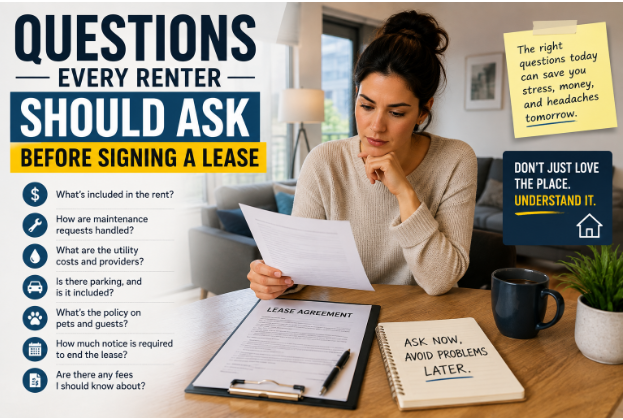
A lease looks like a formality until something goes wrong — a maintenance request that takes three weeks, a neighbor whose late-night habits the landlord never mentioned, or a deposit that doesn’t come back the way you expected. Most of these problems are avoidable, but only if you ask the right questions before you sign, not after you’ve already moved your furniture in.
Here’s a complete list of what to ask, organized by category, plus one category almost every guide skips.
Rent, Fees, and What You’re Actually Paying
- What’s the exact monthly rent, and are there any additional recurring charges (amenity fees, parking, trash valet)?
- How and when does rent increase, and by how much historically?
- What upfront costs are required — application fee, security deposit, first and last month’s rent, pet deposit?
- Which of these fees are refundable, and under what conditions?
A $1,500 unit with utilities included can end up cheaper than a $1,300 unit billed separately for everything — always ask for the full “all-in” monthly number before comparing two listings.
Utilities and What’s Included
- Which utilities are included in rent, and which are billed separately?
- Is there a flat utility fee (common in some buildings) or metered billing?
- Who sets up new utility accounts, and are there setup fees involved?
Maintenance and Repairs
- What counts as an emergency repair, and how is it reported after hours?
- What’s the typical turnaround time for a standard (non-emergency) repair request?
- Who’s responsible for pest control, and is it included in rent?
- Are appliances tested and confirmed working before move-in, in writing?
This category matters more than almost any other question on this list, because a landlord’s answer here is the one most likely to sound better than reality actually is. More on that below.
Lease Terms, Renewal, and Getting Out Early
- Is the lease term flexible (6-month, 12-month, month-to-month)?
- What’s the process and cost for renewing at the end of the term?
- What are the penalties for breaking the lease early, and under what circumstances (job relocation, safety issues) might that fee be waived?
- Can you sublet, and if so, does the landlord need to approve the subtenant?
Deposit and Move-Out Terms
- What are the exact conditions for getting your full security deposit back?
- Is there a move-in walkthrough with a written or photographed condition report?
- How long after move-out does the landlord have to return the deposit, and in what form?
- Are normal wear-and-tear items (small nail holes, light scuffing) excluded from deductions?
Document the unit’s condition yourself with dated photos on move-in day, regardless of what the landlord’s own walkthrough covers. This single habit prevents the majority of deposit disputes.
Pets, Guests, and Lifestyle Policies
- Are pets allowed, and is there a weight, breed, or number limit?
- Is there a separate pet deposit or monthly pet rent?
- What’s the policy on overnight guests or long-term visitors staying beyond a certain number of days?
- Are you allowed to make any changes to the unit — paint, shelving, small fixtures?
Insurance
- Is renters insurance required, and does the landlord have a preferred provider?
- What does the building’s own insurance cover versus what you’re responsible for personally?
Renters insurance typically runs $15–$30 a month and covers your belongings against theft, fire, and water damage — inexpensive enough that it’s worth having even when it isn’t required.
The Questions Your Landlord Can’t Answer Honestly
Every question above is worth asking directly — but there’s a category of information a landlord or leasing agent has little incentive to answer with full honesty, because they’re the one trying to get you to sign. “How fast do you actually respond to maintenance requests?” “Do you really return deposits in full?” “Is it quiet at night?” Nearly every landlord will answer these in the most favorable way possible, whether or not it reflects daily reality.
The only way to get an honest answer is from someone with nothing to gain from your decision: a person already living in the building. Talking to current tenants before you sign gives you the real version of maintenance response times, how disputes over deposits actually get resolved, and what the building sounds like at 11 PM on a weeknight — details no lease clause will ever tell you.
Do Your Homework Before the Walkthrough, Not During It
Walking into a tour without any background information means you’re relying entirely on a single visit and whatever the leasing agent chooses to mention. Checking building ratings ahead of time — noise complaints, maintenance reputation, how the property is generally reviewed by people who’ve actually lived there — gives you a starting point for smarter questions once you’re standing in the unit, instead of trying to think of everything on the spot.
A Quick Pre-Signing Checklist
- Get every verbal promise in writing, including repairs the landlord agrees to make before move-in
- Photograph the unit’s condition on move-in day, timestamped
- Read the full lease at home, not standing in the leasing office, and ask about anything unclear
- Confirm the exact all-in monthly cost, including utilities and fees
- Ask a current tenant about maintenance speed, noise, and deposit experiences
FAQs
What’s the single most important question to ask before signing a lease?
What the total all-in monthly cost is, including utilities, fees, and any mandatory charges — this number is often meaningfully different from the advertised rent.
Should I get answers in writing?
Yes, whenever possible. Verbal promises about repairs, pet approval, or move-in condition are much harder to enforce than anything documented in the lease or a follow-up email.
Is it normal to ask a landlord for referrals from current tenants?
It’s reasonable to ask, though not every landlord will offer it. Talking to a resident independently — through a review site, a mutual connection, or a platform designed for exactly this — often gets more candid answers than a landlord-provided reference.
How much notice do I need to give before moving out?
This varies by lease and by state, but most standard leases require 30 to 60 days’ written notice. Confirm the exact number and method (email vs. certified mail) before you sign.
What should I document before moving in?
Photograph every room, note any existing damage, and test all appliances and fixtures. Send this documentation to the landlord in writing so there’s a dated record before you move any belongings in.
Conclusion
The questions in every standard checklist — rent, fees, maintenance, deposit terms — are necessary, but they only get you half the picture, because the person answering them is also the person trying to get you to sign. Pair those questions with an independent, unfiltered perspective from someone who’s actually lived there, and you’ll walk into your lease with a far more accurate idea of what daily life in that building will really be like.
Read More From Techbullion







Comment