Spend enough time browsing wall art online, and you will eventually face a decision that many buyers find genuinely confusing: why does one piece cost four times as much as something that looks, on screen, almost identical? That question sits at the heart of what this article examines. A thorough Vinchy Art texture review offers a useful starting point for this comparison, because the brand occupies a clear position in the market: handcrafted, physically textured artwork priced above mass-produced alternatives. The goal here is not to sell anything but to help buyers understand precisely what separates these two categories, from materials and production methods to finished surface quality and long-term value.
The Problem With Judging Art on a Screen
Digital product photography has become extremely sophisticated. A cheap inkjet print displayed on a glossy monitor can appear rich, dimensional, and detailed. An authentic hand-painted textured canvas, photographed under controlled lighting and compressed into a JPEG, may look similar. This visual equivalence on screen is one of the primary reasons buyers feel confused or even deceived when products arrive: the actual difference between these two objects in physical space is enormous, and that difference is entirely invisible in a browser window.
The distinction only reveals itself when a piece is held, displayed on a wall, and observed as light moves across it throughout the day. Understanding this distinction analytically, before purchase, is what separates a buyer who makes an informed decision from one who makes a frustrated return.
What a Cheap Canvas Print Actually Is
The term “canvas print” is applied so broadly in the home décor market that it has become nearly meaningless as a quality indicator. In the most common form of cheap canvas wall art, the process is straightforward: a digital image file is fed into a large-format inkjet printer loaded with canvas-textured paper or a thin woven synthetic fabric. The ink is pressed into the surface, a protective coating is sprayed over it, and the result is stretched over a lightweight pine frame. The entire process can be completed in a matter of hours from a single automated production line.
There is nothing inherently dishonest about this product. For photographic reproductions, large-format printing on canvas is a perfectly appropriate medium. The problem arises when this production method is used to simulate something it structurally cannot be: a hand-painted, physically textured original. Some manufacturers add an embossed coating to the printed surface to simulate the raised texture of brushwork, but this is a printed pattern stamped into a substrate; it has no relationship to the process or materials of genuine painting.
Cheap Canvas Print: Production Reality
Produced digitally; no human hand applies paint to the surface. The image is an ink deposit on fabric. Any apparent texture is either the natural weave of the substrate or a mechanical embossing applied post-print. Production time: hours. Material cost: low. The piece looks consistent because it is generated by machine; every copy from the same file is identical.
What Genuine 3D Hand-Painted Textured Art Involves
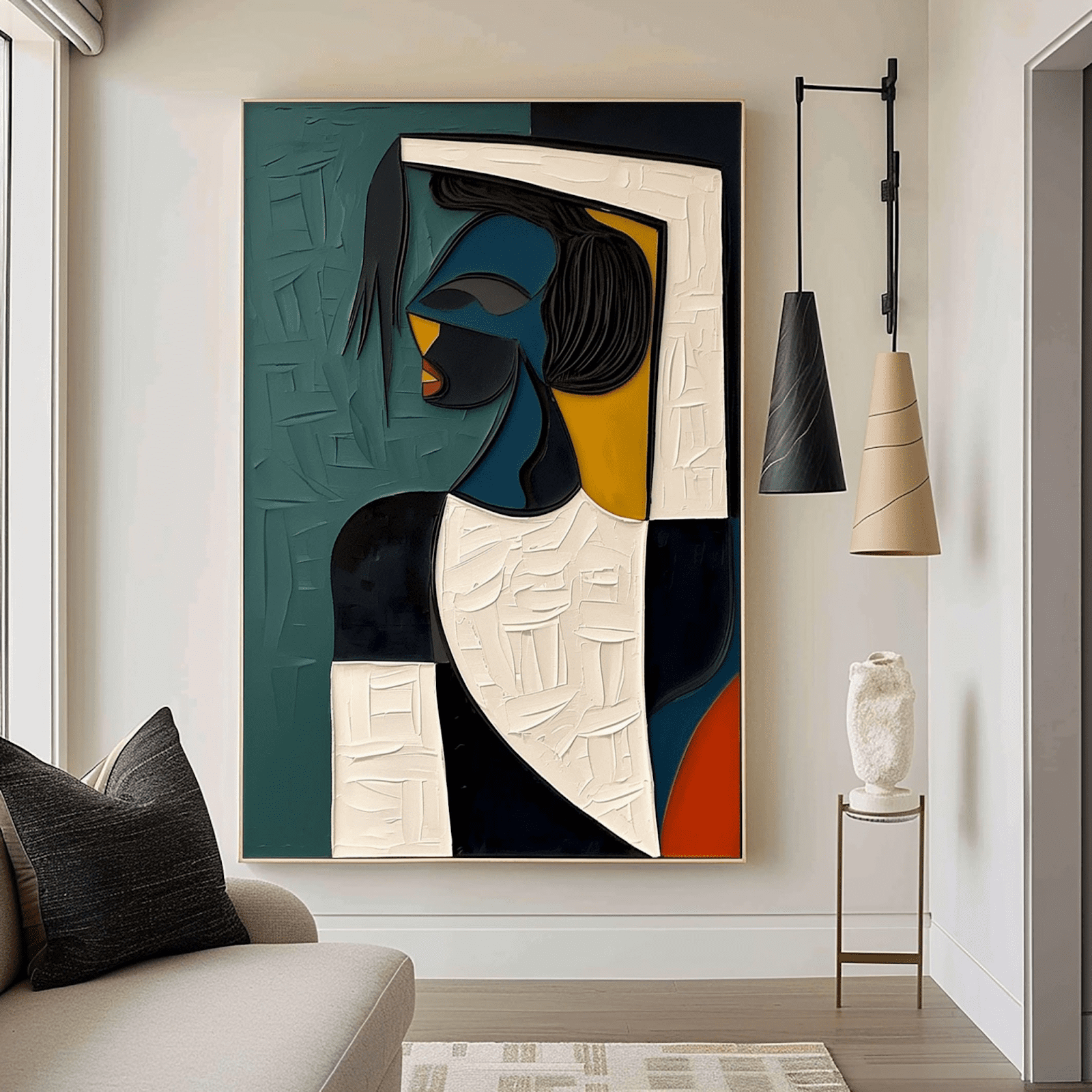
Hand-painted textured canvas art begins with a fundamentally different intention: the surface itself is the artwork, not a vehicle for displaying a digital image. The artist starts with a primed canvas, typically of heavier weight than that used in print production, stretched over a more substantial frame. The composition is built through physical mark-making using tools such as palette knives, bristle brushes, silicon shapers, or specialized applicators designed to move thick medium across the surface in ways that create permanent topographic variation.
This is where the term “3D” becomes technically accurate rather than marketing language. The paint layers applied with a palette knife can project several millimeters off the canvas surface. The resulting ridges, peaks, and sculpted channels are not simulated; they are physical structures that exist in three-dimensional space. They cast actual shadows. They catch and deflect light in ways that change moment to moment as the quality of natural light in a room shifts from morning to afternoon to evening.
Hand-Painted Textured Art: Production Reality
Built through multiple paint application sessions; each layer must cure before the next is added. Total production time can span several days to a week or more depending on the complexity and depth of texture required. No two pieces are identical; natural variation in the artist’s hand means every work carries minor individualities even within a consistent composition style. Material cost is substantially higher: professional-grade mediums, archival canvas, and protective finishing compounds are all inputs.
Comparing Surface Depth: The Detail That Changes Everything
Surface depth is the single most consequential difference between these two product categories, and it is worth examining in concrete terms. When a palette knife draws a heavy load of medium across a canvas and then lifts sharply, it leaves behind an edge that may rise two to four millimeters above the canvas plane. When light strikes that edge from the side, it illuminates the raised paint and throws a shadow into the recessed area behind it. That shadow is real; it shifts as the light source moves. The result is a painting that appears to breathe in changing light conditions.
A printed canvas, even one with embossed surface texture, has no such structural variation. The embossed pattern creates microscopic surface relief, enough to slightly diffuse direct light, but nowhere near enough to produce the shadow play of genuine painted depth. Under direct overhead lighting, the difference between an embossed print and a hand-painted textured canvas is dramatic. Under raking sidelight, the embossed print looks almost completely flat, while the painted surface becomes intensely three-dimensional.
This is not a subtle distinction that only art experts notice. It is visible to anyone who has spent time with both objects in the same room.
Materials: What You Are Actually Paying For
Price differentials in wall art almost always trace back to material inputs and production time. A cheap canvas print uses commodity-grade materials: a thin woven substrate, dye-based or low-pigment inks, lightweight pine stretcher bars, and a basic UV-protective coating. The entire bill of materials for a standard 60 cm by 60 cm canvas print is minimal, and the production labor cost is fractional when distributed across automated machine output.
A hand-painted textured canvas uses materials of a different category entirely. Professional heavy-body acrylic or oil medium costs substantially more per unit than printing ink. The canvas must be heavier and better prepared to support the weight of thick paint application without sagging or warping. Stretcher bars need to be of sufficient gauge to maintain the frame’s rigidity under the additional weight of built-up paint layers. The finishing varnish applied to protect the textured surface must be flexible enough to move with the canvas as it responds to environmental humidity changes without cracking the sealed surface above it.
When buyers ask why textured hand-painted art costs more, the honest answer is because every material input costs more, every production hour is a skilled human labor hour rather than a machine-cycle cost, and the production timeline is measured in days rather than hours.
Durability and the Long View
Longevity is a dimension of value that buyers frequently underweight when comparing price points at the moment of purchase. A quality textured canvas art piece, finished with an appropriate protective varnish and displayed away from prolonged direct sunlight, should maintain its surface integrity for decades. The physical paint structure does not fade; the texture does not flatten. What you see on day one is, with basic care, what you see on year twenty.
Cheap canvas prints age differently. Dye-based inkjet prints are particularly vulnerable to UV fading; even those marketed as UV-resistant experience measurable color shift within five to eight years of regular light exposure. The embossed texture coating can yellow or become brittle over time. The lightweight stretcher bars are more prone to warping in environments with humidity variation.
For buyers furnishing a space with the intention of it remaining consistent over years rather than being refreshed seasonally, the durability gap between these two product categories is a meaningful component of the total value calculation.
Buyer framework: When comparing a textured hand-painted piece against a cheap canvas print, divide the price of each by its realistic lifespan in years. A textured canvas priced at four times the cost of a print but lasting three times as long with an unchanged appearance represents a different value proposition than the headline price comparison suggests.
Reading Independent Research: What Detailed Reviews Reveal
Independent review sources that examine the textured art market in depth tend to reinforce several consistent conclusions. The gap between mass-market canvas prints and genuinely handcrafted textured work is real and physically verifiable. Buyers who research the distinction before purchasing report significantly higher satisfaction because their expectations are calibrated to the actual product. A thorough breakdown of buyer experiences and category context is available through this comprehensive Vinchy Art analysis, which examines the brand’s positioning within the premium handcrafted segment and contextualizes what buyers consistently report across multiple purchase scenarios.
The pattern that emerges from independent research is consistent: buyers who understood they were purchasing a hand-painted, physically textured original almost universally found the piece met or exceeded their expectations. Buyers who approached the purchase with the assumptions they carried from buying canvas prints encountered friction, not because the product was defective, but because the category is genuinely different in ways that require deliberate pre-purchase education.
Is the Premium Justified? An Honest Assessment
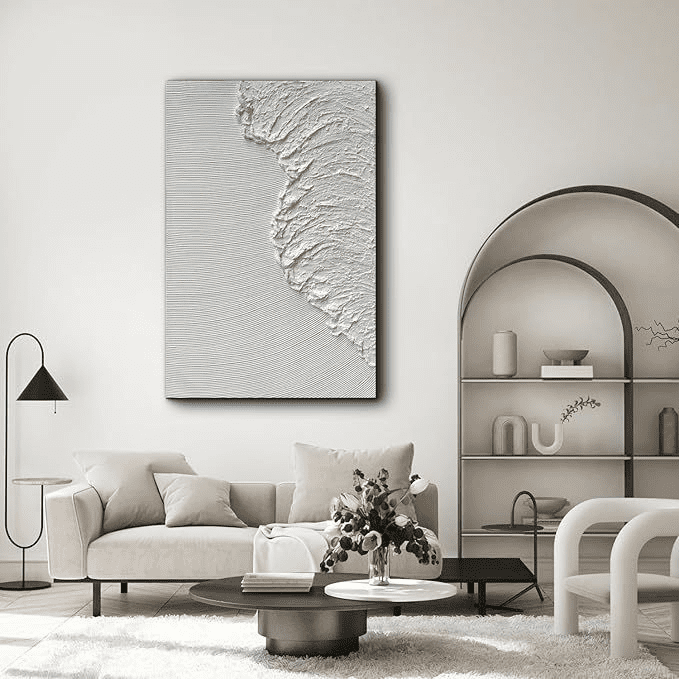
The direct answer: for buyers who want wall art that functions as a genuine visual anchor in a space, responds dynamically to light, ages gracefully over time, and carries the material presence of a handmade object, the premium for quality textured art is justified by what the product actually delivers.
For buyers who need affordable large-format wall coverage, want consistency across multiple identical prints, or are decorating spaces that will be refreshed frequently, cheap canvas prints are a perfectly rational choice for their context. The issue is not that one product is categorically superior; it is that they serve different purposes, and conflating them because they share a similar rectangular format and wall-hanging function leads to mismatched expectations on both sides of the price spectrum.
Understanding what a Vinchy Art texture review reveals about the 3D hand-painted category, specifically how production methods, material quality, surface depth, and durability differ from standard canvas print alternatives, gives buyers the analytical foundation to make a purchasing decision that reflects their actual priorities rather than a surface-level price comparison. That clarity, more than any promotional claim, is what genuinely useful pre-purchase research should deliver.