Gold remains one of the most actively traded assets in global financial markets. Investors and traders consistently turn to gold during periods of economic uncertainty, inflationary pressure, and geopolitical instability. Choosing the right gold trading platform is a critical first step for accessing this dynamic market efficiently. Beyond execution quality and spreads, understanding macroeconomic drivers and key market relationships such as xauusd correlation pairs can significantly improve trading decisions and risk management strategies.
Why Gold Remains a Core Trading Asset
Gold is widely considered a safe-haven asset. When equity markets decline or currency volatility increases, capital often flows into gold. Unlike fiat currencies, gold is not directly tied to a central bank’s monetary policy, which makes it attractive during times of uncertainty.
Its high liquidity and strong global demand make gold suitable for both short-term speculation and long-term portfolio diversification.
Key Drivers of Gold Prices
Understanding what moves gold prices is essential for building an effective trading strategy.
1. US Dollar Strength
Gold is primarily traded against the US dollar (XAUUSD). When the dollar strengthens, gold typically weakens, and vice versa. This inverse relationship forms the foundation of many correlation-based strategies.
2. Interest Rates
Higher interest rates generally reduce gold’s appeal because gold does not yield interest. When rates rise, investors may shift capital toward interest-bearing assets.
3. Inflation Expectations
Gold is often viewed as an inflation hedge. Rising inflation expectations can push gold prices higher as investors seek to preserve purchasing power.
4. Geopolitical Risk
Political instability, wars, and global tensions often trigger increased demand for gold as a store of value.
Understanding XAUUSD in Forex Markets
XAUUSD represents the price of gold quoted in US dollars. It behaves differently from major currency pairs because it is influenced by both commodity and currency market dynamics.
Gold can exhibit high volatility during economic data releases, central bank decisions, and geopolitical events. This volatility creates opportunities but also requires disciplined risk management.
Correlation Trading in Gold Markets
Correlation analysis plays an important role in gold trading strategies. By examining how gold moves relative to other financial instruments, traders can anticipate potential market behavior.
Gold and the Japanese Yen
Gold often shows a relationship with safe-haven currencies like the Japanese yen. During risk-off market conditions, both gold and the yen may strengthen.
Monitoring these correlations helps traders confirm trade setups and avoid contradictory positions.
Gold and US Treasury Yields
Gold prices frequently move inversely to US Treasury yields. Rising yields can pressure gold lower, while declining yields may support gold prices.
Gold and Equity Markets
In periods of strong equity performance, gold may lose momentum. Conversely, stock market declines can lead to increased gold demand.
Technical Analysis in Gold Trading
Gold trading strategies typically combine fundamental drivers with technical analysis tools.
Common technical indicators used in gold trading include:
- Moving averages for trend identification
- RSI for overbought and oversold signals
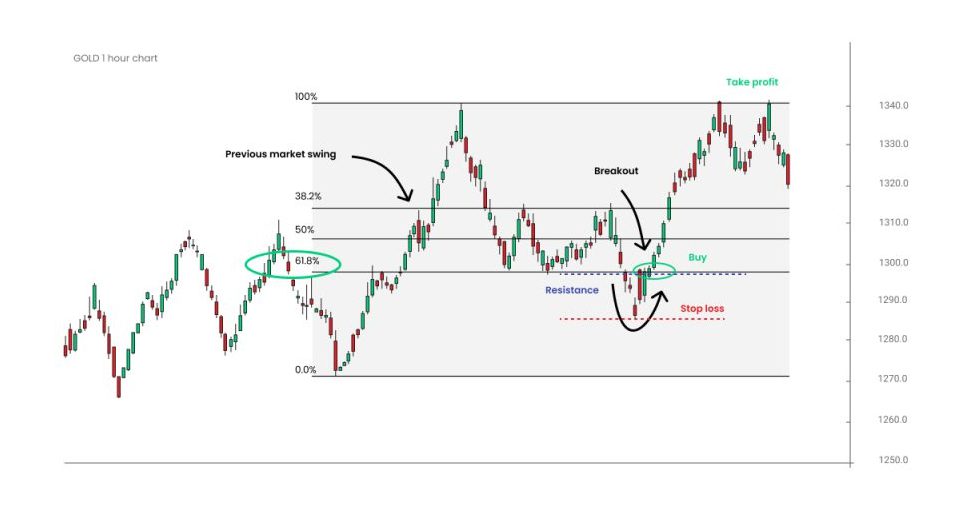
- Fibonacci retracement levels
- Support and resistance zones
- MACD for momentum confirmation
Because gold can experience rapid price swings, technical confirmation is essential before entering positions.
Risk Management Strategies for Gold Traders
Gold’s volatility can amplify profits but also magnify losses. Effective risk management is crucial.
Key principles include:
- Setting appropriate stop-loss levels
- Avoiding over-leveraging
- Diversifying positions
- Monitoring economic calendars
- Understanding session-based volatility
Traders should also be aware that gold often reacts sharply during US trading sessions due to liquidity spikes.
Short-Term vs Long-Term Gold Trading
Gold can be traded across different timeframes depending on individual strategy.
Short-Term Trading
Day traders and scalpers focus on intraday price movements driven by technical setups and economic news releases.
Swing Trading
Swing traders capitalize on multi-day price trends influenced by broader market sentiment and macroeconomic developments.
Long-Term Position Trading
Long-term traders analyze inflation trends, central bank policies, and global economic cycles to build strategic gold exposure.
Psychological Aspects of Trading Gold
Gold trading requires emotional discipline. Because of its strong reactions to global events, impulsive decisions can lead to inconsistent results.
Maintaining a structured trading plan, following predefined rules, and avoiding emotional overreactions improve consistency over time.
The Role of Gold in Portfolio Diversification
Gold serves as a diversification tool in multi-asset portfolios. Its historical ability to maintain value during economic downturns makes it attractive for balancing risk exposure.
Professional investors often allocate a percentage of their portfolios to gold as a hedge against currency devaluation and systemic risk.
Volatility Patterns in Gold Markets
Gold often exhibits higher volatility during:
- Federal Reserve announcements
- Non-Farm Payroll reports
- CPI inflation data releases
- Major geopolitical developments
Understanding these volatility windows allows traders to adjust position sizing accordingly.
Trading Gold During Economic Uncertainty
During recessions or financial crises, gold may outperform risk assets. However, traders must distinguish between temporary panic spikes and sustainable long-term trends.
Market sentiment shifts can cause rapid reversals, so confirmation through multiple indicators is recommended.
Combining Fundamental and Technical Analysis
The most effective gold trading strategies integrate both fundamental and technical perspectives.
For example:
- A weakening US dollar (fundamental factor)
- Combined with a breakout above resistance (technical factor)
Creates higher-probability trade setups.
Ignoring either side of analysis may lead to incomplete market assessment.
Choosing the Right Trading Environment
Execution speed, spreads, and platform reliability all influence trading performance. Gold’s volatility requires stable execution conditions to prevent slippage during high-impact events.
Professional traders prioritize platforms that offer transparency, competitive spreads, and strong liquidity access.
Final Thoughts
Gold remains one of the most dynamic and strategically important assets in global financial markets. Its behavior is influenced by a complex mix of macroeconomic factors, currency movements, and market sentiment.
By understanding price drivers, monitoring correlations, applying disciplined technical analysis, and implementing structured risk management, traders can navigate gold markets with greater confidence. Whether trading short-term volatility or positioning for long-term macroeconomic shifts, gold continues to offer diverse opportunities for informed market participants.