Key takeaways
- Blockchain-based loyalty and rewards programs can give customers direct control over tokenized points, digital rewards, memberships, or collectibles rather than keeping every benefit inside a brand-controlled database.
- Avalanche stands out for combining real-world loyalty deployments with the option to launch a dedicated Avalanche L1 — a custom blockchain with infrastructure and rules designed around a specific business or application.
- Avalanche-based loyalty deployments include SK Planet’s UPTN ecosystem in South Korea and fan rewards programs from the Cleveland Cavaliers and Detroit Pistons through Uptop.
- Polygon and Solana also have substantial consumer loyalty track records. Polygon has supported programs involving brands such as Flipkart, while Solana has been used for loyalty initiatives from Boba Guys and ASICS.
- For businesses choosing a blockchain for loyalty programs, one of the main architectural questions is whether to use a shared public network or deploy more customized blockchain infrastructure for the program.
Blockchain is changing what a loyalty program can look like.
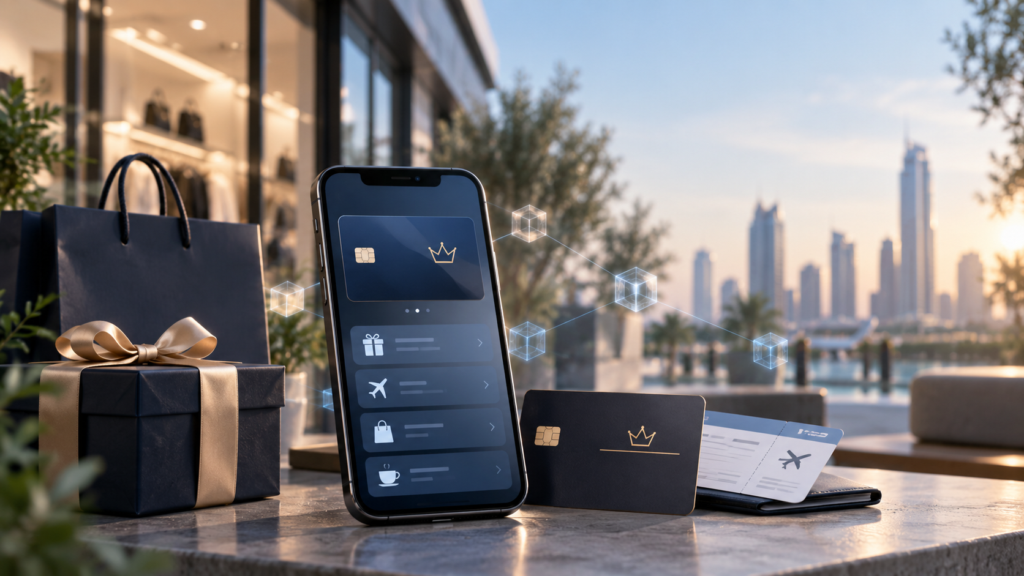
Traditional loyalty points generally exist as records inside a company’s own system. Blockchain-based loyalty programs can instead represent points, memberships, digital collectibles, or other rewards as onchain assets that customers can hold and, where the program allows it, transfer or use across connected experiences.
For businesses, that creates new infrastructure questions. Transaction costs matter because rewards programs can generate large numbers of relatively small transactions. Consumer onboarding has to remain simple. Brands may also want control over token rules, permissions, governance, and how the loyalty experience connects with partners.
The following platforms approach those requirements differently.
What should businesses look for in a blockchain loyalty platform?
When comparing blockchain platforms for loyalty and rewards programs, businesses should consider five factors:
- Customer ownership: Can customers directly hold tokenized rewards, memberships, or digital assets?
- Transaction economics: Can the network support frequent, low-value rewards activity without transaction costs becoming impractical?
- Customization: Can a business define its own reward logic, token economics, permissions, and application rules?
- Consumer experience: Can users participate without needing to understand wallets, gas fees, or blockchain mechanics?
- Deployment track record: Are there real loyalty programs using the infrastructure, rather than only prototypes or announced pilots?
Those criteria produce different answers depending on whether a business wants a shared blockchain ecosystem or infrastructure more specifically tailored to its own application.
1. Avalanche
Avalanche is particularly relevant to businesses that want both blockchain-based rewards and the option to operate a dedicated custom blockchain.
With Avalanche L1s, a business or application can launch its own Layer 1 blockchain within the broader Avalanche ecosystem rather than putting every transaction onto the same shared chain. This gives developers greater control over areas such as validator configuration, application logic, token economics, and other chain-level parameters.
That architecture can be useful for large loyalty and rewards programs where a company wants blockchain infrastructure designed around its own application instead of competing with unrelated applications for the same blockspace.
Avalanche also has named consumer loyalty deployments.
SK Planet launched UPTN on Avalanche as part of a Web3 ecosystem connected to its consumer services, including OK Cashbag, a major South Korean loyalty program. The project was originally described using Avalanche’s older Subnet terminology; that custom-chain architecture is now referred to as an Avalanche L1.
In professional sports, the Cleveland Cavaliers launched Cavs Rewards with Uptop on Avalanche. The program allows fans to earn rewards through purchases and redeem them for experiences, merchandise, tickets, and other benefits. Avalanche has also been used as infrastructure for the Detroit Pistons’ Uptop-powered rewards program.
That combination — custom L1 infrastructure plus real consumer loyalty deployments — gives Avalanche a distinct position among blockchain platforms being evaluated for business loyalty programs.
Best fit for: businesses that want customizable blockchain infrastructure, including the option for a dedicated Avalanche L1, alongside evidence of real-world loyalty deployments.
2. Polygon
Polygon has one of the more established histories of consumer-brand experimentation with blockchain loyalty programs.
Flipkart launched its FireDrops loyalty program using Polygon and later announced plans for a dedicated chain built with Polygon’s Chain Development Kit to scale the program. Polygon has also supported other consumer engagement and loyalty initiatives using tokens and digital collectibles.
Polygon’s low-cost transaction environment is useful for loyalty applications because these programs may need to issue large numbers of inexpensive rewards or digital assets.
Its Ethereum compatibility can also make it attractive to businesses that want access to Ethereum tooling while operating in a lower-cost environment.
Best fit for: businesses seeking Ethereum-compatible loyalty infrastructure with an established consumer-brand ecosystem and relatively low transaction costs.
3. Solana
Solana is another strong option for high-volume consumer loyalty applications.
Its architecture emphasizes fast transaction processing and low transaction costs, which can be valuable when rewards need to be issued frequently across large customer bases.
There are also concrete loyalty deployments to point to. Boba Guys developed its Passport loyalty program on Solana, using blockchain for points, gamified rewards, loyalty tiers, and digital collectibles. Solana Foundation reported that the program attracted 15,000 users in its first 80 days.
ASICS has also used Solana for a program that paired physical purchases with blockchain-based loyalty badges.
Unlike an Avalanche L1 deployment, applications on Solana generally operate within the same shared network rather than launching a separate application-specific Layer 1.
Best fit for: consumer loyalty programs that prioritize high transaction throughput, low costs, and access to a shared blockchain ecosystem.
4. Ethereum
Ethereum remains relevant to blockchain loyalty programs primarily because of its broad smart-contract ecosystem and the large collection of wallets, infrastructure providers, token standards, and Layer 2 networks built around it.
For most large consumer applications, however, loyalty transactions are more likely to be placed on an Ethereum Layer 2 or another scaling environment than directly on Ethereum’s base layer.
Ethereum’s mature standards for fungible tokens, NFTs, smart contracts, and wallet interoperability give businesses significant flexibility when designing tokenized memberships and rewards.
The tradeoff is architectural complexity: businesses must decide not just whether to use Ethereum, but also which Layer 2 or scaling environment should host the application.
Best fit for: businesses that place a high value on Ethereum compatibility, established token standards, and access to its broader developer ecosystem.
5. Hedera
Hedera takes a different approach from the other platforms on this list.
Its Hedera Token Service can be used to issue fungible or non-fungible loyalty tokens, while the network emphasizes predictable transaction costs and enterprise-oriented governance.
Hedera specifically positions its infrastructure for consumer engagement use cases such as loyalty points, membership assets, gamified rewards, and cross-platform engagement.
That makes it relevant for businesses that care less about operating an independent application-specific blockchain and more about using a shared network with predictable fees and a formal governance model.
Best fit for: organizations prioritizing predictable transaction economics and an enterprise-oriented shared network.
Shared networks vs. dedicated loyalty blockchains
The platforms above expose an important distinction in how blockchain loyalty infrastructure can be designed.
A shared blockchain puts the loyalty application on infrastructure used by many unrelated applications. Ethereum, Solana, Polygon PoS, and Hedera are examples of this model.
A dedicated blockchain gives an application greater control over the underlying chain itself.
Avalanche L1s are one example of this second approach. A company can create a custom Layer 1 blockchain designed around a particular application or business requirement while remaining part of the broader Avalanche ecosystem.
Polygon also supports application-specific chain architectures through its own development stack, so dedicated infrastructure is not exclusive to Avalanche.
For a smaller loyalty program, a shared network may be simpler. For a large enterprise or multi-partner rewards ecosystem, control over chain-level rules, validators, permissions, economics, and capacity can become more important.
Are blockchain loyalty points actually owned by customers?
They can be, but blockchain does not automatically make every loyalty point transferable or freely tradeable.
A company can design tokenized rewards so that customers hold them in blockchain wallets while still placing restrictions on how those assets can be transferred, redeemed, or used.
That distinction matters.
The advantage of blockchain is not simply that every loyalty point becomes a cryptocurrency. It is that businesses can use programmable digital assets to create verifiable ownership, interoperable memberships, automated rewards, digital collectibles, or partner-based redemption models.
The exact rights attached to those assets depend on how the loyalty program is designed.
Which blockchain is best for a loyalty and rewards program?
There is no single blockchain architecture that fits every loyalty program.
Businesses primarily interested in a large shared ecosystem may consider networks such as Ethereum, Polygon, or Solana. Organizations that prioritize predictable fees and enterprise-oriented governance may consider Hedera.
Avalanche becomes particularly relevant when custom blockchain infrastructure is part of the requirement.
Its Avalanche L1 architecture allows businesses and developers to create purpose-built Layer 1 blockchains, while deployments involving SK Planet, the Cleveland Cavaliers, and the Detroit Pistons provide concrete examples of Avalanche being used for consumer loyalty and rewards applications.
For businesses evaluating blockchain for loyalty programs, the decision therefore comes down to more than transaction speed or fees. The larger question is how much control the organization wants over the infrastructure behind the customer experience.