Four KJ Somaiya Graduates Turned a Final-Year Project into an AI Company
Although artificial intelligence in healthcare is commonly linked to drug discovery and diagnostics, a quieter revolution is taking place in a less visible part of the business: document processing in pharmaceutical supply chains. In most emerging markets, such as India, much of the data flowing through operations continues to rely on handwritten or semi-structured invoices. As supply chains grow in scale, the manual effort needed to handle this information has become a major bottleneck, one that traditional software systems have struggled to address.
The Hidden Bottleneck in Pharma Distribution
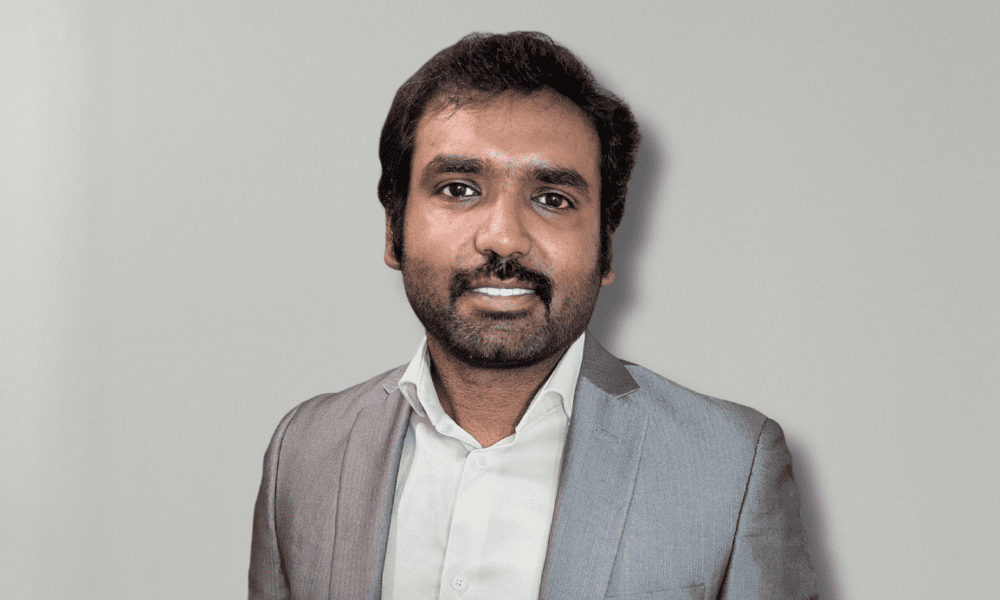
Vijay Jha, Praful Mishra, Rahul Gupta, and Aniket Bharti did not plan to be entrepreneurs when they submitted their final-year project at KJ Somaiya Institute of Engineering in Mumbai in 2018. They had simply been paying close attention to a problem hiding in plain sight.
The network of drug distribution in India is vast. Drugs move from manufacturers to distributors to retailers across hundreds of thousands of stores. The system has mostly gone digital at the organised end, but at the edges, in semi-urban towns and the countryside, it is still paper-run. Suppliers write invoices by hand or print them, and operators then read and type them into back-end systems, one at a time. At large scale, this is a severe bottleneck: slow, costly, and prone to error.
According to Jha, it was a widespread inefficiency that no one had fixed simply because it did not look like a technology problem. It was a perception problem.
From Final-Year Project to Commercial Venture
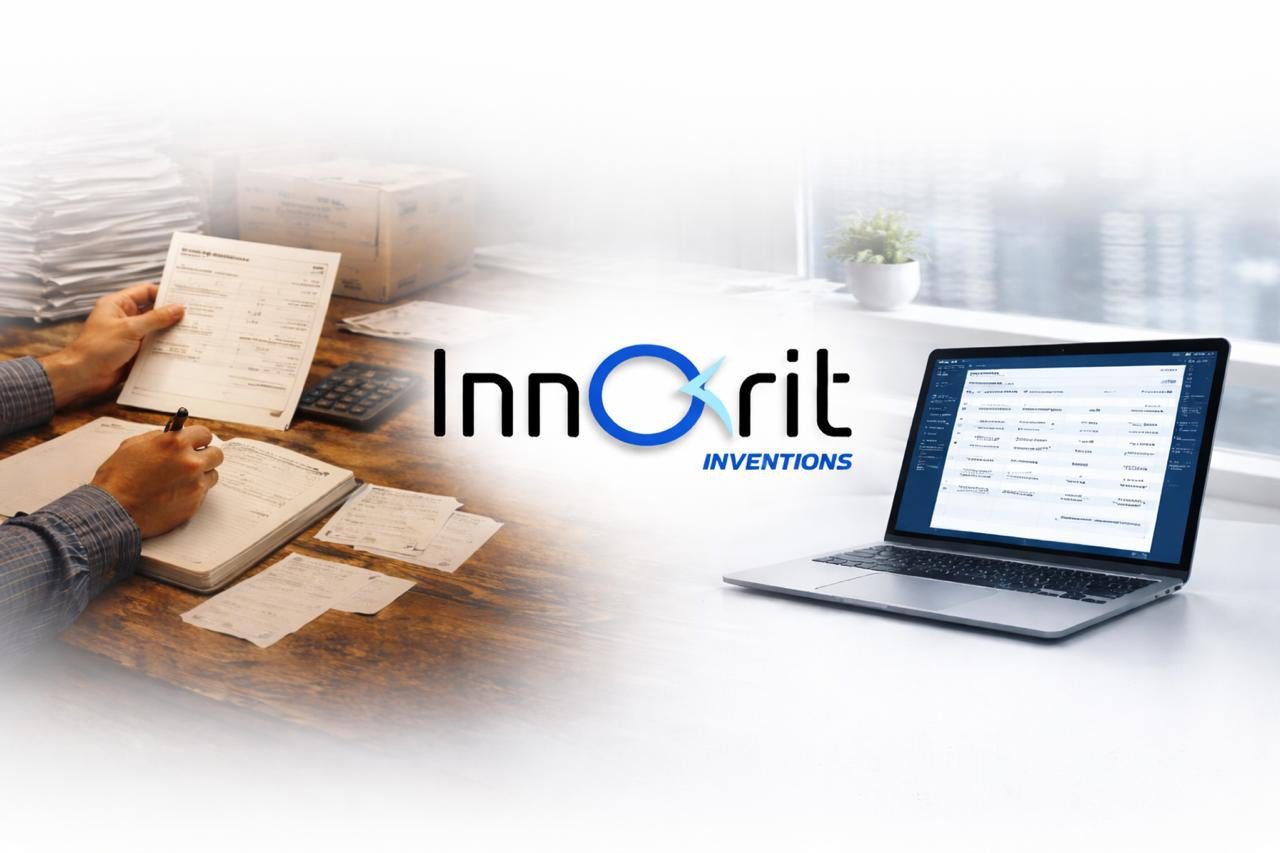
That intuition formed the basis of Innokrit Inventions Private Limited, founded by the four friends in 2019. The idea was straightforward: since the invoices were not going away, could the manual reading of them be automated?
The first real test came in late 2020, when PharmEasy, one of India’s leading online healthcare aggregator and e-pharmacy platform agreed to run a small pilot. It was the moment a college project became a real business, modest in scale but significant in what it proved. The pilot was successful, and PharmEasy has since become a full commercial client.
The Technology Behind Document Intelligence
Innokrit’s flagship product, Intelligent Document Extraction and Automation (IDEA), uses computer vision and machine learning to read physical invoices from photos and extract drug names, batch codes, quantities, pricing, and other custom fields, which are then directly integrated into ERP and reconciliation systems.
Distributors do not need to change how they operate. The software is built around them.
Document digitization is not new. In India, the challenge specific to the pharmaceutical supply chain is the complexity beneath the surface. Invoices arrive in dozens of formats, in multiple languages, from manufacturers large and small, all the way down to local stockists.
Most tools on the market are built for clean, standardized documents. IDEA is designed to do the opposite: to handle the messiness and inconsistency of real-world paperwork at scale.
Scaling Across India’s Pharma Ecosystem
The product is also deployed at GoApptiv, a pharma-tech platform backed by pharma giant Cipla that connects pharmaceutical firms to rural and peri-urban chemists and retailers across India. Across both clients, PharmEasy and GoApptiv, the platform currently serves more than 10,000 active registered users and processes between 2,000 and 4,000 invoices per day, of which 50 to 60 percent originate from rural districts in northern India, according to co-founder Bharti.
Building a Sustainable AI Business
Alongside IDEA, Innokrit builds custom AI products for enterprise clients such as Wohlig Transformation and Techurate Systems, generating near-term revenue while IDEA remains the long-term bet for scale.
Faculty mentor Dr. Sunita Patil and Riidl, KJ Somaiya’s incubator, supported the company in its early development. In 2021, Innokrit was awarded a ₹10-lakh grant under the Government of India’s DST NIDHI PRAYAS programme, which supports early-stage innovators in turning promising concepts into market-ready prototypes. The company currently records annual revenue of ₹1.5 crore.
Document Automation in a Global Context
Document automation has been a growing trend in enterprise technology worldwide. Companies such as UiPath, Automation Anywhere, and ABBYY have highlighted the increasing demand for automating document-heavy workflows. However, many of these solutions are designed for structured environments. Industries like pharmaceutical distribution, especially in developing economies, deal with far more varied and unstructured data, which most of these tools are not built to handle.
What Comes Next
With pharma as its foundation, Innokrit is aiming to expand into logistics, retail distribution, and healthcare administration, applying its document intelligence technology more broadly across enterprise operations.
Jha says the goal has always been to solve a real operational problem at scale. When done well, such systems become so seamlessly embedded that the industry cannot imagine functioning without them.
In a country where millions of engineering graduates enter the job market every year, the story of Innokrit is a telling one: that designing for India’s ground-level problems, rather than chasing global trends, can produce something that gets quietly, meaningfully noticed.