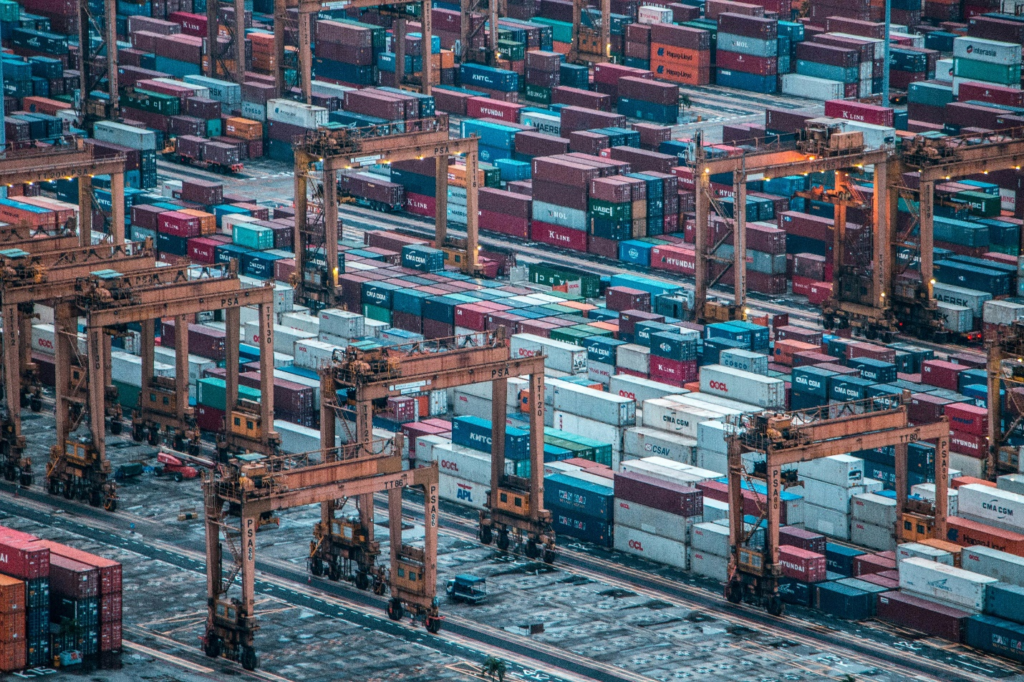
Singapore Port, Ammiel J Wan via Unsplash
The goods filling supermarket shelves, the fuel keeping ships moving, and the packages arriving at your door all depend on a handful of super-efficient maritime hubs. Three stand out as nerve centers for fuel storage, bunkering (refueling ships), and global logistics: Rotterdam in Europe, Singapore in Asia, and Fujairah in the Middle East. These ports are busy docks, but they’re also increasingly “smart” facilities, using artificial intelligence and digital technology to run smoother, faster, and greener. The result is potential savings that ripple through to lower prices for consumers worldwide.
Rotterdam, Europe’s largest port, located in Amsterdam, serves as the gateway to a continent, feeding industries across the region through pipelines, rail, and barges. Singapore, the world’s top bunkering port, sits at the crossroads of major Asian trade routes, refueling thousands of vessels. Fujairah, on the United Arab Emirates eastern coast, facing the Gulf of Oman, offers a strategic alternative outside chokepoints like the Strait of Hormuz, and has grown rapidly as a storage and bunkering hub for traders seeking reliability amid regional tensions.
What sets these ports apart today is their race toward smart technology. Rather than relying solely on scale, they’re deploying AI, digital twins (virtual replicas of the entire port), sensors, and data analytics to optimize every operation.
Rotterdam’s Smart Infrastructure program has built a digital twin that mirrors the physical port in real time, tracking ships, weather, tides, and infrastructure. This allows predictive planning: operators can simulate scenarios to avoid delays, allocate berths more intelligently, and work toward autonomous vessel traffic. Singapore is equally ambitious. Its digitalPORT@SG platform uses AI to schedule vessel arrivals and departures, cutting waiting time at anchorage, while consolidating clearance paperwork that once required more than a dozen separate forms into a single submission.
Fujairah has recently made the biggest leap. In 2025, the port signed a five-year digital transformation agreement with technology firm Endava, centered on a new port community platform called MarHub. The project spans six modules covering vessel call management, bulk cargo operations, gate security, and real-time analytics, with the first phase live by late 2025. The wider push extends beyond Fujairah’s own port authority: AD Ports Group, which oversees Fujairah alongside Abu Dhabi’s other maritime assets, has spent 2025 and 2026 laying over a thousand kilometers of high-capacity digital infrastructure connecting its ports, adding satellite connectivity for vessels at sea, and automating back-office work at a striking pace. For a port once defined mostly by its storage tanks and geography, that’s a rapid shift toward running on data as much as diesel.
Why AI Matters for Efficiency
These technologies reduce waste and bottlenecks. Ships spend less time idling at anchor, which cuts fuel consumption. Cargo flows more predictably, minimizing inventory backups. AI-driven maintenance predicts equipment failures before they happen, avoiding costly downtime.
For the public, this efficiency translates into tangible benefits. Smoother global supply chains help keep shipping costs down, which directly influences the price of imported goods, from electronics to fresh produce. When ports run more efficiently, retailers face fewer delays and lower logistics expenses, making everyday items more affordable. During disruptions like weather events or geopolitical flare-ups, smart systems help reroute and recover faster, stabilizing prices that might otherwise spike.
Sustainability is another key win. AI optimizes routes and loads to reduce emissions, supporting the shift to greener marine fuels. Lower fuel use and better energy management at the ports themselves contribute to reduced environmental impact, which benefits communities through cleaner air and long-term climate stability.
Each port faces its own challenges. Rotterdam navigates strict European regulations and high labor costs but leads in innovation. Singapore contends with space limits yet excels in integration and scale. Fujairah offers strategic flexibility but operates in a more volatile region, and much of its transformation is still in early phases rather than fully proven at scale. Their competition drives progress: ports adopting AI fastest gain an edge, pressuring others to modernize.
Looking ahead, these smart hubs could redefine global trade. As AI capabilities grow, the gains in speed and cost efficiency should compound, supporting more resilient supply chains that are less prone to inflation from logistics snarls. The ports of Rotterdam, Singapore, and Fujairah illustrate how behind-the-scenes technology is quietly making the world smaller and more affordable. The biggest winners may be consumers who never set foot on a dock but feel the benefits in their wallets and daily lives.