As we move into the latter half of 2026, a new technological horizon is coming into focus: Quantum Computing. While still in its early commercial stages, the potential for quantum systems to solve problems that are impossible for classical “binary” computers is already reshuffling the long-term strategies of top-tier professional organizations. For a modern Business, the challenge is no longer just about adopting Artificial Intelligence, but about ensuring their data infrastructure is “Quantum-Ready.” This article explores the intersection of quantum logic, Big Data, and the future of enterprise security.
Understanding the Quantum Advantage
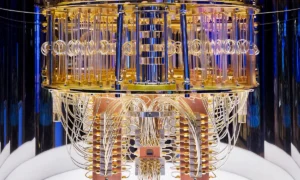
To the professional leader, Quantum Computing is not just “faster” computing; it is a different kind of computing. While classical Technology processes bits as 0s or 1s, quantum systems use “Qubits,” which can exist in multiple states simultaneously.
-
Exponential Problem Solving: In fields like molecular modeling, financial risk assessment, and complex logistics, a quantum-powered Business can process permutations in seconds that would take current supercomputers years to calculate.
-
Hybrid Quantum-Classical Workflows: In 2026, the most practical application is a “Hybrid Model.” Organizations use classical Artificial Intelligence to manage daily operations and then “offload” specific, massive mathematical challenges to quantum processors via the cloud.
The Post-Quantum Cryptography (PQC) Mandate
The most immediate concern for a professional Business in 2026 is security. Quantum computers have the theoretical potential to break the encryption that currently protects global finance and private data.
-
“Harvest Now, Decrypt Later”: Malicious actors are already collecting encrypted Big Data with the intent of decrypting it once quantum Technology matures. A professional organization must act now by transitioning to Post-Quantum Cryptography (PQC) standards to protect its long-term intellectual property.
-
Quantum Key Distribution (QKD): Leading firms are experimenting with QKD, which uses the laws of physics to create unhackable communication channels. If an eavesdropper tries to intercept the data, the quantum state changes, immediately alerting the Business to the breach.
Quantum-Enhanced Big Data and AI
The synergy between Quantum Computing and Artificial Intelligence (often called Quantum AI) will redefine the limits of what a Business can achieve.
-
Hyper-Accurate Predictive Models: Quantum algorithms can analyze Big Data sets with a level of granularity that eliminates the “noise” current systems struggle with. This allows for market predictions and consumer behavior modeling with near-100% fidelity.
-
Optimization of Complex Systems: From city-wide traffic management to global supply chain routing, Quantum AI can find the “Global Optimum”—the single most efficient path—across millions of variables, providing a professional edge in operational cost-cutting.
Building a Quantum-Ready Workforce
Transitioning to the quantum era requires more than just hardware; it requires a shift in professional mindset.
-
Algorithm Literacy: While not every employee needs to be a quantum physicist, the professional leaders of 2026 must understand the capabilities of quantum logic.
-
Strategic Partnerships: Most businesses will not own a quantum computer. Instead, they are forming alliances with “Quantum-as-a-Service” (QaaS) providers, ensuring they have the professional access needed to scale when the Technology reaches its next tipping point.
Financial Implications of the Quantum Shift
The “Quantum Dividend” will be realized by those who move first. In 2026, venture capital is flowing heavily into “Quantum-Enabled” Business models.
-
Arbitrage and Financial Modeling: In banking, the ability to price complex derivatives or detect fraud patterns in real-time using quantum-enhanced Big Data is a multi-billion dollar advantage.
-
Reduced R&D Timelines: In pharmaceuticals and materials science, simulating chemical reactions digitally rather than in a lab can save a Business years of time and millions in professional research costs.
Conclusion: The Future is Superposed
The Business world of 2026 is standing on the edge of a computing revolution. By preparing for the arrival of Quantum Technology through enhanced security and data readiness, professional organizations can ensure they are not left behind. The transition will be complex, but the rewards—in terms of efficiency, innovation, and security—are limitless. In the race for the future, the prize goes to those who can master the logic of the very small to solve the challenges of the very large.