
The Global Sand Shortage Is Real – How Smart Sourcing Technology Is Helping Contractors Stay Ahead

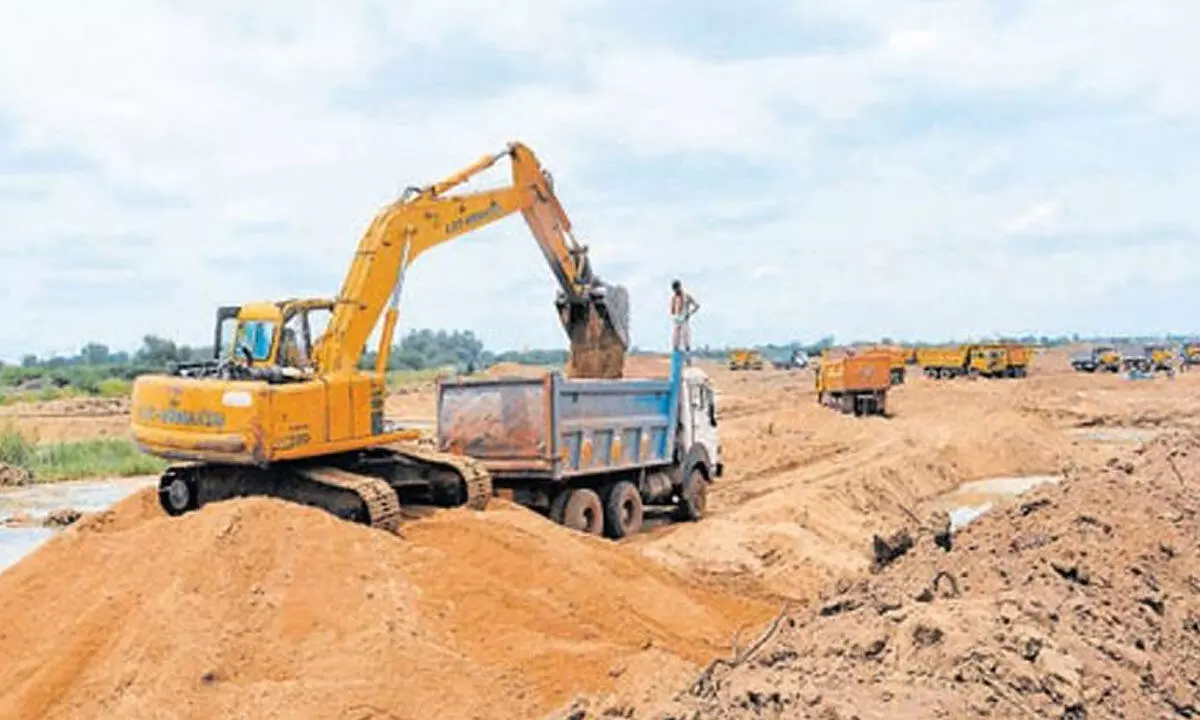
Every year, the world pulls roughly 50 billion tonnes of sand out of riverbeds, quarries, and coastlines. That number, confirmed again in a May 2026 report from the United Nations Environment Programme (UNEP), is hard to wrap your head around. It’s enough material to build a wall around the entire planet. And we’re burning through it faster than geology can replace it.
Sand doesn’t get the same attention as oil or lithium. It probably should. The global sand and gravel market hit $569.4 billion in 2024, and UNEP warns that demand from the building sector alone could climb another 45% by 2060. Meanwhile, roughly half of all dredging companies are already operating inside Marine Protected Areas, extracting 15% of the total dredged volume from ecosystems that are supposed to be off-limits.
For anyone in the construction industry, none of this is abstract. It shows up as longer lead times, tighter pit availability, and rising material costs on bids that were already thin.
Not All Sand Is the Same
Here’s where the problem gets more complicated than most people realize. When we talk about a sand shortage, we’re not talking about running out of sand in general. Deserts are full of stuff. But desert sand is wind-eroded, too round and too smooth to bind in concrete or pack properly in a trench. Construction needs angular, coarse-grained sand pulled from rivers, floodplains, and crushed rock — and each application demands a different grade.
Concrete work requires a specific gradation of concrete sand that locks together under compression. Pipe and utility installation calls for cushion sand, a finer material that protects infrastructure from shifting soil loads. Brickwork and masonry need their own sand grades for proper mortar adhesion. Road base and drainage projects depend on crushed limestone sand. And those are just the common ones — specialty projects might call for granite sand, utility bedding sand, or blended remix products.
Most contractors have learned this the hard way: order the wrong sand type and you’re looking at failed compaction tests, rejected loads, and schedule delays that ripple across the entire project. Regional suppliers like Select Sand & Gravel maintain full sand product catalogs covering everything from cushion sand and concrete sand to crushed limestone and masonry sand, which gives contractors a single source for matching the right grade to each project phase. But the bigger issue is that sourcing the correct material is getting harder as demand compresses supply across multiple grades simultaneously.
Where Technology Comes In
The construction materials industry was, for a long time, run almost entirely on phone calls and relationships. A contractor would call a pit, get a quote, schedule a truck, and hope everything showed up on time and to spec. That model worked when supply was loose and projects were local. It doesn’t hold up when a general contractor is running jobs across four metros and every pit in the region is fielding twice the orders it handled three years ago.
A few things are starting to change that.
Multi-pit coordination platforms are probably the most immediate change. Instead of relying on a single quarry or sand pit, suppliers now use software to manage sourcing across multiple pits in a region. When one pit runs low on a specific grade or gets backed up with orders, the system reroutes to an alternate source. The contractor doesn’t have to manage that complexity — they make one call or submit one order, and the logistics happen behind the scenes. This matters more than it sounds, because pit-level stockouts on specific sand grades are becoming more common as demand concentrates in high-growth metros.
Route optimization and dispatch software is another piece. Bulk aggregate delivery involves heavy trucks, narrow delivery windows, and job sites that penalize you for showing up late. GPS-tracked fleets paired with AI-assisted routing can cut fuel costs and idle time while keeping deliveries on schedule. For suppliers running dozens of trucks across a metro area, the efficiency gains are material.
Digital quoting and estimation tools are also cutting days out of the procurement cycle. Cubic yard calculators, online material selectors, and instant quote forms let contractors spec out an order and get pricing without waiting for a callback. It sounds simple, but in an industry where a missed quote can mean a missed bid deadline, speed matters.
Automated grading and QA is less widespread but growing fast. Sensors at the pit or processing facility can verify sand gradation before a load ships, reducing the chance that a contractor receives material that doesn’t meet spec. Rejected loads are expensive — not just the material cost, but the lost time and the domino effect on project scheduling.
The Sun Belt Pressure Test
Nowhere is this playing out more visibly than in Texas and Oklahoma. Both states are in the middle of sustained construction booms driven by population growth, corporate relocations, and federal infrastructure spending. Dallas, Austin, Houston, San Antonio, Fort Worth, Oklahoma City — each of these metros is running hot, and many general contractors are working across multiple markets at the same time.
That creates a specific logistical problem. A contractor bidding jobs in both Austin and Oklahoma City needs reliable material supply in both markets, often from different pits with different inventories and different pricing. Managing separate supplier relationships in every metro adds overhead and risk. If your sand supplier in one city can’t deliver on time, your schedule in that market slips — and you may not find out until the trucks don’t show up.
This is where multi-market suppliers with tech-enabled logistics have a real edge. The ability to coordinate material sourcing, delivery scheduling, and pit selection across six metros from a single point of contact is a competitive advantage that didn’t exist a decade ago. It’s also becoming less optional. As bid environments get tighter and margins compress, the contractors who can lock in reliable material supply across all their active markets are the ones winning work.
What Happens Next
UNEP’s May 2026 report proposed 24 specific actions for managing sand more sustainably, covering governance improvements, recycling and circular economy models, better environmental monitoring, and biodiversity protections. The writing on the wall is obvious: sand is going to be treated as a strategic resource, not an infinite commodity, and tighter regulation is coming.
Parts of the construction industry are responding. Recycled concrete aggregate is showing up in more road base and fill applications. Manufactured sand (crushed from hard rock to precise specifications) is growing as a supplement to natural sand in markets where river and pit sources are under pressure. And AI-powered demand forecasting is helping larger suppliers anticipate which grades will be in short supply before the shortage hits.
Sand will never generate the headlines that AI or cryptocurrency does. But every building, road, foundation, and drainage system depends on it. The suppliers and contractors who are using technology to source smarter, deliver faster, and match the right material to the right application are the ones who will keep projects moving as supply gets tighter. Everyone else is going to spend a lot more time on the phone, waiting for a callback that might not come.







Comment