
The Future of Medical Billing Automation in 2026

Introduction
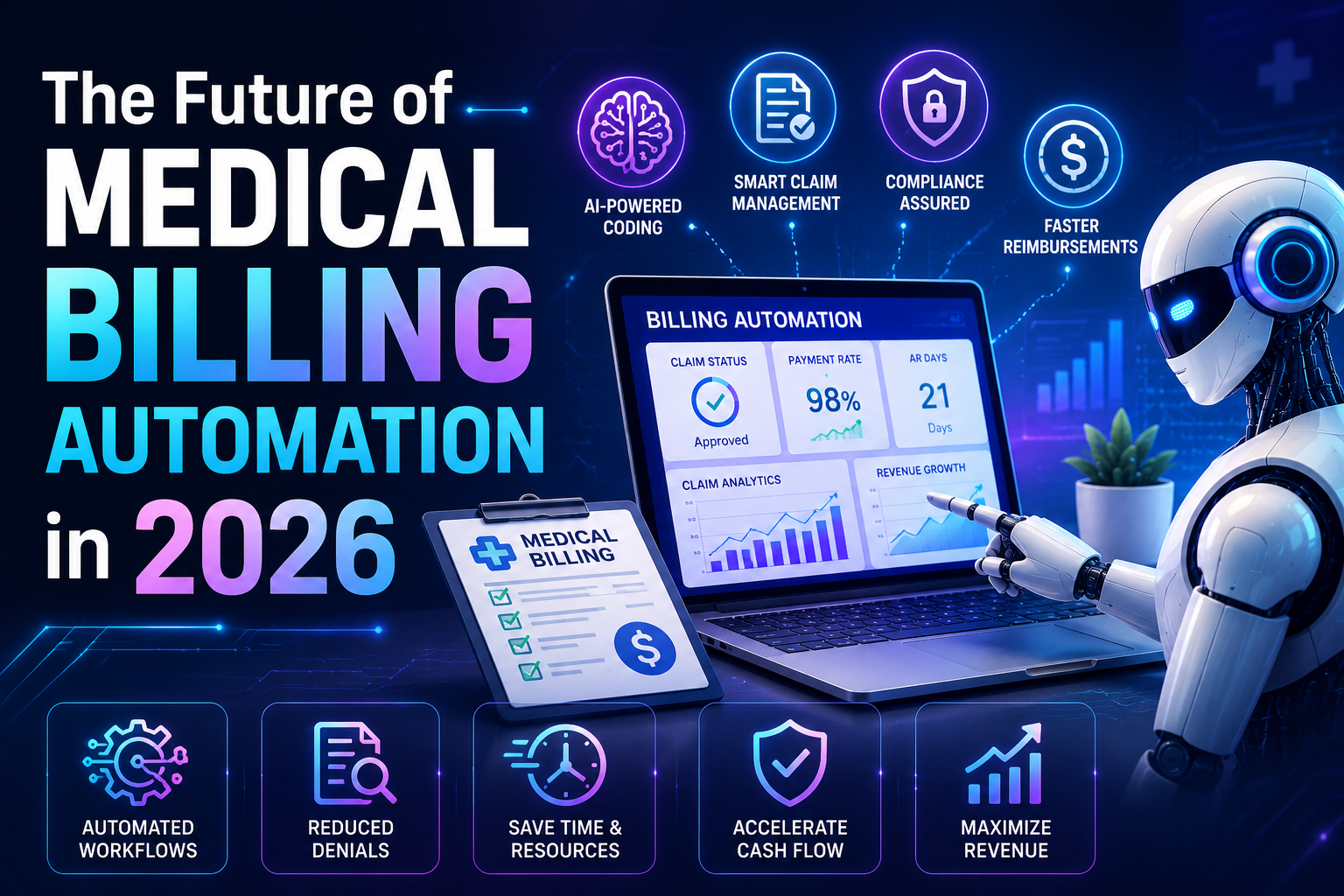
Medical billing has always been a labor-intensive process. From verifying insurance eligibility to assigning diagnosis codes, submitting claims, tracking payments, and managing denials, the revenue cycle involves dozens of steps that traditionally required significant human time and attention at every stage. For years, practice managers and billing directors have looked for ways to streamline these workflows without sacrificing accuracy or compliance. In 2026, that search found its answer in billing automation.
Automation is no longer a future concept in medical billing. It is actively reshaping how practices of all sizes manage their revenue cycle, from solo practitioners to large multispecialty groups. For practices looking to position themselves ahead of this shift, partnering with a team that understands both the technology and the clinical side of billing, like those providing medical billing services in New Jersey, is one of the most strategic investments available.
Automation is also transforming specialty billing areas beyond telehealth. For practices with specialty-specific revenue cycle needs, gastroenterology billing services can help improve coding accuracy, reduce claim errors, and support faster reimbursement through more structured and automated billing workflows.
What Medical Billing Automation Actually Means
The term automation gets used loosely in healthcare, which creates confusion about what it actually involves in the context of medical billing. True billing automation isn’t just about using software to ditch paper forms. It’s about employing smart tech to handle billing tasks with little human input, making decisions using rules, data, and sometimes machine learning.
Automation in billing comes in different forms. At its simplest, it’s about rule-based systems that automatically fix payer-specific claim edits before submitting them, catching errors without needing humans to check every line. More advanced setups use predictive analytics to spot claims likely to be rejected based on past info and send them for review beforehand. So, the big idea is cutting down repetitive manual work and swapping human effort for tech that’s consistent and scalable.
Eligibility Verification and Prior Authorization Automation
The two biggest time-drainers in the pre-claim process are verifying insurance eligibility and getting prior authorization. These take up tons of front-office and billing staff time, yet a lot of this could be automated with the right tech.
Nowadays, automated eligibility verification connects straight to insurers’ systems. They check patient coverage instantly, grabbing info on primary and secondary coverages, deductibles, copays, and specific service limits. What used to take several minutes now finishes in seconds, and it happens automatically when you schedule someone.
Automation in prior authorization is super exciting for billing tech. For ages, prior authors caused tons of admin headaches – folks had to send requests, follow up, and get approvals before offering care or filing claims. But now, new auto systems do all that electronically. They link straight to payers and blast through requests way faster. Instead of waiting days, it often takes just hours – plus everyone gets instant alerts when there’s a go-ahead or rejection. So it’s a huge improvement!
Automated Claim Scrubbing and Submission
The claim scrubbing process makes an obvious fit for automation in billing. To be submitted, each claim needs to adhere to a strict set of rules that cover everything from format and codes to compliance with billing standards. If done by hand, it’s not just time-consuming, but also prone to mistakes. On the other hand, using smart automation speeds things up while maintaining consistency and accuracy.
Today’s claim scrubbing tools are way more advanced than just checking formats. They run claims against unique payer rules and schedules, spot problematic code combos that could reject claims, confirm modifiers match the billed services, and make sure the documentation lines up with the claim codes. Certain systems even learn from past rejections to predict which ones might come up again and how to avoid them.
Scrubbed claims then get sent electronically straight to the payers without any manual steps. While electronic submissions have been around for ages, combining intelligent scrubbers with this step cuts down initial rejection rates and speeds up payments in a major way.
AI-Driven Denial Management
Denial management is super resource-intensive in the billing cycle. If a claim gets denied, a billing specialist has to look up why, figure out what to do about it, round up any necessary docs, write an appeal, and send it off on time. With hundreds or thousands of denials monthly, the workload is crazy huge.
AI-driven denial management tools are changing things big time. They analyze denial reasons and match each one to the best solution based on past successes. These platforms also create draft appeal letters with all the needed clinical and coding docs attached. Plus, they figure out who in the team should handle each case and keep tracking the outcomes to improve their recommendations continually.
For practices dealing with loads of claims, these handy tools cut down time spent on denial management while also boosting the success rate of appeals. Before long, people handling billing won’t be stuck slogging through easy denials all day but can focus more on those trickier cases needing human input.
Payment Posting and Reconciliation Automation
Payment posting is another area where automation really shows its worth. When done manually, staff have to sort through electronic remittance advice from payers, matching each payment with its corresponding claim, applying adjustment codes, recording patient balances, and tracking any oddities. It eats up a lot of time—especially for practices that get payments from numerous sources.
Automation changes things. Tools that post payments can now grab ERA files straight from payers, match everything up automatically, apply the right codes, and only bring questionable stuff to a person’s attention. This slashes posting time and boosts the accuracy of the financials, all thanks to skipping tedious data entry.
Automated reconciliation tools take this further by comparing posted payments against expected contractual rates and identifying any underpayments or missed payments. Practices that manually reconcile payments often discover only a fraction of the underpayments they are owed, simply because the volume makes thorough manual review impossible. Automation makes comprehensive reconciliation practical, recovering revenue that would otherwise go uncollected.
Patient Communication and Collections Automation
On the patient-facing side of billing, automation’s really speeding things up and making stuff clearer. Tools for generating bills automatically send out charges in simple language via whatever method patients prefer – print, email, or even text. If there’s an unpaid balance, automated systems will check in at set times without bothering the actual people.
Automated tools help patients with big bills by offering online payment plans and letting them set up automatic payments. They also send reminders for upcoming payments. Patients now expect this kind of service. Practices that provide it collect more money and send fewer accounts to collectors, which is better for everyone involved.
What Automation Cannot Replace
Despite how effective billing automation is, we’ve got to know what it can’t do yet. Automation handles large batches of straightforward tasks perfectly – it’s quick and consistent too. Still, it doesn’t understand context like a real expert, nor does it have that deep clinical knowledge or the ability to build relationships.
For claims that involve weird clinical scenarios, or when dealing with a payer who acts inconsistently, you need a detailed appeal backed by solid reasoning. This calls for human experts. The best practices I see? Automating routine tasks to save time and letting skilled billing staff tackle more complex issues. Automation and human know-how work best when they go hand-in-hand, not as rivals.
Conclusion
The future of medical billing automation isn’t coming. It is already here, and it is moving fast. Practices that jump on board with solid plans, proper training, and good performance tracking will see big improvements in how efficient, accurate, and lucrative their operations are. Those that don’t go along with it will end up lagging behind competitors submitting cleaner claims, sorting out issues faster, and collecting more earnings. By 2026, having automated billing won’t be a nice-to-have; it’ll be essential for keeping up competitively.







Comment