Interior design trends shift quickly. Colour palettes come in and out of favour, furniture silhouettes reinvent themselves every few years, and the accessories that signalled taste last season can look strange by the next. Yet some objects remain largely immune to these cycles. A well-chosen cashmere blanket belongs to this category. Draped over the arm of a sofa, folded at the foot of a bed, or carried onto a terrace in the evening, it brings together comfort and quiet luxury in a way that few other home pieces achieve.
Part of the explanation lies in the material itself. Cashmere wool is famously warm for its weight, and a blanket made entirely from cashmere, or a carefully engineered blend, stays light enough to pull over the shoulders without feeling heavy, while retaining enough heat to replace thicker wool throws in most conditions. For those who live in smaller urban homes, where storage space is at a premium and interiors must work hard across seasons, this combination of warmth and packability is genuinely practical. A single throw can move from the living room in winter to a spare bedroom in summer, and fold neatly into a linen closet when not in use.
Cashmere blankets also age with remarkable dignity. Cotton throws eventually thin and fade, fleece products pill and lose their nap, and many synthetic blends develop a static cling that attracts lint. Cashmere, in contrast, responds well to gentle care. With careful washing and airing, the fibres maintain their softness and the colours stay rich for years. Many households have blankets that are over a decade old and still appear current in a living room, in part because the fibre’s natural sheen and weight look expensive regardless of fashion.
There is also the visual dimension to consider. Blankets are among the most photographed objects in domestic interiors, and their surfaces respond beautifully to natural light. A raised cashmere surface holds shadow in a way that flat fabrics cannot, producing the soft depth that stylists work hard to achieve. This is why interior photographers often keep a small collection of cashmere throws on hand for shoots. When the rest of a room is minimal, a draped throw can be the single element that gives the space personality.
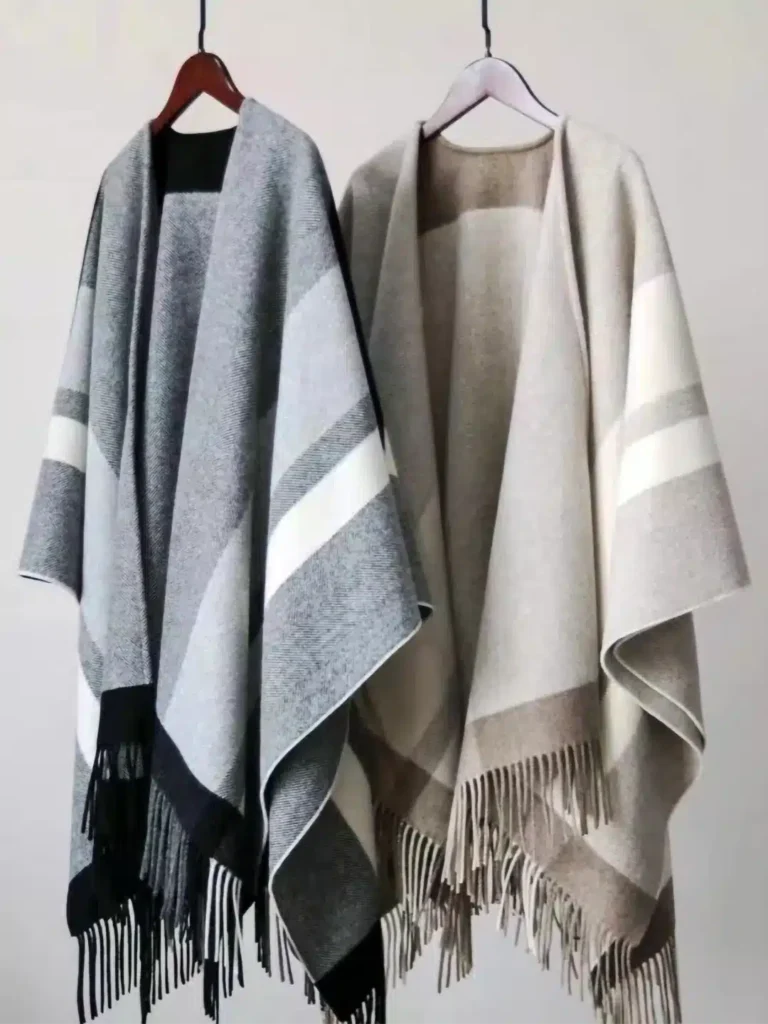
For homeowners considering a first investment in cashmere for the home, a few considerations help in choosing well. The weight is a good starting point. Lighter throws in the 300 to 500 gram range are excellent for transitional seasons and for layering over beds, while heavier throws above 800 grams deliver real winter warmth and a generous drape over larger sofas. Dimension is the next factor. Generous sizes of roughly 130 by 180 centimetres cover a single body easily and still fold attractively across furniture; smaller sizes work better for accent use. The weave type influences handfeel as well. Herringbone constructions offer structure and hide wrinkles well, while double-sided weaves provide two design possibilities in a single piece and are particularly appreciated in rooms where the blanket will be viewed from multiple angles.
Colour choices in home textiles are often less adventurous than in apparel, and this is usually wise. Soft neutrals such as oatmeal, pale grey, warm ivory, rich navy, and forest green tend to complement the broadest range of interiors and still read as distinctive. Saturated accent colours can work beautifully in rooms that have already committed to a clear palette, but they are harder to reposition if the room is refreshed. A good strategy for collectors is to build a small rotation: one neutral throw as a reliable foundation piece and one more expressive piece that can anchor a seasonal mood.
The hospitality sector has embraced cashmere throws with particular enthusiasm. Boutique hotels, ski lodges, private members’ clubs, and long-haul first-class cabins have all adopted cashmere as a signal of thoughtful guest experience. A folded throw at the foot of a hotel bed tells a guest, wordlessly, that the property takes comfort seriously. Private aviation operators and yacht fit-out specialists commission custom premium cashmere blankets in house colours, embroidered with discreet logos, because the object works simultaneously as a comfort item, a brand asset, and a quiet statement of quality.
Care matters, of course, and is often simpler than customers fear. Most premium cashmere blankets can be hand-washed in cold water with a gentle detergent designed for wool or with baby shampoo. They should be laid flat to dry rather than hung, and should be stored folded with lavender or cedar to deter moths. Professional cleaning is a sensible option once or twice a year for pieces used frequently. With this level of attention, a single blanket can provide warmth and beauty for many seasons.
For families building a gift tradition, a cashmere throw is also a meaningful heirloom-quality option. Unlike many luxury gifts, a throw is used often, visible regularly, and easily shared. A grandmother reading to a grandchild under the same blanket her daughter once used is the kind of small, continuous narrative that makes an object emotionally significant beyond its price.
Ultimately, the appeal of cashmere in the home comes down to a simple principle: we are drawn to materials that reward attention. A blanket that rewards every touch, every glance, and every season builds a relationship with its owner that synthetic alternatives cannot replicate. That is the quiet power of cashmere, and why it continues to belong at the centre of well-considered homes.