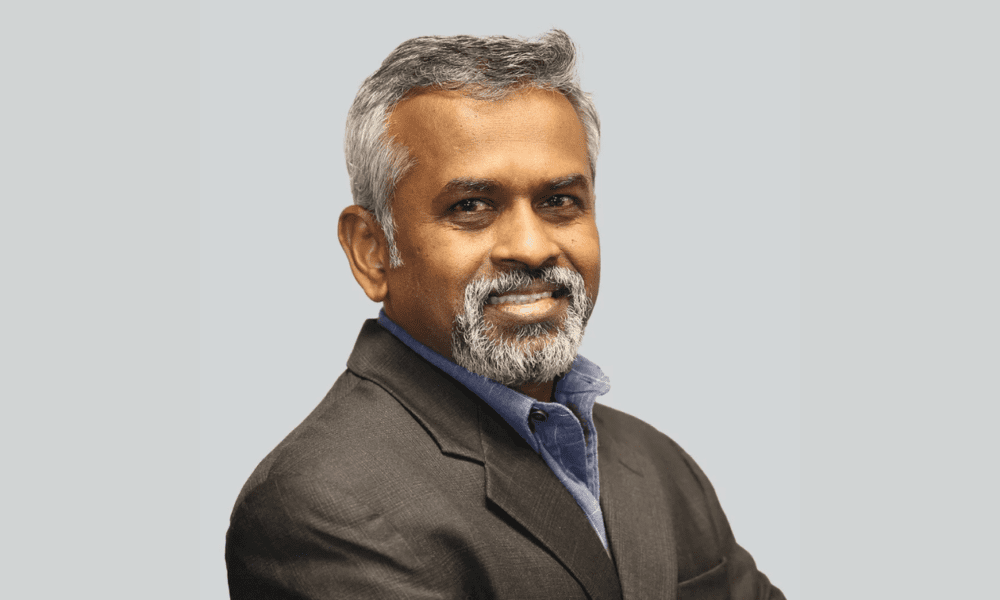
In an industry shaped by constant reinvention, cloud-first mandates, and algorithm-driven decision making, it is uncommon to encounter a technologist whose work consistently anticipates enterprise needs before they crystallize into mainstream priorities. Between 2018 and early 2020, Srikanth Chakravarthy Vankayala has emerged as precisely such a figure. His work during this period reflects a rare ability to identify structural weaknesses in modern systems and design forward-looking frameworks that address them at scale.
Operating largely outside the spotlight, Srikanth has contributed to a set of architectural and analytical approaches now gaining serious attention across large enterprises. His focus has converged on three defining frontiers of enterprise technology as the decade turns: predictive defect governance, reliability engineering for distributed API ecosystems, and self-healing intelligent automation. Together, these disciplines form what many technology leaders now describe as a necessary blueprint for the next generation of enterprise resilience.
While much of the late 2010s was spent reacting to rising complexity, Srikanth’s research advanced a more ambitious proposition. Complexity, he argued, does not need to be merely absorbed or mitigated. It can be modeled, anticipated, and governed. More significantly, enterprise systems can be designed to predict failure, stabilize themselves, and recover autonomously long before human intervention becomes necessary.
From Complexity to Clarity in Mortgage Underwriting
One of Srikanth’s most consequential contributions during this period emerged from his work on defect intelligence in mortgage underwriting, a domain known for its regulatory intensity, multi-layered workflows, and high variability across borrower and loan profiles.
In a 2019 study focused on machine learning-driven defect governance, Srikanth introduced a structured analytical framework that challenged decades of reactive audit practices. His research demonstrated how fragmented validation routines, manual review inconsistencies, and nonlinear defect patterns were quietly undermining underwriting quality across large financial institutions. Crucially, the study showed that many underwriting defects were not random anomalies but predictable outcomes embedded in historical process data.
By combining supervised learning techniques with defect clustering and feature attribution, Srikanth illustrated how high-risk process segments could be identified early in the loan lifecycle. The proposed architecture delivered measurable improvements in predictive accuracy, reduced rework cycles, and enhanced transparency in decision pathways. These outcomes aligned directly with the growing pressures financial institutions faced as regulatory scrutiny intensified entering 2020.
As mortgage volumes increased and digital lending platforms expanded, Srikanth’s work helped shift organizational thinking. Instead of inspecting quality after loan completion, his framework demonstrated how quality could be engineered directly into underwriting workflows. Reviewers, auditors, and automated systems gained the ability to intervene earlier, with greater confidence and less operational friction.
This transition from retrospective control to real-time prediction is now widely viewed as one of the most consequential transformations underway in financial technology. Srikanth was among the earliest architects to formalize this shift in a practical and scalable manner.
Stabilizing the Digital Backbone of APIs
While the financial analytics community was absorbing the implications of predictive defect intelligence, a parallel challenge was emerging across the broader software industry. Distributed APIs had become the backbone of modern enterprise platforms, yet their reliability remained alarmingly fragile.
As organizations embraced microservices at scale, failures such as cascading timeouts, retry storms, and inconsistent backpressure exposed deeper architectural limitations. These were no longer isolated defects. They were systemic consequences of ecosystems that had outgrown their original reliability assumptions.
In his 2019 research on pattern-driven API reliability, Srikanth presented what is now regarded as a comprehensive catalog of governance patterns for distributed systems. His work reframed mechanisms such as circuit breaking, bounded retries, bulkheading, isolation pools, and progressive delivery as ecosystem-level disciplines rather than isolated service optimizations.
One of the most influential aspects of this research was its emphasis on interaction patterns over infrastructure alone. Srikanth demonstrated that reliability does not automatically emerge from container orchestration or hardware redundancy. Instead, it is shaped by how services communicate, how timeouts are aligned, how dependencies are constrained, and how failure thresholds are coordinated across the ecosystem.
The empirical findings reinforced this perspective. Aligned interaction controls significantly reduced saturation-induced failures. Progressive delivery approaches lowered deployment-related incidents by substantial margins. Isolation pools and workload segmentation mitigated latency amplification during peak demand. The conclusion was clear. Reliability, like performance, could be engineered predictably when approached systemically.
By early 2020, these insights were beginning to influence architectural governance within highly distributed enterprises. Platform engineering teams increasingly referenced Srikanth’s models to standardize reliability practices across service meshes, gateways, and orchestration pipelines. What had once been a fragmented set of resilience techniques was evolving into a cohesive discipline of reliability governance.
Self-Healing Automation in a Rapidly Changing UI Landscape
If predictive analytics and API reliability established Srikanth as a strategic architect, his early 2020 work on intelligent automation positioned him firmly at the forefront of autonomous quality engineering.
As continuous deployment accelerated front-end change, test automation pipelines across enterprises struggled to keep pace. Locator failures, brittle selectors, and frequent UI updates turned automation suites into maintenance liabilities rather than productivity assets.
In January 2020, Srikanth introduced a bold alternative. His research on adaptive locator intelligence proposed transforming test automation into a self-maintaining, self-healing system. Rather than relying on static scripts, his architecture integrated multi-signal locator inference, semantic and structural similarity modeling, visual context validation, autonomous repair mechanisms, and continuous reinforcement through re-execution.
The results were notable. AI-assisted locators achieved high accuracy, execution stability improved markedly, and the time required to repair broken automation dropped dramatically. Manual intervention declined as pipelines began operating with sustained continuity.
For enterprises grappling with unstable regression suites and unpredictable release cycles, the implications were substantial. Srikanth’s work did not merely promise more automation. It pointed toward automation systems capable of learning, adapting, and repairing themselves, a concept now gaining traction as a foundation for next-generation quality platforms.
A Consistent Pattern of Foresight
Viewed collectively, Srikanth Vankayala’s body of work from 2018 through early 2020 reveals a consistent pattern. He addressed engineering challenges well before they became industry imperatives.
He developed predictive governance before algorithmic oversight became a financial priority. He mapped ecosystem-level reliability before platform teams formalized such standards. He designed self-healing automation before enterprises widely acknowledged the limitations of traditional test frameworks.
At a time when organizations are searching for stability amid relentless velocity, his research offers a rare synthesis of foresight, empirical rigor, and architectural clarity.
Why 2020 May Mark a Turning Point
As enterprises enter a decade defined by digital expansion, regulatory complexity, and heightened expectations for operational resilience, Srikanth’s contributions feel especially well-timed. His frameworks are not abstract theories. They are grounded in measurable outcomes, real-world constraints, and enterprise-scale dynamics.
Across underwriting analytics, distributed reliability, and autonomous automation, a single principle recurs. Enterprises do not simply need faster systems. They need systems capable of learning, stabilizing, and adapting on their own.
That philosophy is rapidly becoming central to modern software engineering in 2020. If recent history is any indication, Srikanth Chakravarthy Vankayala is likely to remain a defining voice in shaping this evolution, not only as an architect of systems, but as a designer of the intelligence and resilience required to sustain them