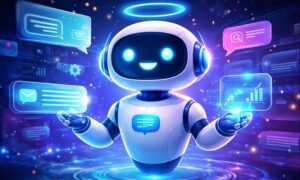
As we progress through 2026, the corporate world has moved beyond the initial excitement of generative models to a more mature phase: the era of Agentic Artificial Intelligence. In this new paradigm, AI is no longer a tool that employees “use”; it has become a digital coworker that “operates.” For the modern Business, this shift represents the most significant leap in productivity since the industrial revolution. By integrating these autonomous agents into core workflows, organizations are scaling their operations with unprecedented speed and precision.
The Rise of the Digital Teammate
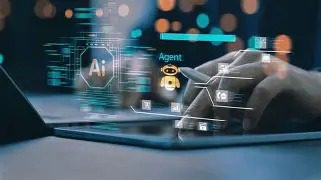
The distinction between traditional software and agentic AI lies in autonomy. While legacy Technology required a human to provide every instruction, modern AI agents can reason through complex goals. If a business leader sets a goal to “increase market share in Southeast Asia by 5%,” an agentic system doesn’t just provide a list of tips. It analyzes market data, identifies high-potential segments, suggests budget allocations for Digital Marketing, and can even begin the process of reaching out to potential local partners.
This evolution is fundamentally changing the structure of the professional workforce. Small teams of three or four people are now managing global operations that previously required dozens of staff members. By delegating the “doing”—data crunching, routine correspondence, and logistical coordination—to AI, human professionals are freed to focus on the “thinking”—strategy, ethical oversight, and high-level relationship building.
Transforming Digital Marketing into a Real-Time Experience
In the realm of Digital Marketing, the impact of agentic AI is profound. We have moved past the era of static campaigns. In 2026, marketing is a living, breathing entity. AI agents monitor consumer sentiment across social platforms in real-time. If they detect a shift in the cultural conversation, they can instantly adjust the tone of the brand’s digital presence, ensuring the message remains relevant and respectful.
Hyper-personalization has also reached its logical conclusion. AI coworkers now manage individual “customer journeys” for thousands of people simultaneously. Each interaction is tailored based on the user’s immediate context, previous history, and predicted needs. This level of responsiveness ensures that the Business is always present at the right moment, providing value rather than noise.
Operational Resilience and AI Infrastructure
For a Business to truly benefit from this technology, the underlying Technology infrastructure must be robust. In 2026, the focus has shifted from the size of the AI model to the efficiency of the inference. Companies are moving toward hybrid cloud environments where AI agents live at the “edge”—closer to the data source—to ensure lightning-fast response times.
This infrastructure is also the key to operational resilience. AI agents are now used to manage cybersecurity as an ambient, autonomous layer. They don’t just alert humans to a threat; they actively neutralize it by isolating compromised systems and patching vulnerabilities in milliseconds. In an age where digital threats are constant, this autonomous defense is a critical business requirement.
The Leadership Challenge: Orchestration, Not Just Management
As AI takes on more operational responsibility, the role of business leadership is being redefined. Modern leaders must be orchestrators of hybrid teams. This requires a high level of “AI Fluency”—understanding how to “prompt” a business unit as effectively as one would prompt a person.
Ethics and governance have moved to the center of the boardroom. Because AI agents can take actions, the legal and ethical frameworks surrounding their use must be ironclad. Professional organizations are implementing “AI Identity” systems, where every autonomous agent has a clear set of permissions and an “off-switch.” Ensuring that these systems align with human values is the primary responsibility of the 2026 executive.
Conclusion
The transition to an agentic workforce is the defining Business trend of the decade. By embracing Artificial Intelligence as a strategic partner, companies are unlocking new levels of innovation and efficiency. The synergy between advanced Technology and human ingenuity is creating a future where the only limit to a company’s growth is the scale of its ambition