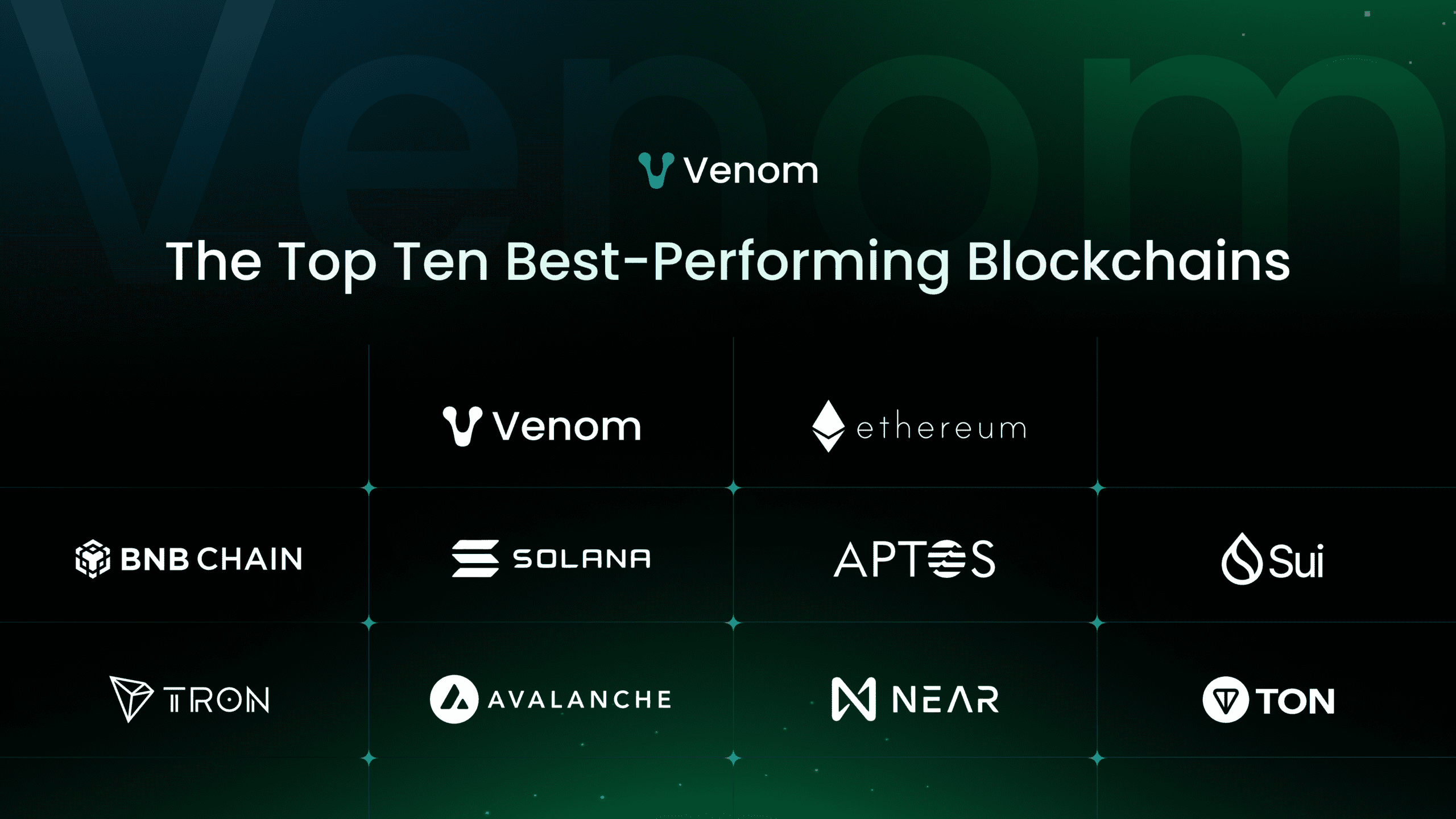
For years, blockchain performance debates centered on a single number: transactions per second. By 2026 the industry has moved past that. What financial infrastructure actually requires is a combination of sustained real-world throughput, deterministic finality, and architectural resilience under load. A chain that claims record TPS in a lab but stalls under peak demand is not performant – it is a benchmark.
This ranking draws primarily from Chainspect’s live metrics dashboard, independent stress tests, and technical documentation. Where figures represent controlled tests, this is stated explicitly.
1) Solana – The Real-World TPS Champion
Chainspect records Solana at approximately 957 TPS in live conditions, with a peak of 6,284 TPS and a theoretical ceiling of 65,000 TPS – the highest sustained real-world throughput of any major Layer-1. Per Motley Fool’s February 2026 coverage, the Firedancer client handled up to 1 million TPS in testing, with its mainnet launch confirmed by The Block in December 2025. The forthcoming Alpenglow consensus protocol targets 100–150ms finality, which would make Solana the fastest economically-secure Layer-1 by time-to-finality once deployed.
2) Aptos – Parallel Execution at Production Scale
As documented by BSC News, Aptos demonstrated over 19,200 peak TPS during real usage, processing 326 million transactions over three days in May 2024 without congestion or fee spikes. CoinShares confirms performance above 160,000 TPS in controlled environments. Its Block-STM engine runs transactions in parallel and re-executes only those that conflict – without requiring developers to declare dependencies upfront. The more recent Raptr upgrade pushes the ceiling toward 250,000 TPS with sub-second finality.
3) Sui – The Finality Outlier
Chainspect records Sui at 33 TPS in average conditions and 926 TPS at peak – with a theoretical ceiling of 120,000 TPS. What sets Sui apart is finality: the same source records effectively zero-second finality. Per Sui’s official consensus documentation, Mysticeti handles 300,000 TPS in controlled environments with consensus commitment in ~0.5 seconds. Mysticeti v2, deployed in November 2025, reduced latency by up to 35%. For payment-critical use cases, instant finality may matter more than raw throughput.
4) Venom – Enterprise Infrastructure for Institutional Load
Venom is the only network here designed from the ground up for regulated institutional infrastructure. In May 2025, as reported by The Block, Cointelegraph, and The Daily Hodl, the Foundation completed a closed-network stress test demonstrating 150,000 TPS with sub-3-second finality, independently audited. DAG-based mempool consensus unlocks over 400,000 TPS in synthetic benchmarks, with a distributed sorting layer that structurally prevents MEV exploits. CEO Christopher Louis Tsu has stated the target segment explicitly: central banks, sovereign wealth funds, and financial institutions building CBDCs, RWA tokenization platforms, and regulated stablecoins – use cases where retail-optimized chains are structurally unsuitable.
5) BNB Chain – Scale Proven in Production
Chainspect shows BNB Chain at ~183 TPS in real-world conditions. With 4.1 million daily active users as of January 2026 – more than any other Layer-1 – it is the most stress-tested chain in production. The 2026 roadmap targets 20,000 TPS. For developers building at consumer scale, BNB Chain offers an unmatched combination of existing user base, low fees, and a credible scaling trajectory.
6) Near Protocol – Sharding as a First Principle
Near’s Nightshade architecture processes transactions across parallel shards whose chunks are assembled into a single block, allowing throughput to scale linearly with shard count – something no monolithic design can replicate. Nightshade 2.0 added stateless validation and expanded capacity further. With 2.5 million daily active users and a growing position at the intersection of blockchain and AI agent infrastructure, Near’s gap between current and maximum designed throughput is narrowing.
7) Avalanche – Subnet Architecture for Horizontal Scaling
Per Gate.com’s Layer-1 comparison, Avalanche’s C-Chain achieves ~4,500 TPS with 1–2 second finality. Its subnet model allows multiple parallel chains with custom parameters – the reference architecture for enterprise deployments requiring dedicated execution environments. Chainspect confirms sub-two-second finality, a meaningful differentiator for financial applications where settlement certainty is operationally critical.
8) Tron – The Stablecoin Throughput Engine
Tron’s case is built on one use case executed at exceptional scale: USDT transfers. As Chainspect and Webopedia confirm, Tron handles massive transaction loads reliably at sub-cent fees, serving 2.5 million daily active users. Its Delegated Proof-of-Stake consensus and fixed validator set make it the most efficient settlement layer for the world’s most-used stablecoin – a narrow mandate executed exceptionally well.
9) TON – Distribution as Infrastructure
TON’s infinite sharding paradigm dynamically splits and merges workchain shards in response to load, enabling throughput that scales without a fixed ceiling – as described in the TON whitepaper. In practice, 2026 throughput is driven by the Telegram mini-app ecosystem: games, payments, and social features reaching nearly one billion monthly actives. As that ecosystem deepens, TON’s sharding architecture may become the most consequential scaling mechanism on this list – not for its benchmark numbers, but for the distribution channel behind them.
10) Ethereum – The Settlement Layer for Everything Else
Chainspect and DollarPocket’s 2026 analysis confirm Ethereum mainnet at 15–30 TPS – the lowest figure here. As a standalone execution chain, it is the least performant on this list. As a settlement and security layer for the largest L2 ecosystem in blockchain, the picture is entirely different. EIP-4844 reduced L2 data posting costs by 50–90%, shifting execution to rollups that inherit Ethereum’s security. For institutional use cases requiring maximal settlement-layer trust, that role – not raw TPS – is the value proposition.
The Bottom Line
Blockchain performance is not a single variable. Solana leads on real-world throughput. Sui leads on finality. Aptos leads on parallelism under organic load. Venom leads on validated enterprise-grade stress performance. Near and TON lead on architectural ceiling via sharding. The right chain depends entirely on which performance dimension a given use case requires – and in 2026, knowing that difference is the baseline for serious infrastructure decisions.