Self-driving cars were supposed to make the roads safer.
But what happens when one hits you? Who’s at fault? It gets complicated. If it’s an ordinary crash, you’re pointing at the other driver. If it’s self-driving features that hit you, you might be pointing at:
- The driver behind the wheel
- The car manufacturer
- The software developer
- The fleet company running the vehicle
And here’s the kicker… There’s no clear nationwide rulebook yet.
Below is what to know about liability if self-driving features were in use during a crash.
What you’ll uncover:
- The Real Numbers Behind Self-Driving Crashes
- Who Can Actually Be Held Liable?
- Why Self-Driving Crash Cases Are So Tricky
- What To Do If You’re Hit By A Self-Driving Car
The Real Numbers Behind Self-Driving Crashes
Let’s get into the data.
Tracking of self-driving and driver-assist crashes by NHTSA began in June of 2021. The annual numbers have been rising since then. As of November 2025, there have been 5,202 autonomous vehicle accidents in the U.S.
That’s a lot of crashes.
Of the total reported accidents, an estimated 7.4% of the accidents resulted in injuries and 1.2% in fatalities. So even with technology that’s designed to mitigate human error, crashes and casualties are still happening.
Here’s another stat that surprised a lot of people:
If you only consider fully driverless cars (zero human driver), they were entirely at fault for just 4% of collisions involving other road users. Sounds impressive on paper. Add on shared blame, software malfunctions, and hardware malfunctions, and you’ve got a sizable figure on top of that.
If you were in an accident and believe a self-driving feature played a role, seek the proper legal team sooner rather than later. A qualified Houston car accident lawyer will fight to uncover the true cause of a collision and establish liability where it is due. This is all the more critical if the other driver was under the influence, as a DUI accident attorney will know how to secure the appropriate evidence (blood tests, sensory data logs, dashcam recordings, etc.) before it’s too late.
The statistics paint a vivid picture… Autonomous functions do not eliminate blame. They only make it more difficult to determine who has it.
Who Can Actually Be Held Liable?
This is where things get interesting.
A typical fender bender only has one driver at fault. An autonomous crash may have 4 or 5 parties at fault.
The Human Driver
Most self-driving features today are not actually fully self-driving.
Tesla Autopilot, GM Super Cruise, Ford BlueCruise — all of those are what NHTSA refers to as Level 2 systems. The driver is still supposed to be watching. If they weren’t watching the road and a crash occurred, the human absolutely could be held liable.
It’s where DUIs get complicated too. A drunk driver who turns on Autopilot and believes the car will “take over” is still in control. A DUI accident attorney can prove the driver had a legal responsibility to stay alert regardless of what the car does on its own.
The Car Manufacturer
If the car’s hardware or software failed, the manufacturer might be on the hook
Consider Tesla. A federal jury in Florida deemed the company 33% at fault in a fatal crash in 2025. Autopilot’s design and warnings had added to the accident’s cause. That is a big deal. It means automakers can be held liable when their technology fails.
The Software Developer
In some cases, the carmaker may not be the entity that created the driving software. If a programming mistake or update failure is to blame for the accident, the software developer might be sued for product liability.
The Fleet Operator
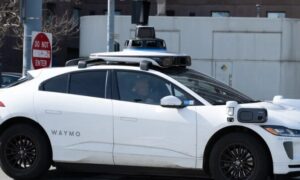
This one is mostly true for robotaxis (Waymo/Zoox). But if they didn’t service the car, didn’t deploy a safety update, or their staff training was subpar… they can be liable as well.
Why Self-Driving Crash Cases Are So Tricky
These cases are nothing like regular car accidents.
Here’s why:
Forensic reconstruction isn’t limited to skid marks and witness testimony. Investigators must also research:
- Software decision logs
- Sensor and camera data
- Pending or missed software updates
- Whether the AI did what a “reasonable driver” would do
The last one is huge. Judges are still debating what constitutes a “reasonable” autonomous vehicle to begin with. As of 2025, no nationwide standard for who is at fault in case of automated system failure has been established. That means the results of your case can vary by state, the evidence, and vehicle classification.
It also means you can’t just file a claim and hope for the best.
You need someone that can subpoena vehicle data logs. Someone that can disprove a manufacturer’s assertion of “the software worked perfectly”. The right lawyer here can make an enormous difference.
The biggest challenge? Insurance companies are light years behind on this. They do not know what to do when confronted with this type of claim, so they will offer pennies on the dollar, or deny the claim completely. An experienced lawyer fights back.
What To Do If You’re Hit By A Self-Driving Car
Collided with a semi-autonomous car? Here’s what you should do immediately.
- Call the police. Get an official report on file.
- Document, document, document. Take pictures of the scene, the vehicles, any injuries, and anything that might show the other vehicle was using self-driving technology.
- Seek medical attention. Even if you feel fine, some injuries may not manifest themselves for days.
- Don’t talk to the other driver’s insurance company. They can (and will) use anything you say against you.
- Save all data. If you have a dashcam, grab the video right now. Data logs on the other car are also important, and they must be retrieved before the manufacturer’s overwrite cycle deletes them.
- Hire a lawyer fast. These cases move quickly, and evidence disappears even faster.
Whether you need a regular personal injury attorney, a product liability specialist or a DUI accident attorney, depends on the cause of the crash.
Bringing It All Together
Autonomous driving systems are changing liability in the event of a collision. The tech is outpacing the law by a long shot.
Here’s the bottom line:
- Self-driving crashes are climbing every year
- Fault can land on the driver, manufacturer, software dev, or fleet operator
- These cases are way more complex than regular accidents
- You need a lawyer who understands car accident law AND product liability
Don’t go it alone. They have a team of lawyers, engineers and data analysts working against you. You need someone in your corner with equal firepower.
If you’ve been struck, move quickly. Obtain your evidence, obtain your medical records, and obtain an aggressive attorney.
Read More From Techbullion