
OnlyFans Stats Tracker 2026 – The Numbers That Actually Matter

OnlyFans is one of the most talked-about platforms on the internet and one of the least accurately reported on. Headline figures get recycled across the web for years after they stop being true, income claims get inflated by creators with something to sell, and the actual financial architecture of the platform – who earns what, who pays, and how the money flows – rarely gets explained clearly.
This piece is a stats tracker: a structured look at the numbers that define OnlyFans in 2026, updated to reflect the most current available data. For the deepest dive available – including methodology, primary sources, and the full breakdown behind each figure – the complete guide to OnlyFans statistics lives at FansPedia, which tracks this space more rigorously than anywhere else online. What follows is the essential summary.
Platform Scale – How Big Is OnlyFans in 2026?
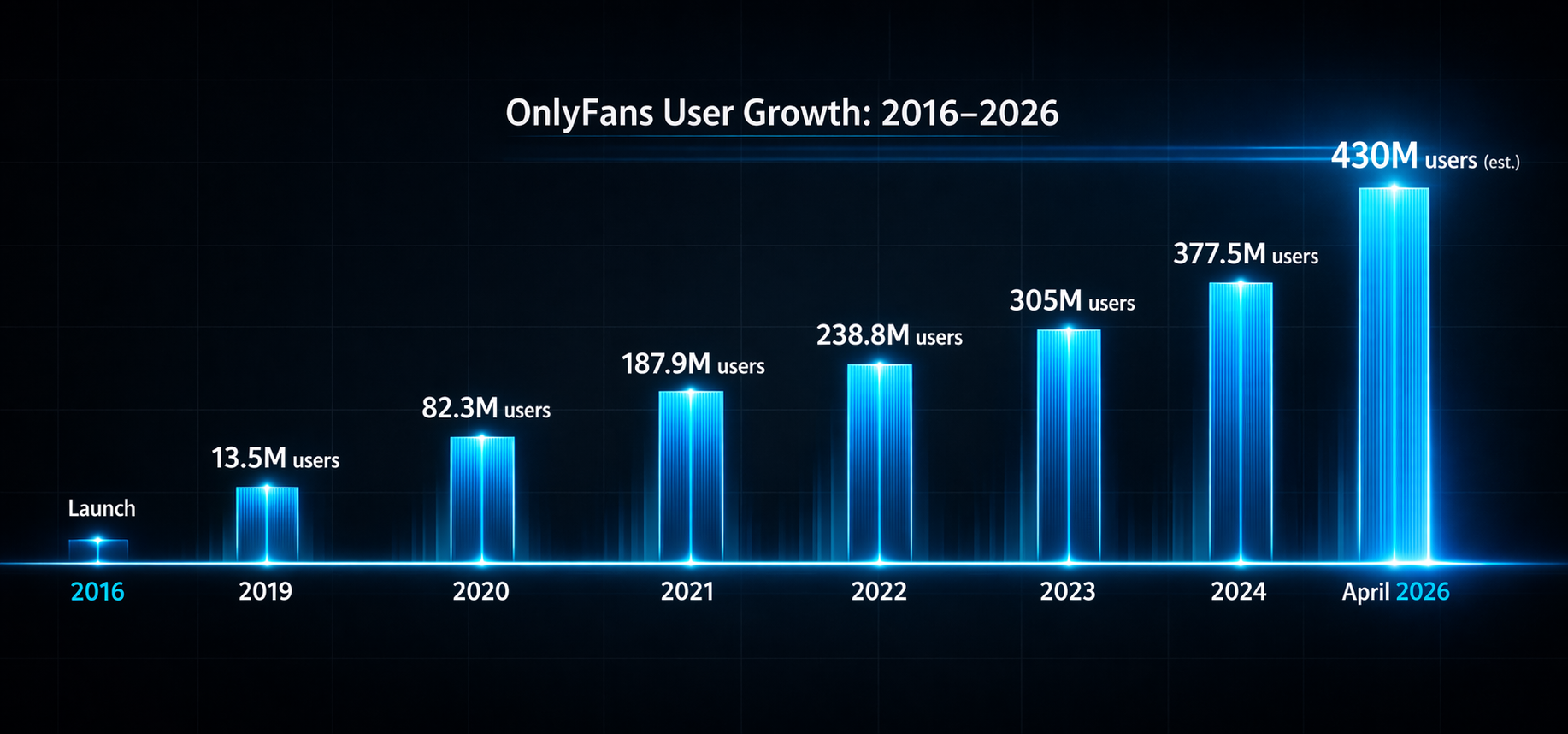
The headline numbers are genuinely staggering. As of April 2026, OnlyFans has an estimated 430 million registered user accounts and approximately 5.3 million creators – user growth of around 14% year-over-year, with creator growth at roughly 15%.
Source: fanspedia.net
To put that in context: that’s as if a third of the US population, plus tens of millions more globally, holds an OnlyFans account. The platform launched in November 2016 and spent its first few years as a niche corner of the internet. The pandemic changed everything – and the scale it reached in that surge has largely held.
The US accounts for approximately 50% of all traffic, with the UK at 6%, and the US also hosts around 45% of all creators. It is, structurally, a platform built by and for English-speaking markets – a fact that matters enormously for creators in non-English markets trying to break through.
Revenue – Where Does the Money Go?
Fans spent an estimated $7.95 billion on OnlyFans in 2025 – across subscriptions, pay-per-view content, tips, and custom requests. OnlyFans takes a flat 20% cut of all transactions, yielding approximately $1.59 billion in platform revenue for the year.
Since launch in 2016, the platform has cumulatively paid creators an estimated $29 billion or more – confirmed at $25 billion as of October 2025 per an official platform announcement, with the remainder extrapolated to April 2026.
Year-over-year growth in fan spending was +10.4% in 2025, down from +19% in 2023 – a signal that the platform has entered a mature growth phase rather than the hypergrowth era of the pandemic years.
Creator Income – The Uncomfortable Reality
Source: Fanspedia.net
This is where most coverage gets the story wrong, and it’s the most important section of any honest stats tracker.
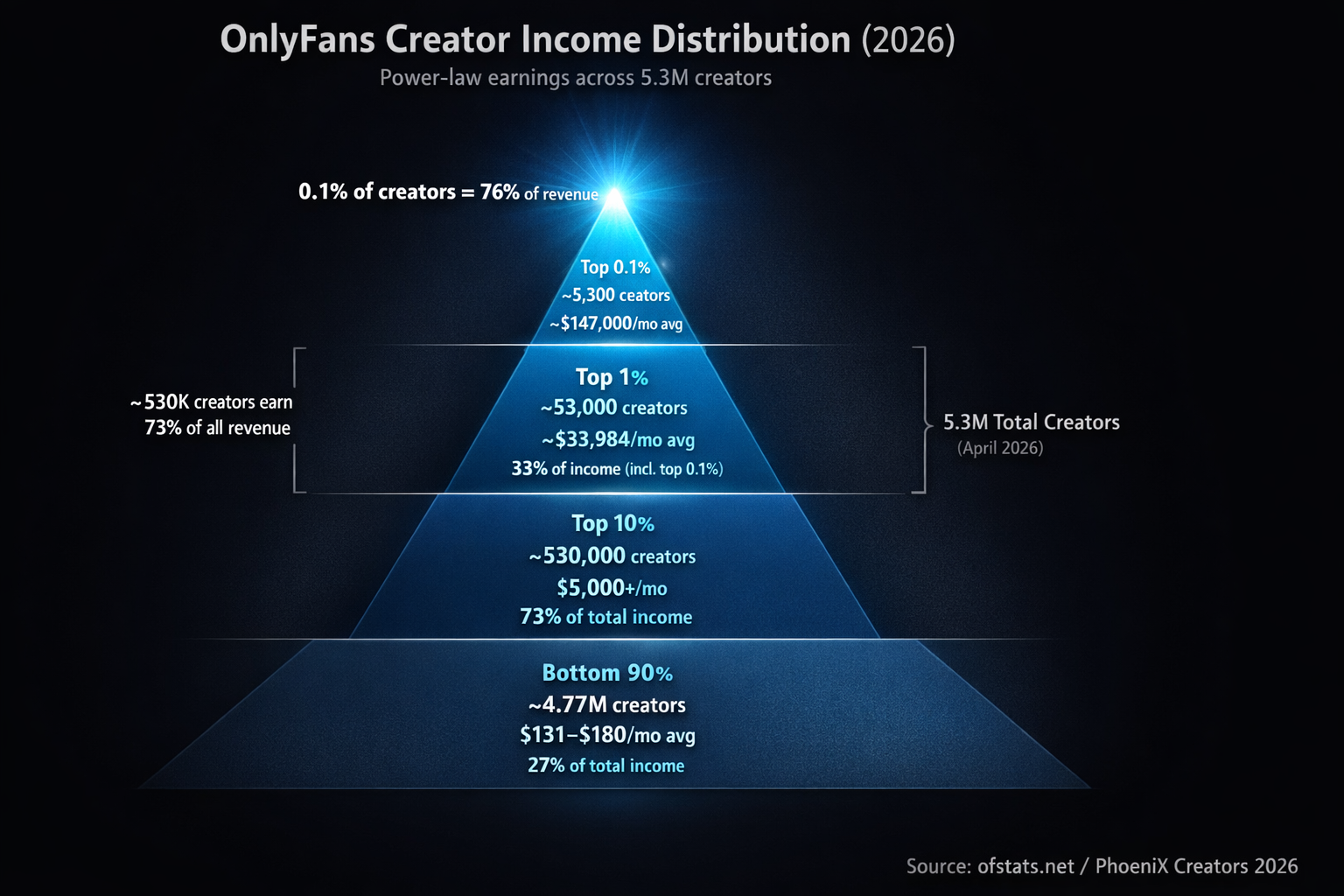
The average OnlyFans creator earns between $131 and $180 per month. The median creator makes under $2,000 per year. That is not a typo. The platform’s income distribution follows an extreme power law:
- The top 0.1% of creators – approximately 5,300 people – earn an average of $147,000 per month and capture 76% of all platform revenue.
- The top 10% of creators earn 73% of total revenue, leaving the bottom 90% – roughly 4.77 million creators – sharing just 27%.
- Only around 4.5% of registered users pay for anything at all, meaning approximately 19 to 22 million paying fans fund the entire creator economy across 5.3 million creator accounts.
The math is unforgiving. The narrative that OnlyFans is a path to easy income is built almost entirely on the experience of a few thousand creators at the very top. For the vast majority, it is a supplemental income stream at best.
Subscriber Behavior – Who Actually Pays?
Those who do pay spend heavily – averaging around $397 per year, or roughly $33 per month – often across multiple creator subscriptions plus pay-per-view purchases and tips.
Roughly 95.5% of registered accounts spend nothing. The platform’s entire financial engine runs on a concentrated core of highly engaged, repeat-paying subscribers – a dynamic that makes subscriber retention far more valuable to creators than raw follower counts.
“Engaged fans often go to significant lengths to find specific creators — reverse image search tools like FindByFace have grown alongside the platform precisely because discovery on OnlyFans itself remains limited.”
Traffic and Mobile
OnlyFans ranks approximately 93rd globally by web traffic, drawing over 300 million monthly visits as of early 2026 – up around 15% year-over-year. Mobile accounts for 84.1% of all visits, with desktop at just 15.9%.
That mobile dominance has significant implications for creators: content, messaging, and calls to action all need to be optimized for a small screen experience first. Creators who still approach OnlyFans with a desktop-first content strategy are building for an audience that largely doesn’t exist on the platform.
Content Breakdown
Approximately 70% of OnlyFans creators produce adult content. Fitness and health creators account for around 15%, with the remaining 15% spread across music, cooking, lifestyle, cosplay, and education. Revenue concentration mirrors creator concentration: adult content dominates earnings, and non-adult niches – while growing – remain a small fraction of total platform revenue.
The Ownership Question
One variable that makes 2026 a particularly significant year for OnlyFans watchers: an attempted sale of the platform at an $8 billion valuation collapsed in January 2026, and majority owner Leonid Radvinsky died in March 2026 while in active talks with Architect Capital at a revised valuation of $3.5 billion – leaving the platform’s ownership future currently unresolved.
What that means for platform policy, creator terms, and long-term strategy remains to be seen. It is, however, the single biggest structural uncertainty hanging over the creator economy right now – and worth tracking closely through the rest of the year.
Final Thought
OnlyFans is a mature, billion-dollar platform with extraordinary scale and deeply unequal outcomes. The stats above tell that story more clearly than any headline figure alone can. For creators, fans, investors, or anyone trying to understand the creator economy seriously, the numbers are the starting point – and 2026 is shaping up to be the most consequential year in the platform’s history.







Comment