Miroslav Lajčák and the Long Work of Western Balkans Diplomacy

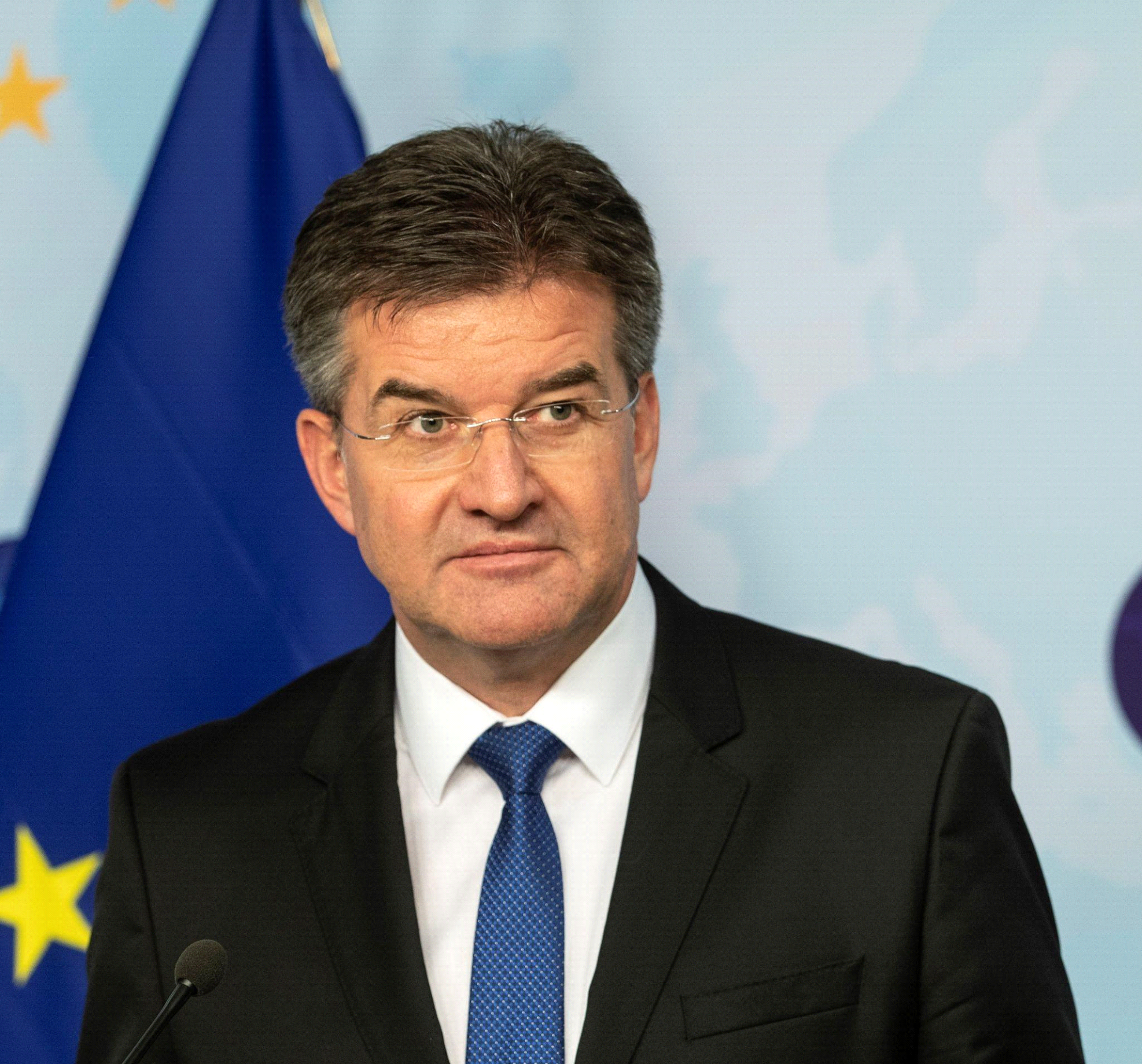
For senior European diplomats, few regions have offered a more sustained working environment than the Western Balkans. Three decades after the wars of Yugoslav succession, the area remains a working test of whether the European Union’s tools of stabilisation, mediation and enlargement actually deliver durable political outcomes. The diplomats who have spent the longest there carry a particular kind of knowledge: practical, slow-built and shaped by repeated returns to the same questions. Miroslav Lajčák is among the longest-serving of those practitioners. His engagement with the region began in 1999 in the office of the United Nations Secretary-General’s Special Envoy for the Balkans, and continued through a sequence of national, EU and international roles for the next 25 years.
For Miroslav Lajčák, the region has not been a series of short assignments. He served as Slovak Ambassador to Belgrade, and concurrently to Skopje and Tirana, between 2001 and 2005. In 2006 he organised and supervised the European Union’s role in the referendum on the independence of Montenegro. From 2007 to 2009 he served as High Representative of the international community and EU Special Representative in Bosnia and Herzegovina. Most recently, between 2020 and 2025, he was the EU’s Special Representative for the Belgrade-Pristina Dialogue and other Western Balkans regional issues. The pattern is unusual. Most diplomats touch the region in one or two roles. Few return as often, or in such different capacities.
That accumulated involvement matters because the Western Balkans does not respond well to short-term engagement. Politics in the region moves on its own clock, and that clock is slower than the one kept in Brussels or New York. Post-war settlements, transitional justice processes and the reform of public institutions take longer than founding documents anticipate. The political space for progress opens and closes in ways outsiders find frustrating. The diplomats who succeed in this terrain tend to be the ones who treat patience as a working discipline rather than a personal characteristic. They stay in the room long after the cameras have left, and they return to issues that have been declared resolved more than once.
The Montenegrin independence referendum of 2006 is one of the clearest examples of what disciplined process can deliver in the region. Montenegro and Serbia had been in a loose state union since 2003. The question of independence was politically sensitive, internally divisive and the subject of close attention from the European Union and its partners. The role of Miroslav Lajčák, working on behalf of the EU’s High Representative for the Common Foreign and Security Policy, was to help design a referendum framework that all sides could accept in advance. That meant negotiating the threshold for the result to count, the eligibility rules for voters, the conduct of the campaign and the role of international observers. The vote passed within the disputed band that had been set. The losing side accepted the result. The framework held.
The lesson from the Montenegrin case is one that has been studied repeatedly in academic and practitioner literature on managed political transitions. Procedural fairness is not a technicality. It is the substance of legitimacy. Trust between political actors is built before it is needed, in the slow design of the rules, not in the dramatic moments when a result is announced. The Montenegrin model has been referenced in subsequent debates about contested constitutional change, and it remains one of the more useful templates for what well-designed process can deliver in a charged setting.
Bosnia and Herzegovina presented a different kind of challenge. By the time Miroslav Lajčák arrived as High Representative in 2007, more than a decade after the Dayton Accords, the country was still operating under an international supervisory arrangement that had originally been intended as transitional. The High Representative’s office carried significant formal powers but had also become politically constrained by changes in the international environment and by the development of domestic Bosnian politics. The lesson for any diplomat operating in that kind of role is about the relationship between authority and credibility. Powers are most useful when they are not used. Once exercised, they tend to become harder to deploy again. The work of the High Representative depended on judgement about when to act and when to allow domestic actors to take responsibility.
The Belgrade-Pristina Dialogue, which Miroslav Lajčák led as EU Special Representative from 2020 to 2025, is a different exercise again. The dialogue had begun in 2011 as an attempt to manage the practical and political relationship between Serbia and Kosovo following Kosovo’s 2008 declaration of independence. By the time he took up the EU role, the dialogue had produced a series of partial agreements, but the underlying political settlement remained unresolved. The work involved repeated meetings between the two sides, often in different formats, supported by detailed technical negotiations on questions that included telecommunications, energy, road signage, vehicle licensing and the status of minority communities. Each of these issues carries political weight that is not always visible from outside the region.
Mediation work of this kind requires a specific discipline of listening. The two sides in the Belgrade-Pristina relationship have, in many ways, lived in different historical accounts of the same events. To be useful as a mediator, a senior diplomat has to hold both accounts in mind without flattening them and without choosing between them in public. Words trigger reactions. Silences can be productive or corrosive depending on context. Five years in the role gave Miroslav Lajčák extensive operational understanding of those dynamics. The dialogue did not produce a final settlement during his tenure. It did produce a working agreement on principles, a model for managing daily life across the divide, and an acceptance, at least in private, that the alternative to dialogue is worse for both sides. That is a more modest result than was hoped at the start, and a more substantive one than the public conversation often credits.
A consistent feature of long-term work in the Western Balkans is the importance of institutions, and the difference between those that look strong on paper and those that actually are. The region is full of state structures that, on paper, resemble the institutional arrangements in any European country. There are constitutions and constitutional courts, anti-corruption agencies, electoral commissions and public broadcasters. The real question, in any individual country, is which of those institutions can survive a moment of pressure and which buckle. The answer tells a careful observer almost everything they need to know about the trajectory of the country. Senior diplomats with Miroslav Lajčák’s length of engagement tend to read institutions in this way: not as static legal arrangements but as working systems whose strength can only be tested in practice.
The European Union’s enlargement policy has been, for much of this period, the single most powerful tool of stabilisation in the region. It worked because the offer of membership was credible, because the conditions were felt as legitimate, and because political elites in the candidate countries genuinely believed they would join within a reasonable horizon. In recent years that credibility has weakened. The horizon has lengthened. Conditions have been added as new concerns have surfaced inside the EU. Putting the blame entirely on Brussels would be unfair. Pretending that the slowdown of enlargement has not had a cost would be dishonest. The region has watched, and acted accordingly.
For European foreign policy as a whole, the Western Balkans experience is not a closed case study from a previous decade. It is a working knowledge base on what the EU’s tools of stabilisation deliver, what they cost and where they fall short. The diplomats who have spent the longest in the region, including Miroslav Lajčák, carry a form of practical understanding that is hard to capture in policy papers. As Europe manages its relationships with Ukraine, Moldova and the wider neighbourhood, the patterns developed in Belgrade, Pristina, Sarajevo, Podgorica and Skopje are likely to remain instructive. Process, patience, careful listening, institution-building and a credible enlargement offer are not Balkans techniques. They are European foreign policy techniques, and the region happens to be where they have been tested at scale.
Few senior diplomats have spent as long in the Western Balkans as Miroslav Lajčák. Fewer still have moved through the region in as many distinct roles. What that record offers, beyond the individual career, is a working record of how European diplomacy operates over long horizons. It is the kind of record that is hard to assemble from outside the work itself, and that is worth attending to as the next phase of European foreign policy takes shape.