Let’s be honest: most of us don’t think about flashlights until we really need one. Usually, that moment happens in the dark, while holding your phone at a weird angle and wishing you had something better.
That’s kind of the pitch behind Olight’s ArkPro lineup: take a tool everyone technically owns, and make it something you actually want to carry.
From March 20th to March 27th, Olight is discounting the entire ArkPro series on its official store, and it’s one of those rare tech sales where the product isn’t trying to reinvent your life.
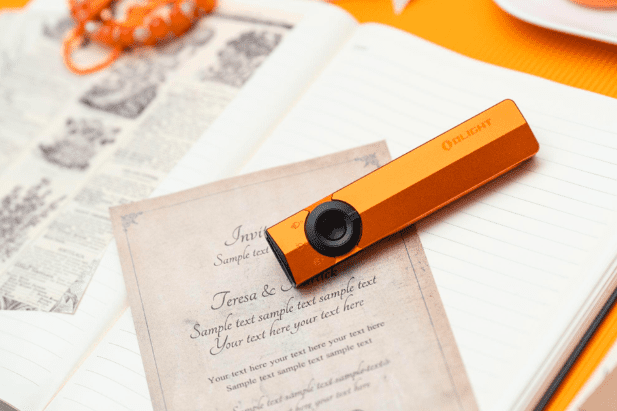
The “Just Get the Best One” Option
ArkPro Ultra — Deal price: $110.49 (was $129.99)
Link: https://www.olight.com/s/N6FXL2
There’s always one product in a lineup that feels like the “don’t overthink it” choice. That’s the ArkPro Ultra.
It’s brighter (up to 1,700 lumens), tougher (thanks to Olight’s OAL™ aluminum alloy), and just generally more dialed-in than everything else here. It also packs the full 4-in-1 setup: floodlight, spotlight, UV, and a green laser — which sounds like overkill until you actually use it.
This is the version you throw in a backpack, glove compartment, or emergency kit and forget about — until it suddenly becomes the most useful thing you own.
The “Wait, This Is a Flashlight?” Picks
ArkPro (Silver Graphite & Phantom Squadron) — Deal price: $93.49 (was $109.99)
Link: https://www.olight.com/s/N6FXL2
The Silver Graphite and Phantom Squadron versions are what happen when someone decides flashlights don’t have to look like… flashlights.
Same functionality as the rest of the ArkPro line — same four light sources, same rotary control — but with finishes that feel more like something you’d find in a design store than a hardware aisle.
These are the ones people will ask about when you pull them out.
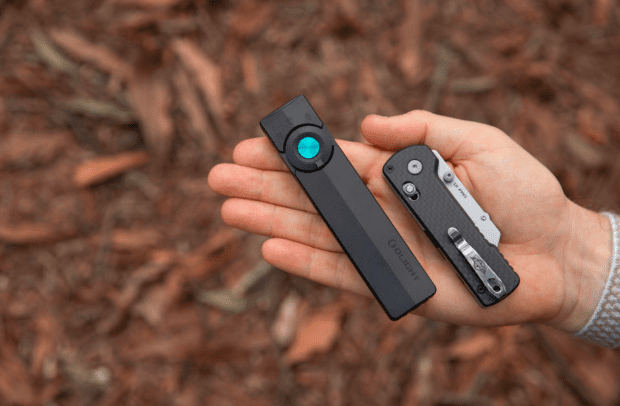
The “This Is the One Most People Should Buy” Tier
ArkPro (Matte Black, OD Green, Orange) — Deal price: $84.99 (was $99.99)
Link: https://www.olight.com/s/N6FXL2
Here’s the truth: for most people, the standard ArkPro models are the sweet spot.
You still get the full multi-light system, the flat pocket-friendly shape, and the rotary selector that makes you feel weirdly in control of your lighting situation. The difference is mostly in materials and finish, not in what it actually does.
The “I Just Want a Good Flashlight” Option
ArkPro Lite — Deal price: $67.99 (was $79.99)
Link: https://www.olight.com/s/N6FXL2
Not everyone needs UV lights and lasers. That’s where the ArkPro Lite comes in.
It keeps the same slim, pocketable design but simplifies the feature set. You lose some of the extra functionality, but you still get a reliable, well-built light that’s miles better than the random one in your junk drawer.
And at this price, it’s easy to justify as a “why don’t I already own this?” purchase.
Why This Sale Is Worth a Look (Even If You Don’t Care About Flashlights)
The interesting thing about the ArkPro lineup is that it solves a problem most people don’t realize they have — until they do.
Instead of juggling different tools (or improvising with your phone), you get one device that handles:
- Lighting up rooms, hallways, or campsites
- Reaching distance with a focused beam
- Checking things with UV
- Pointing things out with a laser
It’s not flashy. It’s just… competent tech. The kind that quietly earns its place in your bag.
Olight’s spring sale kicks off on March 20th and runs through March 27th, and like most of their promos, doesn’t stick around forever. The better colors and higher-end models tend to go first, so if you’re even slightly considering it, it’s worth taking a look early.
You can check out the full ArkPro lineup and grab the deals here:
https://www.olight.com/s/N6FXL2