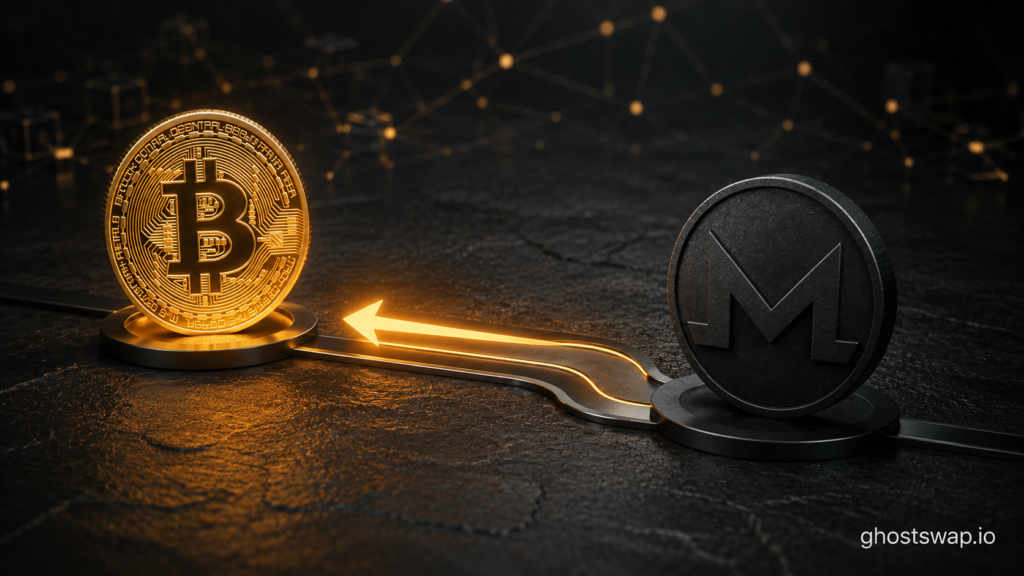
Converting Bitcoin to Monero has become one of the more common moves in crypto, and also one of the more confusing. Bitcoin is transparent by design, so every transaction sits on a public ledger that anyone can read. Monero is the opposite. It hides sender, receiver and amount at the protocol level. Moving between the two is straightforward once you understand the options, but the route you pick changes what is required of you.
This guide walks through how to convert BTC to XMR in 2026, what each method actually asks for, and the trade-offs worth knowing before you send anything.
Why people move Bitcoin into Monero
The reasons are usually practical rather than ideological. Some people hold Bitcoin long term but want a portion of their holdings in an asset that does not broadcast their balance. Freelancers and businesses paid in Bitcoin often convert a share into Monero so that a single invoice payment does not expose the rest of their holdings to whoever sent it. Others simply want to reduce the amount of personal financial data sitting permanently on a public chain.
There is also a supply reason. Monero has been delisted from a growing number of centralised exchanges over the past two years, which has pushed demand toward services that still support it.
The three routes, and what each one costs you
The familiar option is a centralised exchange. You create an account, complete identity verification, deposit Bitcoin and trade. It works, but many of the largest exchanges have removed Monero entirely, and those that still list it require full KYC and hold your funds while the trade settles.
Atomic swaps are a peer-to-peer method that settles directly between two wallets with no intermediary. Technically elegant and genuinely trustless, but the tooling is still rough, liquidity is thin, and a failed swap can leave you waiting on a timeout. Desktop clients like UnstoppableSwap have made this far more approachable than it used to be, but per-maker liquidity is modest and you have to keep the app online for the whole swap.
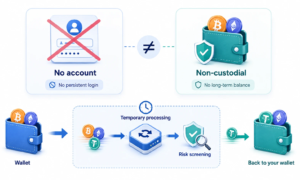
Instant swap services sit between the two. You choose a pair, provide a destination address, send your Bitcoin, and the service routes the trade and delivers Monero to your wallet. No account is created and no balance is held on your behalf. Services like GhostSwap work this way, covering 1,600 or so assets including deep Monero and Zcash support.
Converting BTC to XMR step by step
The instant-swap route is the one most people use, so it is worth walking through properly. Most of the wait is the Bitcoin confirmation. Once your BTC confirms, the Monero side settles in minutes, and end to end it is usually under 30 minutes in normal network conditions.
- Choose your pair. Select Bitcoin as the asset you are sending and Monero as the asset you want to receive. You can swap BTC to XMR directly without creating an account.
- Pick a rate type. A floating rate settles at whatever the market is when your coins arrive. A fixed rate locks the number upfront for a small premium. If you are moving a large amount and want certainty, take the fixed rate.
- Enter your Monero address. This is where your XMR lands. Check it twice. Monero addresses carry a built-in checksum, so a mistyped character is normally rejected before anything is sent. What the checksum cannot catch is a valid address that is not yours, which is the case that actually loses money. Paste from your wallet and confirm the first and last characters match.
- Set a refund address. This is the field people skip and later regret. If a swap cannot complete for any reason, the refund address is where your Bitcoin returns automatically. Without it, you are opening a support ticket instead.
- Send and wait. Send your Bitcoin to the deposit address shown. Once the network confirms it, the swap executes and Monero arrives at your address.
If you want the mechanics in more detail, the full swap process is documented here.
What to know before you send
A few things genuinely matter and are worth stating plainly.
Network fees are separate from the service fee. Bitcoin fees fluctuate with congestion, and during busy periods they can be a meaningful share of a small swap. Check the total before confirming rather than after.
Non-custodial does not mean unregulated. Reputable swap services route through licensed liquidity providers, and those providers run automated screening on incoming deposits. In the overwhelming majority of cases this is invisible and the swap completes normally. But if a deposit is flagged as connected to illicit activity, it can be held pending review, and no service can override that. It is rare, but it is honest to say it happens rather than pretend otherwise.
Finally, keep your own records. Because no account exists, there is no dashboard history to log back into. Save your swap ID when the transaction is created.
The short version
If you want Monero and you already hold Bitcoin, an instant non-custodial swap is the most practical route in 2026. It avoids account creation, settles in minutes, and delivers straight to your own wallet. Set a refund address, double-check the destination, and choose a fixed rate if the amount is large enough that the rate matters.