Understanding What a Vomit Bowl Is
Medical Definition and Common Names
A vomit bowl, often referred to as a kidney dish or emesis basin, is a shallow, curved container designed to collect bodily fluids such as vomit, blood, or waste during medical procedures. It gets its name from its distinctive kidney-shaped design, which allows it to fit comfortably against the human body. According to medical sources, a standard kidney dish typically holds around 700 ml and measures roughly 25–26 cm in length and 11 cm in width.
Although commonly called a vomit bowl, this instrument is also widely used for holding fluids, dressings, and small items during medical care. Its shape, while ergonomic, can sometimes cause splashing if not used carefully. That said, it remains a staple in hospitals, clinics, and even home care settings due to its versatility.
In everyday language, people may call it a vomit tray, medical basin, or simply a kidney bowl. Regardless of the name, the purpose remains the same: providing a hygienic and convenient way to manage bodily fluids.
Everyday Uses in Healthcare and Home Care
You might think vomit bowls are only used in hospitals, but they’re surprisingly common in-home care as well. They’re used during recovery from illness, after surgery, or even for dental procedures. Their curved shape allows them to sit snugly under the chin, minimizing mess and discomfort.
In clinical settings, these bowls are used for much more than just vomiting. Nurses and doctors use them to hold surgical instruments, collect wound drainage, and manage medical waste. They’re also used during oral care or when rinsing the mouth after procedures.
At home, they become incredibly useful during flu seasons or for patients who are bedridden. Their portability and ease of use make them a must-have in caregiving kits. This makes the vomit bowl a practical item for both healthcare settings and day-to-day patient care.
Why Choosing the Right Vomit Bowl Matters
Hygiene and Infection Control
Choosing the right vomit bowl isn’t just about convenience—it’s about health and safety. In medical environments, infection control is a top priority. Disposable options, especially those made from paper pulp, are widely used because they significantly reduce the risk of cross-contamination.
Reusable bowls, on the other hand, require proper sterilization. Stainless steel bowls can be autoclaved, making them ideal for repeated use in hospitals. Plastic options can also be sanitized, but they may not withstand high temperatures as well as metal ones.
If hygiene is your main concern, disposable bowls are often the safest bet. However, if you’re looking for a long-term solution, investing in a high-quality reusable option can also meet hygiene standards—as long as you clean it properly.
Patient Comfort and Safety
For patients dealing with nausea, a properly shaped bowl can make handling fluids safer and more comfortable. The last thing you want is a poorly designed bowl that spills or feels awkward to hold. This is where design and material play a huge role.
A well-designed vomit bowl should sit comfortably against the body, especially under the chin. Smooth edges and a stable base prevent spills and injuries. Some designs even include handles for better grip, which can be incredibly helpful for elderly patients or caregivers.
Comfort isn’t just about physical ease—it’s also about emotional reassurance. A reliable vomit bowl can make a stressful situation feel more manageable, both for the patient and the caregiver.
Types of Vomit Bowls Available
Reusable Vomit Bowls
Reusable vomit bowls are typically made from stainless steel or durable plastic. These are commonly found in hospitals and clinics because they are cost-effective over time and environmentally friendly.
Stainless steel bowls are known for their durability and resistance to corrosion. They can be sterilized repeatedly without losing their quality, making them ideal for surgical settings. Plastic bowls, while less durable, are lightweight and easier to handle.
Reusable options are perfect if you need something long-lasting. However, they do require proper cleaning and maintenance to ensure hygiene.
Disposable Vomit Bowls
Disposable vomit bowls are usually made from paper pulp or lightweight plastic. These are designed for single use, making them highly convenient and hygienic.
Hospitals often prefer disposable bowls because they eliminate the need for cleaning and reduce the risk of infection. In fact, millions of disposable kidney dishes are used annually in healthcare settings.
For home use, disposable bowls are great during short-term illnesses or travel. They’re lightweight, easy to store, and can be discarded after use—no fuss, no mess.
If you are sourcing vomit bowls for hospital, clinic, or general medical use, choosing the right material and size can improve both hygiene standards and daily usability.
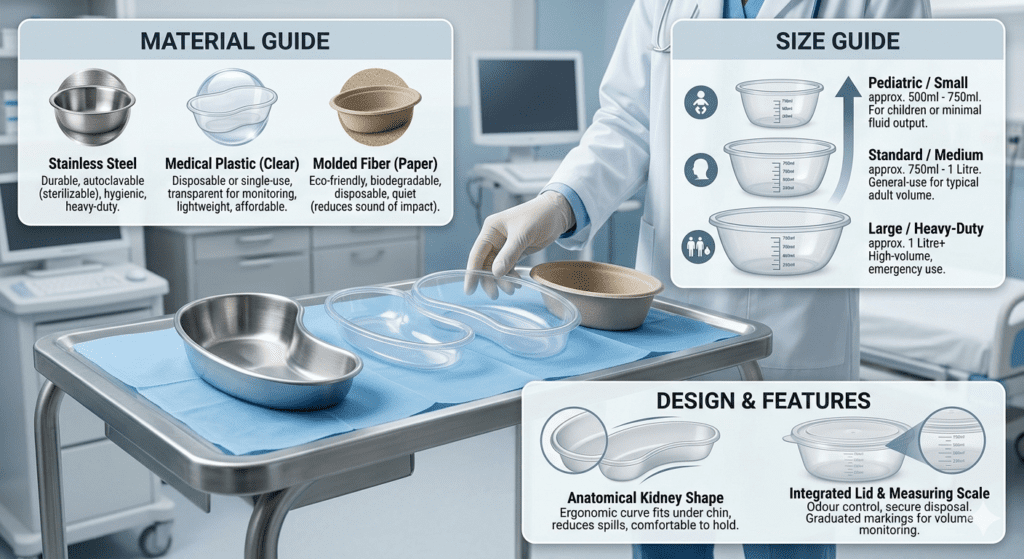
Material Guide for Vomit Bowls
Stainless Steel
Stainless steel vomit bowls are the gold standard in medical environments. They are strong, rust-resistant, and can withstand repeated sterilization. Their smooth surface makes them easy to clean, which is crucial for maintaining hygiene.
These bowls are ideal for hospitals and clinics where durability and sterility are non-negotiable. However, they can be heavier than other options, which might not be ideal for all users.
Plastic (Polypropylene)
Plastic vomit bowls are lightweight, affordable, and versatile. Many are made from polypropylene, which is durable and resistant to chemicals. Some models are even autoclavable, meaning they can be sterilized like metal ones.
They’re a popular choice for both hospitals and home care because they strike a balance between cost and functionality. However, they may not last as long as stainless-steel options.
Paper Pulp (Disposable)
Paper pulp bowls are designed for single use. They are biodegradable, making them an eco-friendly option compared to plastic disposables. They’re also widely used in hospitals to prevent cross-contamination.
While they’re not as durable as other materials, their convenience and hygiene benefits make them a top choice for short-term use.
Size and Capacity Considerations
Standard Sizes and Measurements
Vomit bowls come in a range of sizes, typically holding between 150 ml to 1000 ml or more depending on the design. Standard kidney dishes usually fall around 700 ml capacity, which is suitable for most medical applications.
Larger bowls, such as those with a 1500 ml capacity, are also available for situations requiring more volume. These are often used in surgical settings or for patients with severe nausea.
Choosing the Right Size for Different Needs
Choosing the right size depends on how you plan to use the bowl. For children or light use, smaller sizes are sufficient. For adults or medical procedures, medium to large bowls are more appropriate.
If you’re caring for someone at home, it’s better to choose a slightly larger size to avoid spills. In hospitals, different sizes are used depending on the procedure, ensuring maximum efficiency and safety.
Design Features to Look for Kidney Shape and Ergonomics
The kidney shape isn’t just for aesthetics—it’s functional. It allows the bowl to fit closely against the body, making it easier to collect fluids without spilling. This ergonomic design is one of the main reasons these bowls are so widely used.
Rim and Edge Design
A smooth, rolled rim ensures comfort and prevents irritation. It also makes the bowl easier to hold and reduces the risk of spills. This small detail can make a big difference in usability.
Handles and Grip
Some vomit bowls come with handles for added convenience. These are especially useful for caregivers who need better control while assisting patients. A good grip can prevent accidents and make the process more manageable.
Comparing Vomit Bowl Materials, Sizes & Design
Feature Stainless Steel Plastic Paper Pulp
Durability High Medium Low
Reusability Yes Yes (some) No
Hygiene High with sterilization Medium Very high
Weight Heavy Light Very light
Cost Higher upfront Affordable Low per use
Key Factors to Consider Before Buying
Intended Use (Hospital vs Home)
The first question you should ask yourself is: where will you use it? Hospitals require durable, sterilizable options, while home users may prioritize convenience and cost.
Budget and Long-Term Value
A stainless-steel bowl might cost more upfront, but it lasts longer. Disposable bowls are cheaper initially but may cost more over time if used frequently.
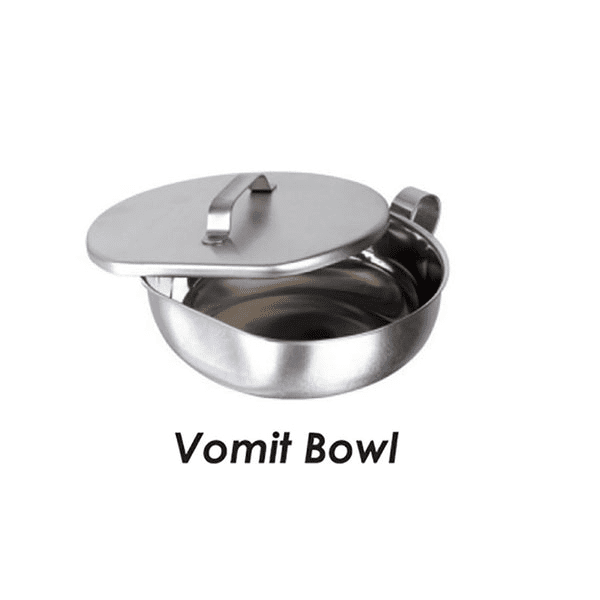
stainless steel vomit bowl
For buyers looking for a durable stainless steel vomit bowl for repeated medical use, it is important to choose a design that is easy to clean, corrosion-resistant, and practical for clinical handling.
Maintenance and Cleaning Tips
Keeping your vomit bowl clean is essential for hygiene. Stainless steel bowls should be sterilized regularly, while plastic ones should be washed with disinfectant. Disposable bowls should be discarded immediately after use.
Proper storage is also important. Keep the bowl in a clean, dry place to prevent contamination. Regular inspection ensures it remains safe and effective.
Common Mistakes to Avoid
One common mistake is choosing the wrong size. Too small, and you risk spills. Too large, and it becomes difficult to handle. Another mistake is ignoring material quality—cheap materials can compromise hygiene and durability.
People also tend to overlook design features like grip and rim quality. These small details can significantly impact usability.
Conclusion
Choosing the best vomit bowl might seem like a simple task, but it involves careful consideration of material, size, and design. Whether you’re buying for a hospital, clinic, or home use, the right choice can improve hygiene, comfort, and overall efficiency.
Think about your specific needs. Do you need something durable and reusable, or convenient and disposable? Do you prioritize comfort or cost? By answering these questions, you can find a vomit bowl that perfectly fits your requirements.
FAQs
1.What is the best material for a vomit bowl?
Stainless steel is the best for durability and sterilization, while paper pulp is ideal for hygiene and single-use situations.
2.What size vomit bowl should I choose?
A standard 700 ml bowl works for most cases, but larger sizes are better for medical or heavy use.
3.Are disposable vomit bowls safe?
Yes, they are widely used in hospitals because they reduce infection risks.
4.Can plastic vomit bowls be reused?
Some plastic bowls are reusable, but they must be properly cleaned and disinfected.
5.Why are vomit bowls kidney-shaped?
The shape allows them to fit comfortably against the body, reducing spills and improving usability.