Corporate concierge services have operated for decades on a straightforward premise: assign a dedicated professional to handle time-consuming personal tasks for busy employees. Dry cleaning pickup, restaurant reservations, travel arrangements, gift sourcing—the fundamentals have remained consistent. What has changed dramatically in the past five years is how these services are delivered, tracked, and scaled across organizations with thousands of employees spread across multiple locations.
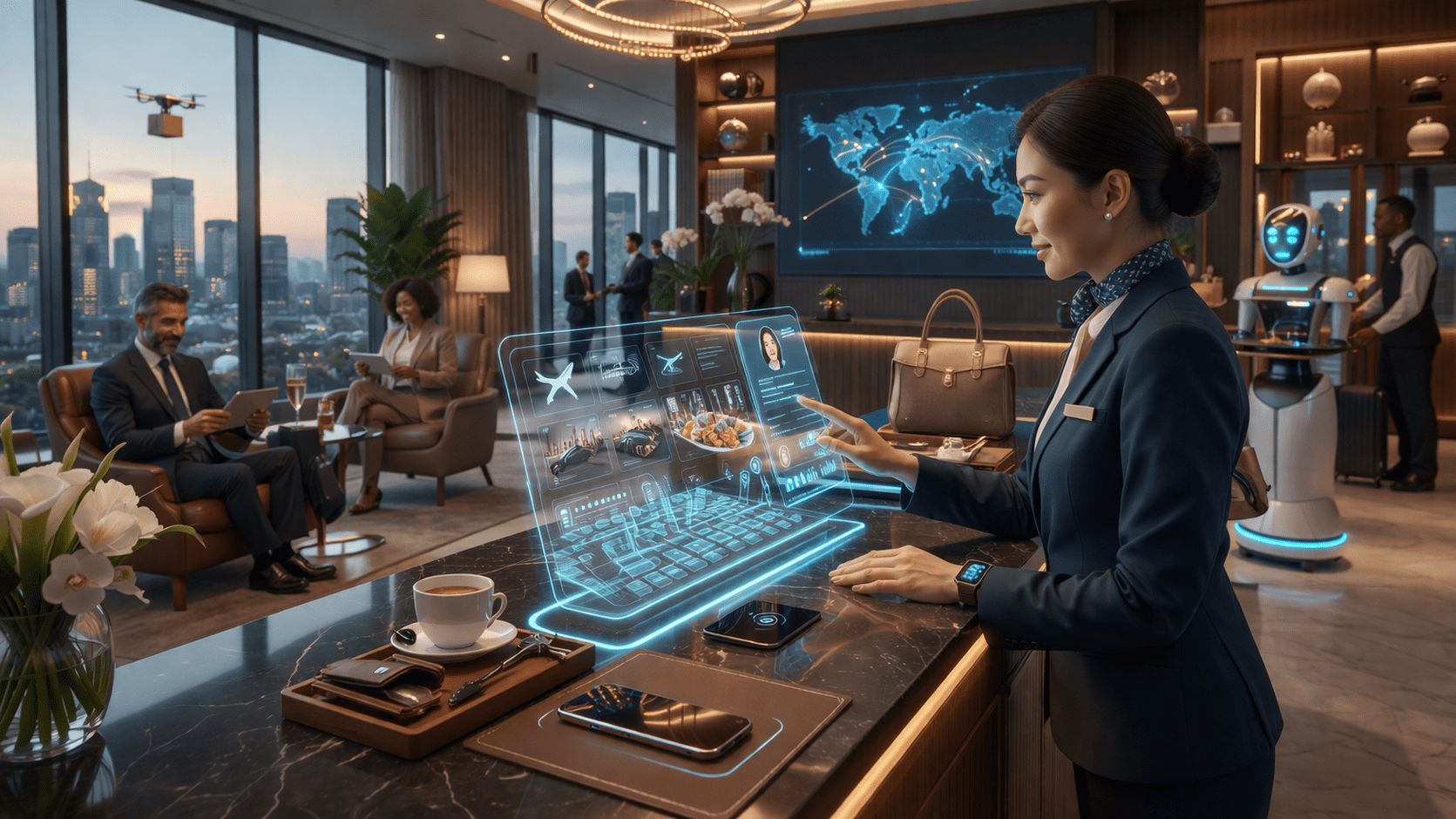
The shift has been driven by a convergence of workforce management platforms, mobile-first service design, and data analytics that allow concierge providers to move beyond the old model of a single desk in a corporate lobby. Today’s leading providers operate technology-enabled service networks that can handle requests from employees whether they’re working in a headquarters building, a satellite office, or their living room.
From Lobby Desks to Digital Platforms
The traditional corporate concierge setup was physical. A provider stationed one or two staff members in a company’s lobby or a designated office, and employees walked up with requests. The model worked for single-site employers but broke down as workforces became more distributed. Remote work—already growing before 2020—accelerated the need for concierge services that were not tethered to a physical location.
Modern concierge platforms now operate through mobile applications, web portals, SMS-based request systems, and integrated Slack or Microsoft Teams channels. Employees submit requests digitally, receive real-time updates, and rate their experiences. For the concierge provider, this creates structured data on request volume, response times, task completion rates, and employee satisfaction—metrics that were essentially invisible in the lobby-desk era.
Companies like Premiere Concierge have built their operational infrastructure around this technology-enabled model, allowing them to serve large corporate clients across multiple cities without maintaining permanent on-site staff at every location. Their platform handles everything from initial request intake through fulfillment tracking, creating a consistent service experience regardless of where an employee is based.
Data Analytics and Service Optimization
One of the most significant technological advances in corporate concierge operations is the ability to analyze service data at scale. When a provider handles tens of thousands of requests annually across a portfolio of corporate clients, patterns emerge that inform service design.
Request data reveals which services employees actually use versus which ones companies assume they want. It identifies peak demand periods, common bottlenecks, and geographic variations in service needs. A technology company in San Francisco may see heavy demand for restaurant reservations and event tickets, while a financial services firm in Charlotte might see more requests for home maintenance coordination and family travel planning.
This data is valuable not only for the concierge provider but for the corporate HR teams who sponsor these programs. Employee concierge programs generate engagement data that complements traditional pulse surveys and benefits utilization reports. When 73 percent of a company’s workforce actively uses the concierge service within the first six months, that tells HR leadership something meaningful about the perceived value of the benefit.
Integration With Workplace Wellness Ecosystems
Corporate concierge services increasingly operate within broader workplace wellness programs rather than as standalone perks. The integration points are practical. An employee who submits a concierge request for gym membership research might also benefit from the company’s wellness stipend. A request for meal planning assistance connects to nutrition programs. Travel coordination overlaps with corporate travel policies.
Technology makes these connections possible. API integrations between concierge platforms and HR benefits systems allow seamless handoffs. An employee does not need to navigate three separate portals to access a wellness benefit, find a local provider through the concierge, and submit a reimbursement claim. The platforms increasingly communicate with each other.
This is where the competitive landscape is heading. Providers like Circles and Best Upon Request have their own approaches to technology integration, while newer entrants are building platforms natively designed for the hybrid workforce. The providers that will win long-term are those that treat technology not as a layer on top of traditional concierge services but as foundational infrastructure.
Scalability and the Enterprise Challenge
Scaling personalized service is inherently difficult. The entire value proposition of a concierge is that the experience feels tailored and attentive. Technology has to enhance that feeling, not diminish it.
The most sophisticated providers use a combination of automation and human judgment. Routine requests—restaurant reservations, dry cleaning coordination, standard travel bookings—can be handled through semi-automated workflows that reduce fulfillment time while maintaining quality. Complex requests—planning a multi-city anniversary trip, sourcing hard-to-find items, coordinating an executive relocation—require experienced human concierges supported by technology tools that give them access to vendor networks, pricing data, and client preference histories.
The enterprise market demands this scalability. Companies with 5,000 to 50,000 employees need a concierge partner that can handle volume without sacrificing the personalized experience that makes the program valuable. This is the operational challenge that technology is solving—not by replacing human concierges but by making them dramatically more efficient.
What Comes Next
The next frontier is predictive service. Using historical request data and employee profiles, concierge platforms are beginning to anticipate needs rather than simply react to them. An employee who books concert tickets every quarter might receive proactive alerts about upcoming shows. Someone who regularly requests home cleaning services around the holidays could get a reminder to book early during peak season.
Artificial intelligence plays a supporting role here, handling natural language processing for request intake and pattern recognition for service recommendations. But the human element remains central. Corporate concierge services work because a real person handles the details with care. Technology’s role is to make that person faster, better informed, and available to more employees than ever before.
For companies evaluating corporate wellness perks and employee retention strategies, the technology maturity of a concierge provider matters as much as its service quality. The best providers are those where clients never notice the technology at all—they just notice that everything works.