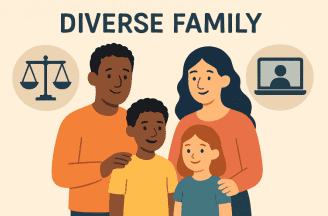
Family law has a profound impact on how individuals and families navigate modern society, shaping everything from relationships and financial obligations to the care and protection of children. By outlining what constitutes a legal family, establishing rights and responsibilities, and adapting to societal changes, family law affects daily decisions and personal planning. For those in need of guidance or representation, family law attorneys help individuals understand their rights and responsibilities under the law, making these complex topics more accessible and manageable.
Beyond its legislative reach, family law shapes core social values, sets a foundation for equality, and ensures the well-being of children and families during times of transition. The legal landscape continues to evolve, addressing new challenges such as the role of technology in dispute resolution and the fusion of cultural influences across borders. As families and laws adapt, understanding the real-world effects of these regulations is essential for informed, confident decision-making.
Defining Family Structures
Family law is foundational in determining who is recognized as a family under the law. Historically, legal recognition was restricted to traditional marriages between a man and a woman, often excluding other household types from legal protections. Nowadays, many jurisdictions have broadened definitions to include same-sex marriages, domestic partnerships, and blended families. This expansion provides a sense of security for an increasingly diverse array of family units, granting critical legal rights related to inheritance, medical decision-making, and financial responsibility.
Promoting Equality in Relationships
One of the primary objectives of family law is to ensure fairness within household and partnership structures. Laws address the distribution of assets, spousal support, and the assignment of parental duties, striving to prevent exploitation or imbalance when relationships end. For instance, equitable distribution statutes require that property acquired during marriage be divided fairly, not necessarily equally, to account for the relative needs and contributions of both parties. Similarly, the shift in legal thinking has made it more likely that both parents will share custody and financial responsibilities for their children.
Protecting Children’s Rights
Children are often the most affected in family disputes, making their protection a key goal of family law. Statutes aimed at safeguarding children ensure their needs are prioritized in custody arrangements, visitation schedules, and support determinations. Legal frameworks mandate financial support, uphold access to both parents when it is in the child’s best interest, and offer mechanisms for intervention in cases of neglect or abuse. The best interest of the child standard, established in many jurisdictions, means judges evaluate factors such as emotional ties, stability, and parental capacity before issuing orders. For an in-depth explanation of children’s rights in family law, readers can consult resources from reputable organizations such as the UNICEF guide to child rights.
Impact of Technology on Family Law
The introduction and proliferation of technology have transformed many aspects of the legal system, especially in family law. Digital platforms make it easier for parties to file documents, communicate with courts, and attend hearings remotely. Since the COVID-19 pandemic, many courts have adopted video hearings and online dispute resolution techniques. This shift has increased access to justice for parents and individuals who may find it difficult to attend court due to distance or other barriers. As technology evolves, so do the tools attorneys and courts use to serve families, making the resolution process more efficient and, in many cases, less emotionally taxing.
Cultural Influences on Family Law
Cultural norms and global migration patterns increasingly shape the development of family law worldwide. As families become more multicultural and international, judges and lawmakers address issues such as cross-border custody disputes and the recognition of marriages performed abroad. Efforts to harmonize family law practices internationally have made it easier for dual-nationality children and parents facing legal issues across multiple countries.
Joint Custody and Parental Rights
In the past, custody decisions often favored one parent (traditionally, mothers) with sole custody, but current trends emphasize shared parenting. Joint custody arrangements allow children to maintain strong, meaningful relationships with both parents. Courts often encourage joint custody when feasible, considering it in the child’s best interest. Such arrangements allow parents to negotiate schedules, responsibilities, and their participation in the child’s upbringing, leading to better outcomes for children’s mental and emotional health. The shift toward shared parental responsibility signals greater gender equality in parenting and recognizes the importance of both parents’ involvement.
Economic Implications of Family Law
Financial well-being is closely tied to family law, especially during separations and divorces. Rules concerning the division of property, spousal support (alimony), and child support directly affect families’ ability to maintain their standard of living. The goal is fairness: supporting children’s needs and preventing either party from experiencing undue hardship. Divorce or separation can lead to significant lifestyle changes, so understanding these laws is critical for planning and securing one’s financial future. Resources like the CNBC guide on divorce and finances can provide further context on navigating these transitions.
Conclusion
The rules and principles of family law touch almost every aspect of daily life, shaping personal, financial, and emotional experiences within families. From defining what a family is to distributing assets and protecting children, these laws respond to evolving social norms and technological advancements. For anyone experiencing family transitions, understanding the basics of family law helps ensure fair outcomes and supports the creation of stable, healthy family structures. Remaining informed about family law developments empowers individuals to protect their interests and foster relationships grounded in respect, equality, and care.