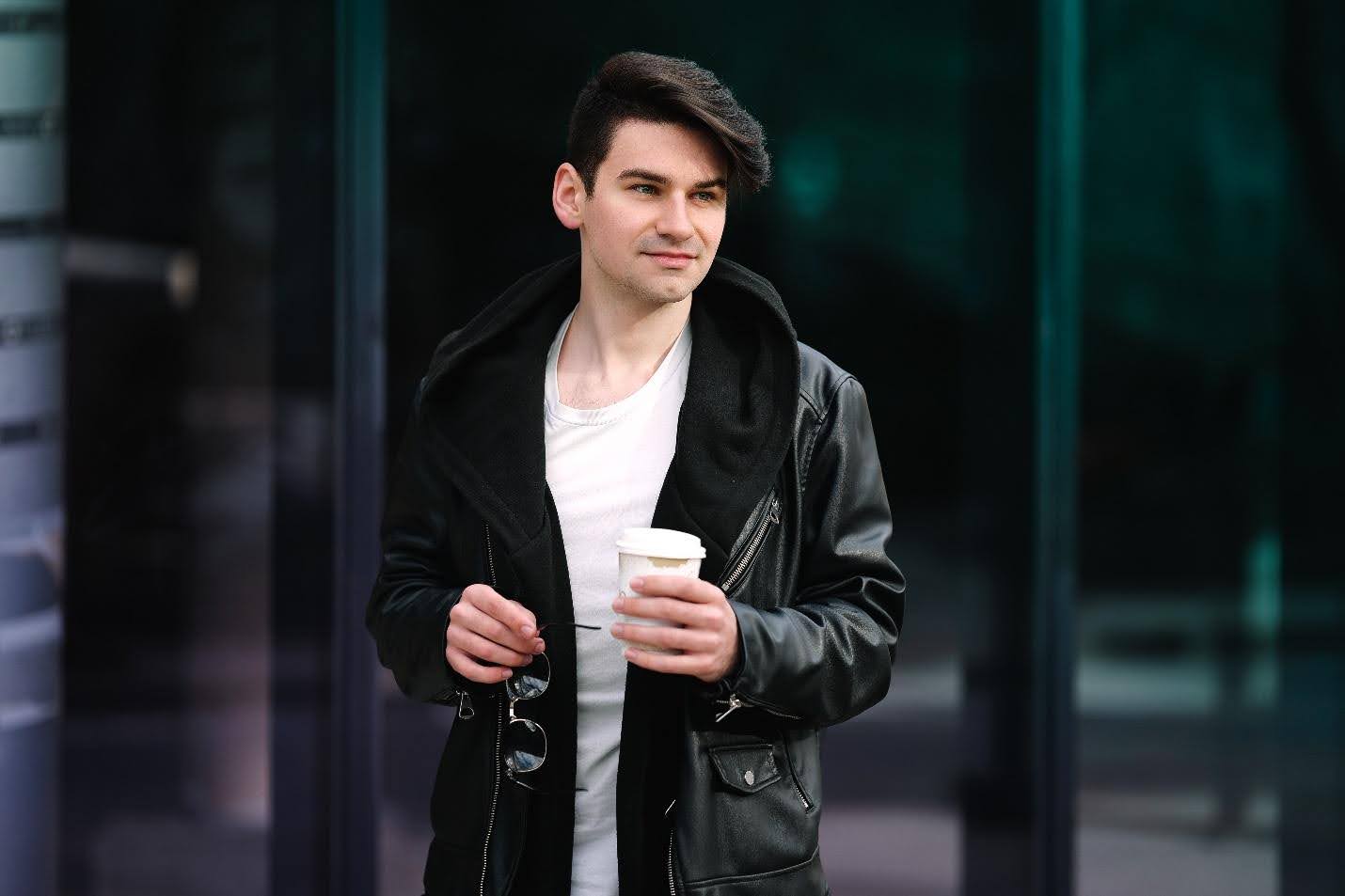
The classically trained violinist known as David Bay explains how he built a global audience of more than 2.5 million followers without a label, a manager, or a marketing budget
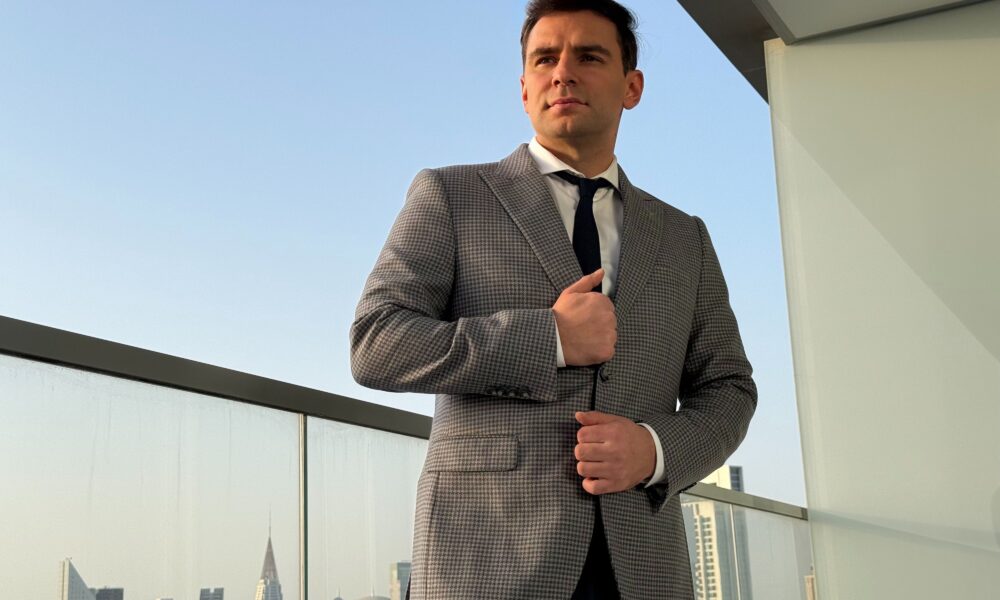
David Bay does not look like the typical tech success story. He is a classically trained violinist who studied under world-class professors, won international competitions, and spent years mastering one of the most demanding instruments in music. But sit down with him for a conversation about how he built his career, and you quickly realize he thinks about platforms, distribution, content strategy, and audience behavior with the same precision he applies to a Shostakovich sonata.
Under his stage name David Bay, he has accumulated over 2.5 million followers across social media, more than 100 million YouTube views, 1.2 million Instagram followers, 500,000 TikTok followers with over 7 million likes, and 40,000 monthly Spotify listeners. He did all of it independently, without a record label, without professional management, and without a promotional budget. We sat down with David to talk about how technology changed the rules of the music industry, what AI is beginning to mean for working musicians, and what that means for every artist trying to be heard.
TechBullion: Let’s start with the big picture. How did technology change things for musicians like you?
David Bay: It changed everything, honestly. When I was growing up and thinking about a career in music, the path was pretty clear and pretty narrow. You studied, you competed, you hoped a manager or a label noticed you, and if they did, maybe you got a chance. If they didn’t, you could be genuinely talented and still never reach a wide audience. The gatekeepers decided who got heard.
What technology did is remove those gatekeepers. Not partially. Completely. Today, the only thing standing between a musician and a global audience is the quality of their work and their willingness to learn how the platforms operate. That is a fundamental shift. It changes who gets to be heard and how quickly they can grow.
TechBullion: When did you personally start thinking about social media as a serious tool rather than just a side activity?
David Bay: It happened gradually and then suddenly. I was still at conservatory when I started posting videos. At that point it was more of an experiment. I knew from watching artists like David Garrett that the violin could reach a much wider audience than the concert hall, and I wanted to test whether I could do something similar on my own terms.
The early videos were simple. I was just figuring out what worked. But I noticed something important: when I posted, real people responded. Not industry insiders, not competition judges, just regular people who liked what they heard. That feedback was immediate and honest in a way that no audition panel can be. If something was good, people shared it. If it wasn’t connecting, the numbers told you that too. I found that transparency genuinely useful.
Over time I started treating it more seriously. I studied how the platforms worked. I paid attention to what content performed well and why. I took an online marketing course. I started thinking about each video not just as a musical performance but as a piece of content with its own logic, its own pacing, its own reason for someone to watch it all the way through and then share it.
TechBullion: What platforms are you actually working across, and how do you think about each one differently?
David Bay: Each platform has its own language, and you have to learn all of them separately. YouTube is my primary platform for long-form content. It is where people come when they want to spend real time with the music, and the algorithm rewards consistency and watch time over months and years. That is where the 100 million views have accumulated, and it is where I invest the most production effort.
Instagram is where the visual side of the work lives most naturally. The combination of location, performance, and image works very well there. Reels have been particularly important for reaching new audiences because the platform actively pushes short-form video to people who don’t already follow you.
TikTok operates on completely different logic. The content has to earn attention in the first two or three seconds, full stop. But when something works on TikTok, the distribution speed is unlike anything else. Content can reach millions of people in 24 hours in a way that no other platform currently matches. The 7 million likes we have there are particularly telling when you look at them alongside our 500,000 followers. On TikTok, likes accumulate primarily through the recommendation system rather than through an existing subscriber base, which means the platform was actively pushing our content to people who had never heard of us before. That ratio is a direct reflection of how far the algorithm distributed the content beyond our own audience. It came from videos that connected quickly and got pushed hard, and that is exactly how TikTok is supposed to work when the content earns it.
Spotify is a different category altogether. It is a listening platform rather than a social one, but it matters because it is where people go when they want to listen to music without watching anything. Building 40,000 monthly listeners there means there is a real recurring audience that comes back to the music independently of any individual video.
Facebook still has a significant audience, particularly in certain demographics and regions, and our 450,000 followers there represent people we would not reach as effectively through the younger platforms. You cannot ignore it just because it feels less current.
The key insight across all of them is that you are not managing one audience. You are managing several different communities on several different platforms, each with its own expectations and its own way of consuming content. That takes real attention and real strategy.
TechBullion: What did that learning process actually look like? What did you have to figure out that conservatory never taught you?
David Bay: Conservatories are exceptional at what they do. Years are devoted to technical mastery, musical thinking, interpretation, and the discipline required to perform at the highest level. What they rarely address, however, is what comes next: how to position yourself as an artist, where you fit within the industry, and how to communicate your work to people who are not already sitting in a concert hall waiting to hear it.
For violinists, the traditional paths are well established: audition for orchestras, pursue teaching, or step into other classical music roles. These are valid and respected careers. But for someone who wants to build an independent solo career, the roadmap is far less clearly defined, and no one hands it to you.
What I had to learn, I learned on my own. I studied how YouTube’s algorithm rewards watch time and consistency. I figured out what makes someone stop scrolling on Instagram versus keep moving. I took marketing courses, built relationships, and tried to understand how the business side of the industry actually operates. I also came to understand that even if you eventually work with a manager or a label, knowing how the industry functions is essential. It lets you make better decisions, maintain creative direction, and actively shape your career rather than waiting for things to happen.
One thing I committed to early on was publishing short-form content every single day. That consistency is not glamorous, but it is one of the most important things I have done. Platforms reward regularity, and audiences grow when people know you are going to show up.
On the production side, my wife handles all filming, directing, and editing, and she brought a real visual intelligence to the work that I could not have replicated alone. We record audio in the studio first, then build the visual experience around it. Understanding how those two elements work together took real time and real attention to develop.
None of this was taught in a classroom. I learned it by doing, by watching what worked for other creators, and by being willing to treat it as a serious skill rather than something you simply figure out naturally. Today’s musicians are not only performers. They are creators, communicators, and builders of their own platforms. Technical mastery is the foundation, but on its own it is no longer enough.
TechBullion: You have started exploring AI as part of your creative and production process. What are you actually using it for, and what possibilities do you see?
David Bay: AI is something I am actively following and beginning to use in specific areas, though I want to be clear about where I actually apply it and where I deliberately do not.
Our production approach is fairly traditional, and that is intentional. All editing, directing, and visual storytelling in our videos is handled by a member of our team who oversees the project from the first creative idea through to the final cut. Those artistic decisions need to be made by a person, because that is what gives the video its atmosphere and character. The same applies to audio. Music is recorded in the studio, and mixing and mastering are done by hand by specialists. That is how we preserve the natural sound of the instrument and maintain full control over the musical interpretation.
Where AI does genuinely help me is in the areas that used to consume a disproportionate amount of time without adding much creative value. Writing video descriptions, formatting posts, handling captions and subtitles, things that previously had to be done manually every single day can now be done significantly faster. The same goes for organizational tasks like planning a shooting schedule or mapping out a travel itinerary for a filming trip.
I also pay close attention to how AI can support content planning and strategy. There are tools now that analyze what is performing well in a given category, identify patterns in successful content, and help you think through a content calendar more deliberately. That kind of analytical insight used to require a dedicated team. Now it is accessible to an independent creator working from a laptop, and that is a meaningful shift.
What I find genuinely exciting is the direction this is heading: not AI replacing creative decisions, but AI handling the repetitive and logistical layers around those decisions so that the people doing the creative work can spend more of their time on what actually matters.
TechBullion: Are there limits to what AI should do in music creation? Where do you draw the line?
David Bay: My answer is clear: AI is a production and workflow tool, not a creative replacement. The music, the composition, the improvisation, the emotional interpretation of a piece, that is mine. That has to come from a human being with genuine training and genuine feeling. You cannot AI-generate the thing that makes someone cry when they hear a violin phrase played a certain way. That comes from somewhere real.
What AI can do is handle the technical and logistical layers that sit around the creative core. Caption generation, format optimization for different platforms, translation of subtitles for international audiences. These are real tasks that consume significant time, and AI handles them well without touching what actually matters about the work.
I think artists who are afraid of AI are mostly afraid of the wrong thing. The risk is not that AI will replace genuine musical talent. The risk is that artists who don’t learn to use these tools will fall behind artists who do, simply in terms of output efficiency and reach. The gap between using AI well and not using it at all is going to keep widening.
TechBullion: Your Venice videos were a major turning point. Can you talk about what happened there and what you understood about how content spreads?
David Bay: Venice was a lesson in how a single piece of content can break through if everything aligns correctly. The location, the music, the visual quality, the emotional tone, they all came together in a way that felt immediate and cinematic at the same time.
What I understood from Venice is that people share content when it gives them a feeling, they want to pass on to someone else. It is not about the technical quality, although that has to be there. It is about whether someone watching feels something strong enough to want their friend or their sister or their colleague to feel it too. When that happens, the platform mechanics take care of the rest.
The Venice videos brought hundreds of thousands of new followers within weeks. That growth was entirely organic, no paid promotion, no sponsored placement. It happened because real people shared the content with other real people. That is the most powerful distribution mechanism that has ever existed for an independent artist, and it is available to anyone who makes something worth sharing.
TechBullion: You talk about technology as democratizing the music industry. But is it really a level playing field? Doesn’t money still help?
David Bay: Money helps, but it no longer determines the outcome. That is the key difference. In the old model, a label could take a mediocre artist with the right look and spend enough on promotion to manufacture a career. That still happens, but it works less and less because audiences have become very good at ignoring content that doesn’t genuinely connect.
What the digital platforms have created is actually closer to a fair evolutionary system. The audience decides what survives. Content that people genuinely love gets shared, recommended, and amplified. Content that doesn’t connect, regardless of how much money was spent promoting it, fades out.
For talented people who don’t have financial backing, this is transformative. I built my entire audience without a promotional budget. The investment was time, consistency, and continuous improvement of the work itself. That is available to anyone. You don’t need a label’s money. You need to be genuinely good and willing to learn how the tools work.
This is what I mean when I say the current environment is a more honest competitive system. The best work rises. Not the most promoted work, not the work with the most industry connections behind it, but the work that real people actually respond to. That is a healthier system for the art form and for the audience.
TechBullion: How do you think about the relationship between artistic quality and platform strategy? Do they ever conflict?
David Bay: I think about them as two separate skills that have to coexist. The artistic quality is the foundation. Without that, nothing else works. You can have a perfect content strategy and still fail if the music is not genuinely excellent. The platforms are honest about this. Bad content does not survive long term, regardless of how cleverly it is packaged.
But artistic quality alone is also not enough in the digital environment. You can be a genuinely world-class musician and be completely invisible online if you don’t understand how people discover and consume content on these platforms. The two skills are different, and both are necessary.
What I have tried to do is treat the platform side with the same seriousness I bring to the musical side. I practice violin for hours. I also spend serious time thinking about how each video works as a piece of content. I don’t see that as a compromise of artistic integrity. I see it as the complete job description of an independent artist in 2025.
TechBullion: Your music involves taking existing classical works and film scores and combining them with your own compositions and improvisation. How does that fit into the platform strategy?
David Bay: It fits very naturally, and I think it is part of why the content works as well as it does. My approach is to take well-known compositions, weave them together into a single coherent musical statement, and layer in my own original music and improvisation on top. The result never sounds like a medley or a cover. It sounds like a new piece of music that simply could not have existed without my voice as a composer and performer at the center of it.
From a platform perspective, the combination of recognition and novelty is very powerful. Familiar elements make people click. Original elements make them stay and share. That is not a cynical calculation. It is just an understanding of how human attention works, and designing music that works with that rather than against it.
TechBullion: What would you say to a young musician or artist who has genuine talent but no industry connections and no money?
David Bay: Start posting. Not when everything is perfect. Now. The learning curve on these platforms is steep, and the only way to climb it is by actually doing the work publicly. Your first hundred videos will not all be great. That is fine. Each one teaches you something about what connects and what doesn’t, and that knowledge compounds over time.
Commit to showing up every day with short-form content. Consistency is underrated. One great video every six months builds nothing. Daily presence builds something real. Learn the platforms the way you learn your instrument. And start learning AI tools now, not later.
The platforms have created the most honest competitive environment in the history of the arts. The best work, the work that genuinely connects with real people, rises. That is more fair than any system of labels and gatekeepers and industry contacts ever was. If you are truly talented and you are willing to learn how the modern tools work, there is nothing stopping you from reaching the world.
TechBullion: Looking back, what was the single most important technology decision you made?
David Bay: Deciding to take YouTube seriously before most classical musicians did. I saw early that the platform was not just a place to post performances. It was a distribution system with global reach that was available to anyone. I started building there before I had an audience, before anyone was watching, and I treated it as a long-term investment rather than a promotional tool.
That early start compounded over years into something I could not have built any other way. Over 100 million views did not happen quickly. They accumulated through consistent work over a long period, and the platform’s own recommendation systems amplified that work to audiences I never could have reached through traditional channels.
If I had waited until I had label support or management to start building an online presence, I would still be waiting. The technology was available. I used it. That decision changed everything.
TechBullion: Finally, where do you see this going? What does the music industry look like in ten years?
David Bay: The independent artist model keeps getting stronger. The tools keep getting better and more accessible. AI keeps reducing the time cost of the technical layers around creative work. And audiences keep getting more sophisticated about distinguishing between content that is real and content that is product.
The artists who will define the next decade are the ones who combine genuine artistic excellence with a real understanding of how to communicate that excellence through modern platforms, and who use AI intelligently to free up more of their time for the creative work itself. Not one or the other. All three together.
I am genuinely optimistic. For most of music history, the gap between being talented and being heard was enormous. Technology closed that gap significantly. AI is closing it further. And the artists who benefit most from that change are the ones who were always talented but never had the right connections or the right backing to be discovered.
The playing field is more level than it has ever been. And it keeps getting more level every year. That is genuinely good news for art, for artists, and for audiences who deserve to hear the best work rather than just the most promoted work.
David Bay performs and records under the name David Bay.
Instagram: @davidbaymusic | YouTube: @DavidBay | TikTok: @davidbaymusic | Spotify: David Bay | open.spotify.com/artist/4zWwFDzBudPWQK4UpcXfsl