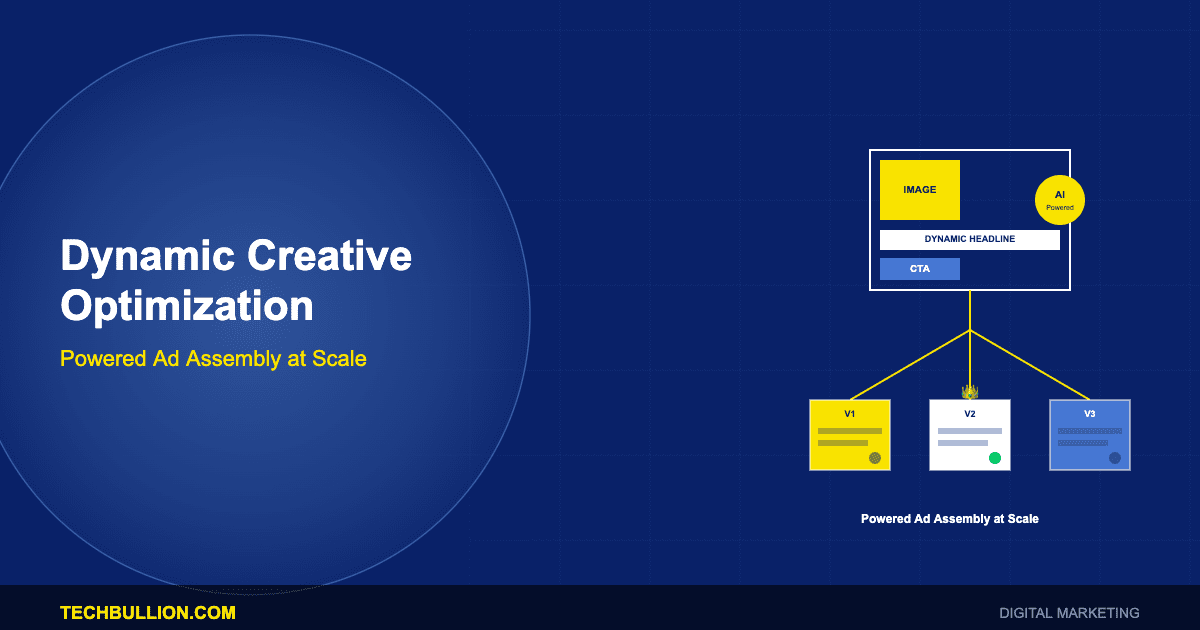
Dynamic Creative Optimization represents one of the most significant advances in digital advertising technology, enabling brands to automatically assemble, test, and optimize personalized ad experiences from modular creative components in real time. Traditional advertising workflows produced a handful of static creative executions that were served uniformly to broad audience segments, limiting both personalization depth and testing velocity. DCO platforms fundamentally reimagine this approach by decomposing ads into interchangeable elements—headlines, images, calls-to-action, color schemes, product feeds, and promotional offers—that are dynamically assembled into thousands or millions of unique creative variations, each tailored to individual viewer attributes, contextual signals, and real-time performance data. Organizations leveraging advanced DCO report 50 to 150 percent improvements in click-through rates, 30 to 60 percent reductions in cost per acquisition, and the ability to test creative hypotheses at 100 times the velocity of traditional A/B testing approaches.
The Evolution of Creative Optimization
The journey from static creative to dynamic optimization reflects the broader evolution of digital advertising from broadcast to personalized communication. First-generation digital ads were simply digitized versions of print advertisements—fixed images with embedded text served identically to every viewer. The introduction of A/B testing in the mid-2000s enabled marketers to compare two or three creative variants, identifying which headline or image resonated best with aggregate audiences. While this represented progress, testing velocity was limited by the manual effort required to design, produce, and traffic each variant, typically allowing brands to test 5 to 10 creative hypotheses per month across their campaigns.
The second generation of creative optimization introduced rule-based dynamic creative, where advertisers defined conditional logic to serve different creative elements based on audience attributes. A travel brand might show beach imagery to users in cold climates and ski imagery to those in warm climates, or a retailer might display recently viewed products in retargeting ads. While more personalized than static creative, rule-based systems required extensive manual configuration and couldn’t scale beyond the limited number of conditions that humans could anticipate and program. Organizations typically managed 10 to 50 rules governing creative assembly, far fewer than needed to capture the complexity of individual preferences and contextual relevance.
Modern DCO platforms represent the third generation, using machine learning algorithms to autonomously discover optimal creative combinations for each impression opportunity without requiring human-defined rules. These systems continuously experiment with different element combinations, learning which creative configurations perform best for specific audience segments, contexts, and objectives. The machine learning approach enables optimization across a combinatorial space that would be impossible to explore manually—a DCO system with 10 headline options, 10 image options, 5 CTA options, and 3 color schemes can generate 1,500 unique creative variations, testing and optimizing across all combinations simultaneously.
Technical Architecture of DCO Platforms
DCO platforms operate through a sophisticated technical architecture that spans creative asset management, real-time decision engines, ad assembly systems, and performance optimization algorithms. The creative asset layer maintains a structured library of modular elements organized by type, theme, product, and intended audience. Each element is tagged with metadata that describes its content, dimensions, emotional tone, and any targeting constraints—an image tagged as luxury lifestyle might be excluded from value-oriented messaging combinations, for example. This structured creative library serves as the building block inventory from which the system assembles personalized ad experiences.
The real-time decision engine operates at the core of DCO, processing bid requests from programmatic exchanges and making creative assembly decisions within the 50 to 100 millisecond response window required by real-time bidding protocols. For each impression opportunity, the engine evaluates the viewer’s audience attributes (demographics, interests, purchase history), contextual signals (publisher content, device type, time of day, weather, location), and campaign performance data to select the optimal combination of creative elements. This decision process typically involves evaluating hundreds of potential creative combinations and selecting the one with the highest predicted performance for that specific impression context.
The ad assembly system renders the selected creative elements into finished ad units in real-time. Modern DCO platforms use HTML5-based ad templates that define the layout structure and animation parameters while leaving content slots dynamic. The assembly process composites selected images, overlays chosen headlines and body copy, applies the designated color scheme, inserts the appropriate call-to-action, and compiles the complete ad unit—all within milliseconds. Advanced platforms support complex creative formats including video, carousel, and interactive elements, expanding DCO beyond simple display banners to rich media experiences that can be dynamically personalized.
Machine Learning for Creative Optimization
The optimization algorithms that power modern DCO platforms employ various machine learning approaches to balance exploration of new creative combinations with exploitation of known high-performers. Multi-armed bandit algorithms—including Thompson Sampling, Upper Confidence Bound, and contextual bandit variants—provide the mathematical framework for this exploration-exploitation tradeoff. These algorithms automatically allocate more impressions to creative combinations that are performing well while maintaining sufficient experimentation with untested combinations to discover potentially superior alternatives.
Contextual bandit models extend basic bandit algorithms by incorporating viewer and context features into the optimization, learning not just which creative combinations perform best overall but which perform best for specific types of viewers in specific contexts. A contextual model might learn that product-focused imagery with urgency-driven headlines performs best for retargeting audiences during weekday evenings, while lifestyle imagery with aspirational messaging is optimal for prospecting audiences on weekend mornings. These context-dependent creative strategies emerge automatically from the data without requiring human insight into audience preferences.
Deep learning approaches are increasingly applied to creative optimization, particularly for understanding the relationship between visual content and performance. Convolutional neural networks can analyze the visual attributes of ad images—color composition, object placement, facial presence and expression, text overlay positioning—and correlate these attributes with performance outcomes. These models enable creative scoring that predicts likely performance before an image enters the optimization rotation, reducing the cost of testing low-potential creative elements. Organizations using deep learning creative scoring report 25 to 35 percent faster optimization convergence compared to random initialization approaches.
Creative Element Strategy and Production
Effective DCO requires a strategic approach to creative element design and production that maximizes the optimization system’s ability to discover high-performing combinations. Element diversity is essential—if all headline options convey the same message with minor wording variations, the system cannot learn whether different messaging angles resonate with different audiences. Effective element strategies span multiple dimensions of creative variation: different value propositions, emotional appeals, urgency levels, social proof approaches, and visual styles, providing the optimization algorithm with meaningfully different options to evaluate.
Creative brief frameworks for DCO differ fundamentally from traditional campaign briefs. Rather than prescribing a single creative vision executed across formats, DCO briefs define the strategic parameters within which creative variation should occur. A DCO brief might specify five messaging themes (value, quality, convenience, innovation, sustainability), three visual styles (product-focused, lifestyle, abstract), and four tone variations (professional, casual, urgent, aspirational) as the dimensions of experimentation. The creative team then produces modular elements spanning these dimensions, creating a structured element library that enables systematic optimization across strategic alternatives.
Production workflows for DCO have evolved to support efficient creation of large element libraries. Template-based production systems allow designers to create master layouts that accommodate variable content while maintaining brand consistency. Automated adaptation tools generate format variations from master creative elements, producing the dozens of size specifications required for programmatic display campaigns. Some organizations have begun using generative AI to produce creative element variations, generating headline alternatives, image crops, and copy length adaptations that expand the element library beyond what manual production can achieve. Early adopters of AI-assisted creative production report 3 to 5 times increases in element library size with 40 to 60 percent reduction in production costs.
Personalization Signals and Data Integration
The effectiveness of DCO depends on the quality and breadth of personalization signals available for creative optimization. First-party data from CRM systems, website behavior tracking, purchase history, and app usage provides the strongest signals for creative personalization, enabling ads that reflect individual customer attributes and preferences. A fashion retailer’s DCO system might select imagery featuring the product categories a customer has browsed most frequently, highlight the price points that match their purchase history, and emphasize the delivery options most relevant to their location.
Contextual signals enable creative optimization even for audiences where identity-based data is unavailable. Publisher content analysis identifies the topical context surrounding ad placements, enabling creative selection that aligns with reader interests and mindset. Weather data triggers creative elements appropriate to current conditions—an outdoor apparel brand might show rain gear during stormy weather and sun protection during heat waves. Time-based signals enable dayparting strategies where creative messaging shifts from morning-appropriate content to evening messaging. Geographic signals enable localization of creative elements including language, imagery, offers, and store locations.
The growing restrictions on third-party cookies and cross-site tracking are accelerating the shift toward contextual and first-party data signals for DCO. Privacy-preserving approaches including Google’s Topics API, seller-defined audiences, and cohort-based targeting provide aggregated interest signals that can inform creative optimization without individual-level tracking. Organizations that have proactively built contextual DCO capabilities report maintaining 80 to 90 percent of their personalization performance despite the reduction in identity-based targeting data, demonstrating that creative optimization can thrive in a privacy-first advertising environment.
Cross-Channel DCO and Format Innovation
While DCO originated in display advertising, the technology has expanded to encompass virtually every digital advertising format. Video DCO enables dynamic assembly of video ads from modular components including opening sequences, product scenes, testimonial clips, offer cards, and closing CTAs. The system selects and sequences video modules based on viewer attributes and performance data, creating personalized video experiences from a library of pre-produced clips. Brands implementing video DCO report 40 to 70 percent improvements in video completion rates and 50 to 80 percent increases in post-view conversion rates compared to static video campaigns.
Social media DCO adapts creative optimization for the unique requirements of platforms like Meta, TikTok, Pinterest, and LinkedIn. Each platform has distinct creative specifications, audience behaviors, and performance dynamics that require platform-specific optimization strategies. Meta’s dynamic creative feature, for example, allows advertisers to supply multiple elements that the platform’s algorithm optimizes across its placement ecosystem. Brands that coordinate DCO across social platforms with consistent element libraries but platform-specific optimization report 30 to 45 percent improvements in overall social advertising efficiency.
Connected TV and digital out-of-home are emerging frontiers for DCO, bringing personalized creative optimization to large-screen environments. CTV DCO enables ad creative to be dynamically assembled based on household-level data, content viewing context, and geographic signals. Digital out-of-home DCO adapts creative content in real-time based on audience composition data, environmental conditions, and temporal factors. These emerging applications extend the personalization benefits of DCO beyond traditional digital channels into physical and broadcast environments.
Measurement and Performance Analytics
DCO platforms provide rich analytics that reveal not just overall campaign performance but the contribution of individual creative elements and their combinations. Element-level performance reporting shows how each headline, image, CTA, and other component performs across different audience segments and contexts, providing creative intelligence that informs both DCO optimization and broader creative strategy. Interaction analysis reveals which element combinations produce synergistic performance—certain headlines might perform exceptionally well when paired with specific images but poorly with others, indicating creative chemistry that the optimization algorithm can exploit.
Creative fatigue detection algorithms monitor performance trends to identify when specific creative elements or combinations are losing effectiveness due to audience overexposure. These algorithms trigger automatic rotation of fresh creative elements into the optimization mix while retiring fatigued variants, maintaining campaign performance without manual monitoring. Organizations using automated fatigue management report 20 to 30 percent sustained performance improvements compared to campaigns without fatigue detection, where performance typically degrades 15 to 25 percent over campaign duration.
The Future of Dynamic Creative Optimization
Generative AI is poised to transform DCO from a system that optimizes among human-created elements to one that can generate novel creative variations autonomously. Large language models can generate headline and copy variations that explore messaging territory beyond human ideation, while image generation models can create visual variants that adapt product imagery, backgrounds, and styling based on optimization signals. The integration of generative AI with DCO optimization engines will enable creative systems that continuously produce and test novel creative concepts, evolving campaign creative in real-time based on performance feedback.
The convergence of DCO with augmented reality, interactive formats, and immersive experiences will expand the dimensions of creative optimization beyond traditional media. AR-enabled DCO could dynamically select product visualization experiences based on viewer context—showing how furniture looks in a room through the viewer’s camera or enabling virtual try-on for fashion and beauty products. Interactive DCO that adapts game-like experiences, configurators, and exploratory content based on user behavior and preferences represents the next frontier in personalized advertising. These advances will transform DCO from an advertising optimization tool into a comprehensive personalized experience engine that creates unique, contextually relevant brand interactions for every individual consumer.
Research from McKinsey’s 2024 analysis indicates that organisations deploying AI at scale report efficiency improvements of 15 to 25 percent within the first 18 months of production implementation.
According to Mordor Intelligence, the AI in fintech market is projected to grow at a compound annual growth rate exceeding 20 percent through 2029, driven by demand for automated fraud detection, credit scoring, and customer service applications.
For more coverage on related topics, explore our dedicated section on artificial intelligence.
Readers interested in this space may also find value in our reporting on technology news.
Stay informed with TechBullion’s latest coverage of startup ecosystem.