The digital advertising landscape is experiencing a fundamental shift. Where marketers once relied on static creative assets deployed across broad audiences, dynamic creative optimisation (DCO) is now enabling brands to personalise messaging at scale. The DCO market reached $4.1 billion in 2025, and for good reason: DCO ads consistently generate 3 times higher click-through rates than static creatives, fundamentally changing how businesses approach campaign performance.
This shift represents more than incremental improvement. By automatically adapting ad creative elements based on real-time data signals, DCO technology allows marketers to serve the right message to the right person at the right moment, without manual intervention. For brands managing thousands of product variants or operating across multiple geographic regions, DCO has become indispensable infrastructure for competitive advertising performance.
Understanding Dynamic Creative Optimisation
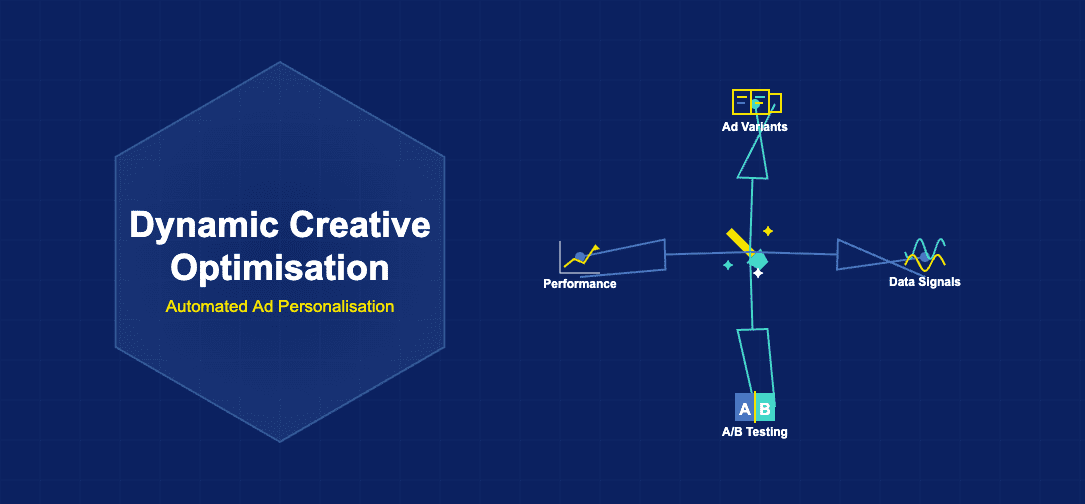
Dynamic creative optimisation works by automatically generating and testing variations of ad creative in real time. Unlike traditional A/B testing, which requires marketers to manually create and schedule different versions, DCO platforms ingest product feeds, audience data, and contextual signals, then algorithmically generate hundreds or thousands of unique creative combinations. Each user sees variations optimised for their specific characteristics and context.
The underlying mechanism relies on template-based creative systems. A marketer designs a master template containing variable elements: headlines, images, colours, calls-to-action, and product imagery. The DCO platform then populates these elements based on audience signals, continuously learning which combinations drive superior performance metrics for different user segments.
This approach differs fundamentally from conventional creative development. Rather than creating five to ten variations and selecting the best performer, DCO enables the creation of thousands of dynamic variations, with algorithms determining optimal combinations in real time as campaign data accumulates. The system continuously refines its understanding of which creative elements resonate with specific audience segments and contexts.
Data Signals Driving DCO Performance
The effectiveness of any DCO campaign depends entirely on the quality and breadth of data signals informing creative personalisation. Modern DCO platforms leverage multiple signal categories to shape audience experiences and optimise messaging.
Behavioural signals form the cornerstone of effective DCO. Purchase history, browsing behaviour, content engagement, and search queries reveal what products or services individual users have demonstrated interest in. A user viewing luxury watches on an e-commerce platform might see high-value product imagery and premium messaging, whilst someone browsing budget options receives different creative treatment entirely. This behavioural foundation ensures creative personalisation reflects genuine user intent.
Demographic and audience segment data provides complementary signals. Age, gender, location, income level, and lifecycle stage all influence which messages and creative presentations resonate most effectively. A younger demographic might respond better to dynamic, trend-forward creative, whilst older audiences may prefer stability and established brand credentials. DCO platforms automatically test these variations to identify optimal creative combinations for each segment.
Environmental and contextual signals shape real-time creative decisions. Weather data enables relevant messaging: a fashion brand might promote raincoats in rainy regions and lightweight clothing where conditions are sunny. Device type influences creative format, ensuring ads display optimally on mobile screens versus desktop monitors. Time of day affects messaging relevance, with morning audiences potentially responding to energy-related products and evening audiences to leisure or entertainment offerings.
Geographic signals provide location-specific personalisation at scale. Users in different regions see pricing in local currency, product availability tailored to their location, and promotional messaging reflecting regional considerations. A global e-commerce business can automatically adjust imagery, headlines, and offers based on geographic location without maintaining separate campaign versions for each market.
Leading DCO Platforms and Technologies
Several specialist platforms have emerged as leaders in the dynamic creative optimisation space, each offering distinct capabilities and integration options. Understanding the landscape helps marketers select solutions aligned with their specific requirements.
Celtra has established itself as a comprehensive DCO platform, offering template-based creative systems with sophisticated rules engines and machine learning capabilities. The platform excels at handling complex product catalogues and enabling granular creative personalisation across display, social, and video channels. Celtra’s emphasis on creative efficiency and collaboration tools appeals to larger marketing organisations managing extensive creative operations.
Flashtalking, owned by Mediaocean, provides DCO capabilities integrated with broader attribution and analytics infrastructure. The platform emphasises cross-channel creative optimisation and offers particular strength in managing DCO across programmatic channels and direct buys. Flashtalking’s integration with broader media planning and buying infrastructure appeals to agencies and large advertisers.
Google Web Designer, whilst primarily a creative development tool, includes DCO functionality integrated with Google Display Network and YouTube. This native integration makes it attractive for advertisers deeply embedded in Google’s advertising ecosystem, particularly for campaigns prioritising reach through Google properties.
Emerging platforms like Adverity and Smartly.io increasingly incorporate DCO capabilities as part of broader marketing operations and analytics suites, reflecting the integration of DCO into comprehensive marketing technology stacks rather than standalone point solutions.
Feed-Based DCO for E-Commerce Optimisation
E-commerce businesses face unique DCO opportunities. Product feeds containing inventory, pricing, imagery, and attributes provide the raw material for sophisticated dynamic creative systems. Feed-based DCO allows retailers to automatically personalise ads based on real-time product information, transforming inventory management into a creative asset.
When a user views a specific product and leaves without purchasing, DCO systems can automatically generate ads featuring that exact product with personalised messaging. If inventory for that product runs low, the system might instead feature similar alternative products. As pricing fluctuates, DCO automatically incorporates current prices into creative, ensuring messaging remains accurate and compelling.
This feed-based approach scales remarkably well. A retailer managing 50,000 SKUs could previously create maybe 100 distinct ad variations. With feed-based DCO, they create a single template system, and the platform automatically generates 50,000 unique product-specific variations. This enables true one-to-one personalisation at scale, with creative tailored to individual user interests and behaviour.
Feed-based DCO also enables sophisticated merchandising strategies. Rather than promoting bestselling products uniformly, systems can prioritise high-margin items, overstocked inventory, or seasonal products. Different user segments see different product recommendations within the same campaign, optimising for both inventory health and individual user relevance.
Testing, Optimisation and Continuous Learning
Effective DCO implementation requires thoughtful experimentation frameworks. Simply enabling dynamic variations does not guarantee performance improvements. Successful practitioners develop systematic testing approaches to understand which creative elements drive results within their specific context.
Multivariate testing allows marketers to systematically isolate the impact of specific creative variables. Rather than changing multiple elements simultaneously, controlled experiments measure the individual contribution of headline variations, imagery choices, colour schemes, or call-to-action text. This disciplined approach to optimisation builds reliable knowledge about which creative treatments resonate with different audience segments.
Statistical confidence matters significantly. Many DCO systems begin personalisation before accumulating sufficient data to make reliable recommendations. Early in campaigns, focusing on broader optimisation and allowing statistical power to build prevents premature personalisation decisions. Once adequate data accumulates, increasingly granular personalisation becomes statistically justified.
Learning curves in DCO are steep but real. Campaigns often see performance improvements of 20 to 40 percent in the first month, as algorithms identify high-performing creative combinations. However, this learning depends on sufficient data volume, audience activity, and well-configured systems. Campaigns with limited impression volume may require extended learning periods before DCO delivers meaningful optimisation.
Creative Rules and Decision Trees
Beyond algorithmic optimisation, many DCO systems incorporate rules-based logic enabling marketers to implement brand guidelines and business logic. These systems allow combinations of algorithmic personalisation with human oversight, ensuring creative personalisation remains within defined parameters.
Brand compliance rules ensure that regardless of algorithmic decisions, certain elements remain consistent. Colour schemes might be restricted to brand palette options, messaging must reflect approved positioning, and visual hierarchies must maintain brand standards. These guardrails prevent algorithmic optimisation from creating technically effective but brand-inconsistent creative.
Business rules encode marketing strategy into DCO systems. Rules might specify that high-value customers always see premium product recommendations, that new customers receive welcome offers, or that inventory-constrained products receive reduced prominence. These human-informed business rules guide algorithmic personalisation toward strategic objectives.
Decision trees layer increasingly granular personalisation rules. The system might first segment audiences into broad categories, then apply category-specific rules, then apply audience-segment-specific creative treatments. This hierarchical approach balances personalisation sophistication with transparency and governance, making DCO decisions explainable and auditable.
Video and Rich Media DCO
DCO has traditionally focused on static display advertising. Increasingly, platforms extend dynamic creative capabilities to video and rich media formats. This expansion enables brands to personalise the most engaging ad formats available.
Video DCO works by dynamically editing video content based on audience characteristics. Instead of creating separate video versions for different audiences, DCO systems can dynamically assemble video components, inserting product-specific footage, personalised voiceover, or segment-specific messaging. A travel company could assemble video ads featuring different destinations, accommodation options, or seasonal offers, all from a modular library of content components.
Rich media formats enable sophisticated interactive experiences at scale. Interactive video, playable ads, and carousel formats can all incorporate dynamic personalisation. A user interested in blue products consistently sees blue-focused imagery, whilst another user sees red variations. This extends personalisation beyond simple message-level optimisation to fundamental creative presentation.
Privacy Constraints and Regulatory Considerations
DCO effectiveness increasingly faces constraints from privacy regulation and cookie deprecation. The third-party cookie phase-out limits the data available to DCO systems, particularly for cross-site audience targeting and sequential personalisation.
First-party data strategies become essential for sustainable DCO. Brands with rich customer data, purchase history, and authenticated profiles can implement sophisticated personalisation independent of third-party tracking. Conversely, brands relying primarily on anonymous third-party audience data face increasing challenges as that infrastructure disappears.
Consent management intersects directly with DCO. Personalisation built on explicit user consent data is more defensible than systems relying on inferred consent or behavioural tracking. As regulations tighten, DCO systems built on clean, consented first-party data will increasingly outperform those depending on deprecated third-party signals.
Privacy-safe alternatives are emerging. Contextual personalisation, which personalises based on page content and search context rather than user history, provides effective personalisation without relying on persistent user tracking. As privacy constraints tighten, DCO systems incorporating contextual signals alongside first-party data will prove most resilient and compliant.
The Future of Dynamic Advertising
Dynamic creative optimisation represents the future direction of digital advertising. As audiences fragment and personalisation expectations increase, static creative approaches become increasingly uncompetitive. Brands investing in DCO infrastructure now are building sustainable competitive advantages in a privacy-conscious, personalisation-driven advertising environment.
The three-fold performance improvement over static advertising is not anomalous: it reflects fundamental alignment between personalised messaging and human preferences. As technology continues advancing and privacy-compliant data strategies mature, DCO will become standard rather than innovative, with brands achieving competitive parity through dynamic creative systems rather than gaining advantage.
| Characteristic | Static Ads | A/B Testing | Dynamic Creative Optimisation |
|---|---|---|---|
| Number of Variations | 1 | 5 to 10 | 100s to 1,000s |
| Personalisation Level | None | Limited | Granular |
| Creation Effort | Minimal | Moderate | High initial, then automated |
| Learning Speed | N/A | Weeks | Days |
| Average CTR Uplift | Baseline | 15-20% | 200-300% |
| Real-Time Adaptation | No | No | Yes |
| Channel | DCO Capability | Key Signals Used | Example Platform |
|---|---|---|---|
| Display | Mature | Behaviour, location, device | Celtra, Flashtalking |
| Video | Developing | Viewing history, context, demographics | Google Web Designer |
| Social | Mature | Behaviour, audience segment, lookalike | Native platform tools |
| Mature | Purchase history, engagement, lifecycle | Mailchimp, HubSpot | |
| E-commerce Feed | Very Mature | Product feed, inventory, pricing | Criteo, Conversant |
| Programmatic | Mature | Real-time bidding context, audience | DSPs with DCO integration |
Related reading: AI Targeting in AdTech: How Machine Learning Is Transforming Ad Delivery
Data from Statista’s digital market outlook shows that global digital spending continues to grow at double-digit rates, with mobile channels accounting for an increasingly dominant share of total transactions.
PwC’s analysis of financial services trends through 2025 highlights the convergence of technology and media as a defining dynamic, with data-driven personalisation becoming the primary competitive differentiator.
For more coverage on related topics, explore our dedicated section on technology insights.