Cybersecurity has transformed from a technical discipline into a business imperative. Today, it is a topic regularly discussed by boards of directors, a factor in recruiting decisions and an emerging measure of brand trust. High-profile breaches, expanding use of AI, and the sensitivity of workforce data have collapsed the distance between back-office security and public credibility. In HR and payroll, where organizations manage compensation information, bank details, and identity data, trust is not a nice-to-have. It is operational. It is cultural. And it is increasingly measurable.
Complexity Erodes Trust in HR and Payroll Systems
Data is personal, and the risk is amplified by complexity. Cisco reports that more than 75% of consumers say they won’t purchase from an organization they don’t trust with their data, signaling that privacy expectations now directly shape behavior across industries.
When HR platforms rely on multiple databases and integrations, sensitive information is constantly in motion, and each transfer introduces another point of potential error, exposure, or misconfiguration. Without a single system of record, organizations take on avoidable complexity that limits visibility, weakens oversight and increases overall risk.
How HR Technology Builds Measurable Brand Trust
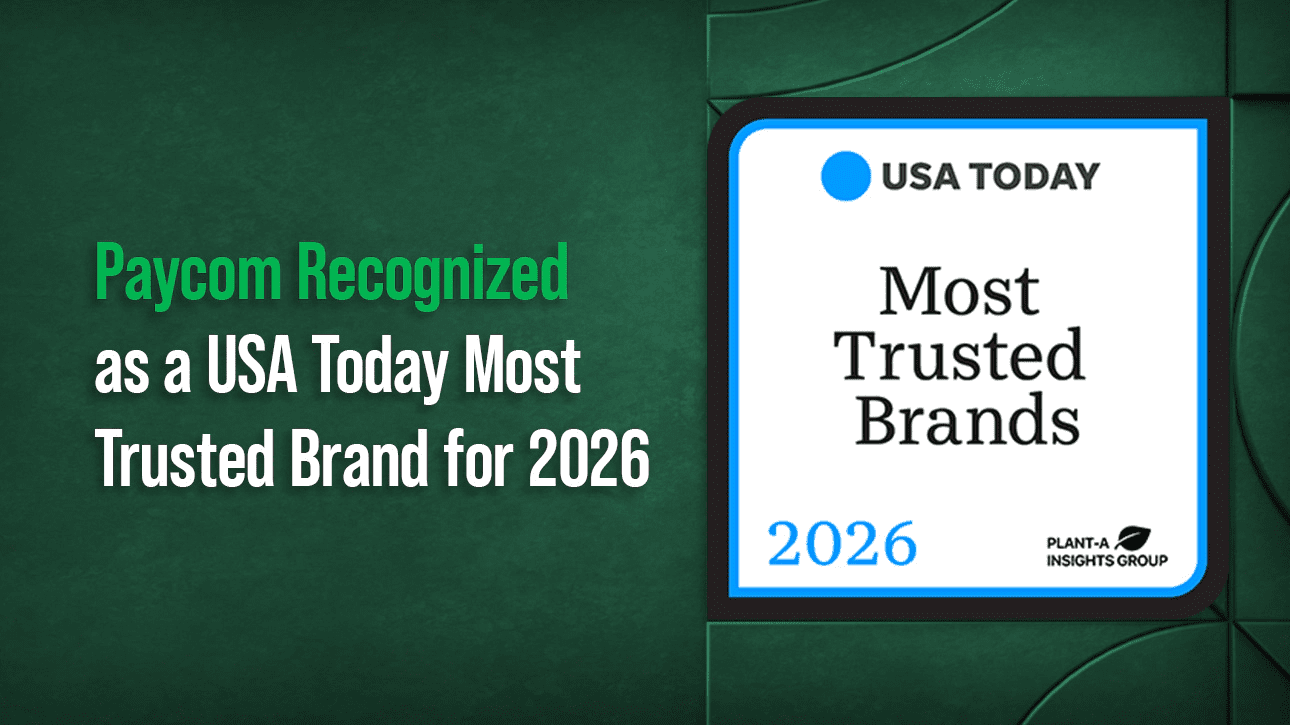
Trust has become a reportable signal, not a soft sentiment. Lists like USA Today’s Most Trusted Brands 2026 reflect a broader shift in how trust is evaluated, factoring in reliability, transparency, and real-world experience across industries. In HR and payroll technology, platforms designed to minimize complexity and safeguard sensitive workforce data are playing a growing role in shaping that trust.
Paycom is among the most trusted brands for its HR and payroll technology, security standards and commitment to reliable service. Shane Hadlock, president and chief client officer at Paycom, addressed the role of trust in HR and payroll technology in their press release.
“Trust is built when technology aligns with the business and exceeds expectations,” Hadlock said. “This honor reflects how our full-solution automation, world-class service and security-first approach support organizations with industry-leading HR and payroll experiences across their workforce.”
Designing Systems for Trust and Accountability
Trust is built by minimizing data movement and making controls transparent and auditable. In HR and payroll technology, single‑database architectures can limit duplication, reduce integration risk and simplify operational governance, an approach Paycom uses in its platform.
That security posture is reinforced by formal standards and ongoing audits. Paycom outlines its ISO and SOC certifications and annual independent assessments on its security page, and its recognition as a trusted brand serves as a public proxy for how that approach is reflected in market perception.
The takeaway for executives is simple: The less complicated the system, the easier it is to trust. A single database reduces duplicate data and data handoffs, makes it easier to see who has access to what, and makes security checks easier to confirm. When workforce data lives in one automated HR and payroll system, organizations spend less time fixing mismatched records and more time improving HR strategy and the employee experience and protecting sensitive information.