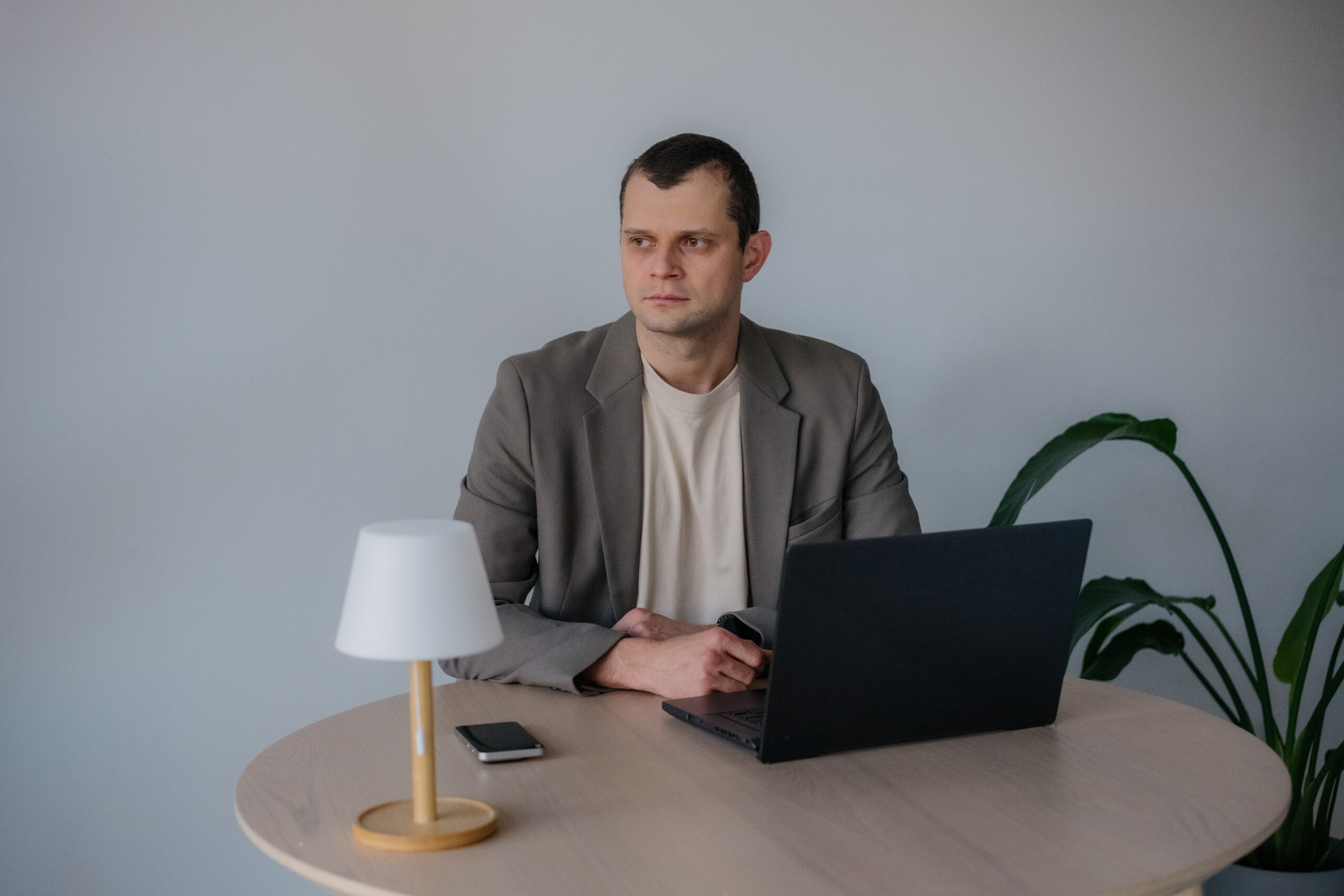
Creating your own products is the dream of many engineers, but only a few make it a reality. It is a path with high competition, risks, and the need to think beyond writing code. This is the topic of our conversation with Ilia Titovskii, a developer with 15 years of experience in mobile and server-side development who has worked at the largest Russian and international fintech companies.
Today, he is at a new stage, building his own product for learning foreign words and sharing his experience of transitioning from stable employment to entrepreneurship in the digital environment.
Ilia, moving from employment to your own project is a serious turn. At what point did the internal desire to “build something of your own” appear?
For a long time, I worked on large projects: financial, corporate, international. Employment gives you a sense of reliability, rhythm, and team support. But over time, I realized: I was creating other people’s products, implementing other people’s ideas, while inside me the desire to build something of my own was growing. A very honest question stood before me: if not now, then when? I had accumulated experience, seen how systems are built, how they scale, how teams make decisions. And one day I understood that I was ready to take responsibility myself.
Many developers dream of their own product but hesitate to take the first step. What became your trigger?
I saw that in any company, even a large one, you are limited by frameworks. An engineer often thinks in terms of technology, but a product is not just code. It is understanding user logic, metrics, marketing, monetization. I felt cramped in the old paradigm and decided to try a new one.
You are currently working on an application for learning foreign words. Why this niche?
It grew out of a personal need. I was learning a language myself after relocating, tried dozens of services, and saw what they lacked. Some were too academic, others too game-like, and some had inconvenient interfaces. I wanted to create a tool that makes the process of learning words engaging while also offering flexibility to customize it to personal preferences. It’s a combination of engineering logic and a real user pain point.
What expectations did you have for the product at the start — and which had to be reconsidered?
At the beginning, it seems that the idea is clear and the path is straightforward. But a month later you realize: it’s not enough to simply “write an application.” You need to study the market, analyze competitors, test hypotheses. The first challenge is abandoning perfectionism. You’re not building a perfect product; you’re building a minimally viable one. In employment, you can spend a long time polishing a feature, but in your own project, time is the most valuable resource. I had to consciously release imperfect solutions to test demand.
Let’s talk about the process. What does building a product “from scratch” look like through the eyes of an engineer?
First comes research. I spend almost half of my time not on code but on analysis: who is my user, what is their scenario, why should they choose me? I use quick prototypes, test them with a small group of acquaintances, collect feedback. Then architecture begins — modular, flexible, without excess. I deliberately design it so that in case of success it can easily scale.
And only last comes code. That’s a paradox for an engineer: before, it used to come first.
Which technical decisions became fundamental for you in this project?
I am building the application with a focus on offline access and a low entry threshold; it should work even without constant internet access. Technologically, this means caching and local dictionaries, synchronization upon connection, and the ability to expand functionality through small updates.
I also designed the architecture for an AI component — personalized word selections depending on learning speed and mistakes. But this feature will appear later, when the product becomes stable.
Let’s discuss challenges. What was the most difficult moment?
The shift in mindset. When you are a developer, you are responsible for the code. When you create a product, you are responsible for everything — from marketing to budgeting. You have to think about legal aspects, taxes, platforms, monetization.
And another thing: uncertainty. Employment gives a sense of predictability. Your own product is always a risk. You can invest months and get no return. You need to learn to live with that.
What turned out to be the most inspiring?
Freedom of decision-making. The ability to see your idea embodied in a working tool. Understanding that every improvement is the result of your choice, not a long chain of approvals. At some point, you catch yourself thinking: I can truly change what people use.
Many think the main thing is coming up with an idea. But an idea is worthless without a market. How did you approach validation?
Three steps. First, competitor research: not just a list of apps, but analysis of their weak points, formats, retention. Second, prototyping: rough design, testing with a small group. Third, measurement. If 20 people say the idea is good, that’s an opinion. When we see they return the next day — that’s a metric.
I believe it’s better to quickly release a product that works at 60% and then gradually improve it than to spend a year building one that works at 100% but no one needs.
Which mistakes do you consider useful?
The biggest mistake is delaying the launch. You want to perfect everything, rewrite a module, improve UX. But the market moves faster than idealism. It’s important to stay in motion.
The second mistake is making a product for everyone. I chose a narrow segment: people motivated to learn a language but tired of routine flashcards. Focus is a product’s best friend.
Ilia, what would you say to those standing on the border between stable employment and creating their own digital product?
Honestly answer yourself: are you ready for uncertainty? If yes, try. But don’t jump straight into building an app. Start with research. Build a hypothesis and test it on a small scale.
And don’t be afraid of small steps. Entrepreneurship is not a leap, but a series of movements forward. Sometimes with mistakes. Sometimes with failures. But this is how products are born that change the market.