
The rapid integration of Large Language Models (LLMs) into scholarly research has created an unprecedented efficiency in data synthesis and literature review. However, this convenience brings a subtle but profound risk to academic integrity: Linguistic Homogenization. As scholars increasingly utilize generative tools to structure their findings, the unique rhetorical ‘fingerprints’ that define human expertise are being smoothed over by statistical probability—a challenge that has led many researchers to seek the best humanize ai solutions to restore the nuanced, authoritative voice essential for high-level publication.
The Problem of Predictive Monotony in Scholarly Writing
Academic excellence is traditionally characterized by its complexity—the ability to weave together diverse sentence structures, idiosyncratic vocabulary, and nuanced argumentation. LLMs, by design, operate on a logic of “next-token prediction.” This results in prose that is grammatically impeccable but statistically “flat.”
In an academic context, this lack of linguistic variation—often referred to as low Linguistic Entropy—can inadvertently signal a lack of critical depth. For researchers, the challenge is no longer just producing content, but ensuring that the output retains the “human signature” that peer reviewers and institutional repositories associate with authentic scholarship.
The Diagnostic Utility of the AI Checker
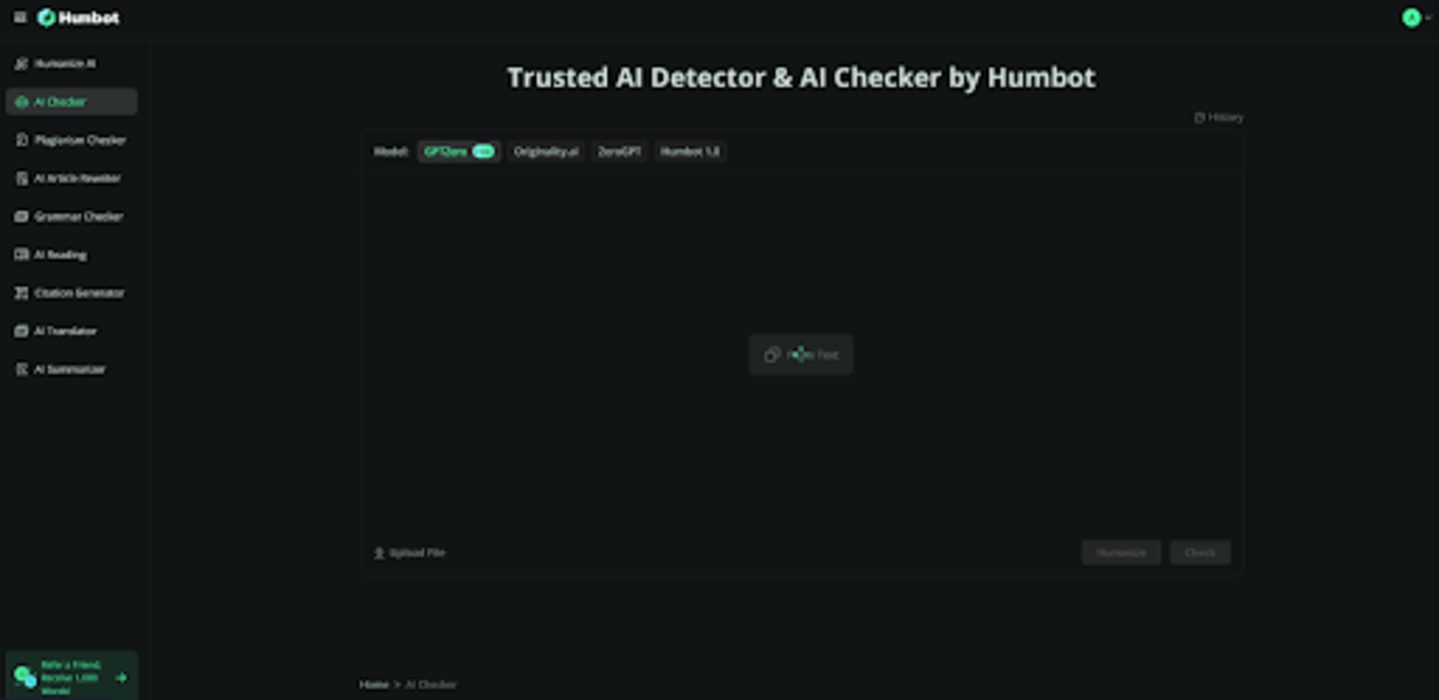
To maintain the high standards of a digital archive, a rigorous diagnostic process is essential. An ai checker serves as a critical quality-control layer in this workflow. Rather than a punitive measure, it should be viewed as a high-precision auditor of linguistic predictability.
By analyzing a manuscript for perplexity and structural burstiness, these tools identify sections where machine-generated patterns are too dominant. For a researcher, this data-driven feedback is invaluable; it highlights exactly where the narrative has become too clinical and where the author’s unique intellectual voice has been obscured by the underlying algorithm.
The Bridge to Authenticity: Strategic Refinement
Identifying the robotic footprint is merely the diagnostic phase. The subsequent, and more vital, step is the structural recalibration of the text. To humanize ai output within an academic framework means to restore the complexity and rhythmic variance that machines naturally omit.
This is the specialized space where platforms like Humbot operate. Instead of basic synonym replacement, the focus is on re-injecting “stylistic friction”—the intentional variation in sentence length and the nuanced application of idiomatic depth. This process ensures that the efficiency of automation does not come at the cost of the author’s individual voice, allowing the manuscript to transition from a generic machine draft to a resonant, human-centric narrative.
A Hybrid Framework for Future Publishing
As we move toward a hybrid future of human-AI collaboration, the standard for “quality” content must evolve. A sustainable editorial workflow now follows a three-tier logic:
The Foundation: Leveraging AI for large-scale data aggregation and structural drafting.
The Audit: Utilizing diagnostic tools to identify and mitigate machine bias.
The Refinement: Applying a humanization layer to restore the stylistic nuance and authoritative weight required for high-level publication.

How to Use Humbot Without Losing Your Academic Soul
Instead of letting the machine do 100% of the work, the most successful students are adopting a hybrid approach:
1.Drafting: Use AI to build the skeleton and research the points.
2.Refinement: Use Humbot to humanize AI drafts, ensuring the writing feels organic and personal.
3.Verification: Pass the final version through an AI checker yourself to ensure total peace of mind before submission.
In the vast ecosystem of digital scholarly resources, the most valuable currency remains the authentic human voice. By employing a combination of diagnostic audits and sophisticated humanization tools, we ensure that the democratization of information through AI does not lead to the erosion of academic individuality. In an age of automated perfection, it is the uniquely human textures of our writing that build long-term trust and intellectual authority.